Deep-Sea Food Chains and the Global Carbon Cycle

Deep-Sea Food Chains and the Global Carbon Cycle


65,70 €
IVA incluido
Disponible
Editorial:
Springer Nature B.V.
Año de edición:
2012
Materia
Geología y la litosfera
ISBN:
9789401050821
65,70 €
IVA incluido
Disponible

Selecciona una librería:

  • Librería Samer Atenea
  • Librería Aciertas (Toledo)
  • Kálamo Books
  • Librería Perelló (Valencia)
  • Librería Elías (Asturias)
  • Donde los libros
  • Librería Kolima (Madrid)
  • Librería Proteo (Málaga)

Carbon dioxide and other `greenhouse’ gases are increasing in the atmosphere due to the burning of fossil fuels, the destruction of rain forests, etc., leading to predictions of a gradual global warming which will perturb the global biosphere. An important process which counters this trend toward potential climate change is the removal of carbon dioxide from the surface ocean by photosynthesis. This process packages carbon in phytoplankton which enter the food chain or sink into the deep sea. Their ultimate fate is a `rain’ of organic debris out of the surface-mixed layer of the ocean. On a global scale, the mechanisms and overall rate of this process are poorly known. The authors of the 25 papers in this volume present their state-of-the-art approaches to quantifying the mechanisms by which the `rain’ of biogenic debris nourishes deep ocean life. Prominent deep sea ecologists, geochemists and modelers address relationships between data and models of carbon fluxes and food chains in the deep ocean. An attempt is made to estimate the fate of carbon in the deep sea on a global scale by summing up the utilization of organic matter among all the populations of the abyssal biosphere. Comparisons are made between these ecological approaches and estimates of geochemical fluxes based on sediment trapping, one-dimensional geochemical models and horizontal (physical) input from continental margins. Planning interdisciplinary enterprises between geochemists and ecologists, including new field programs, are summarized in the final chapter. The summary includes a list of the important gaps in understanding which must be addressed before the role of the deep-sea biota in global-scale processes can be put in perspective.
Artículos relacionados

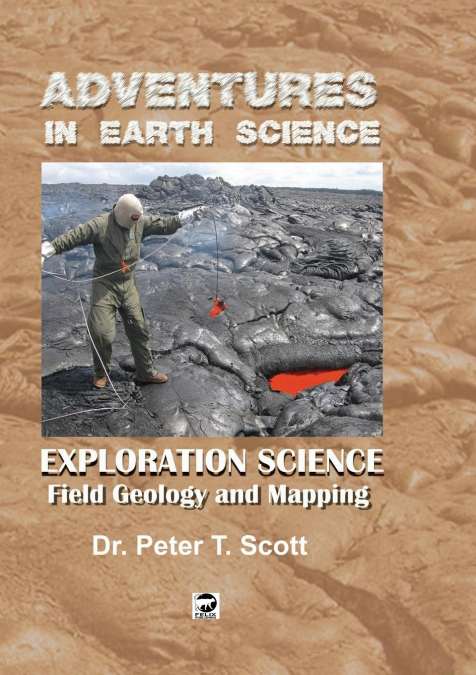
  • Exploration Science
    Dr Peter T Scott
    About Exploration ScienceHave you wondered what the science of geology is all about?Together we will explore of the surface and sub-surface of the Earth, the sub-branches of geology, including mineralogy, petrology (rocks), palaeontology (fossils), geochemistry, seismology (earthquakes), engineering geology, and many more.The scientific method used by all scientists as well as ...
    Disponible

    30,12 €

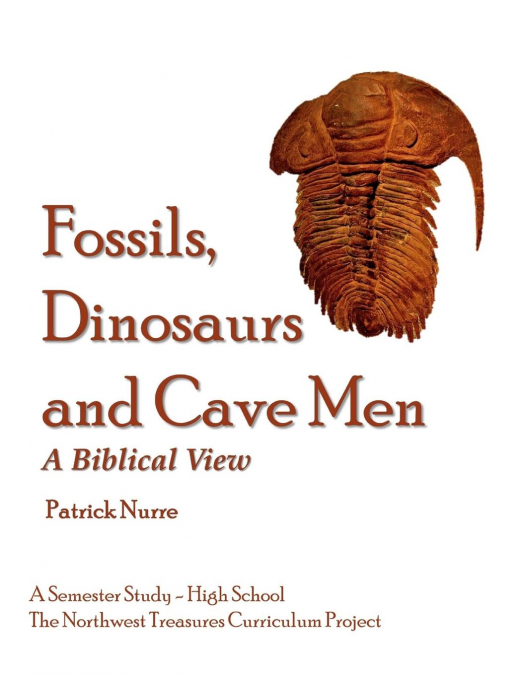
  • Fossils, Dinosaurs and Cave Men
    Patrick Nurre
    This textbook is a high school, semester study of the differences between the Biblcal and secular views of fossils, dinosaurs, and cave men.  Topics include the cause and mechanism for a global flood, the geologic time table, living fossils, the Tower of Babel, modern classification of dinosaurs, and more.  Students will also learn to interpret the geologic column from a Biblic...
    Disponible

    43,86 €

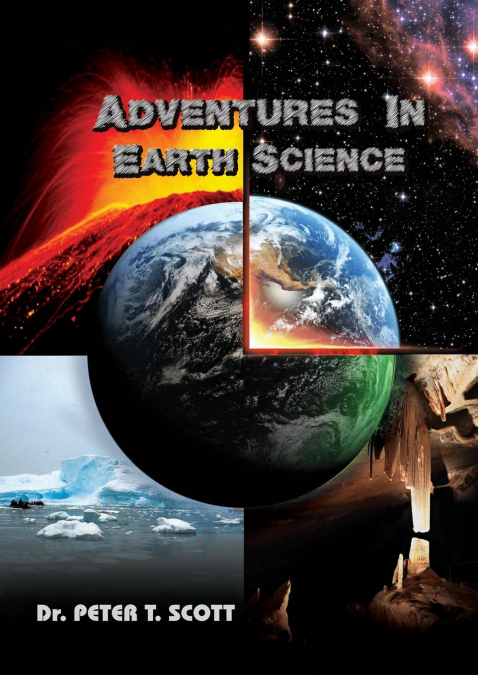
  • Adventures in Earth Science
    Dr Peter T Scott
    ADVENTURES in EARTH SCIENCE is not just an in-depth textbook but a series of adventures across seven continents and beyond in the sciences of astronomy, geology, meteorology and oceanography. It has been written with over forty years of experience in studying, researching and teaching earth science. Whilst it has been designed for senior high school and junior university or col...
    Disponible

    142,25 €

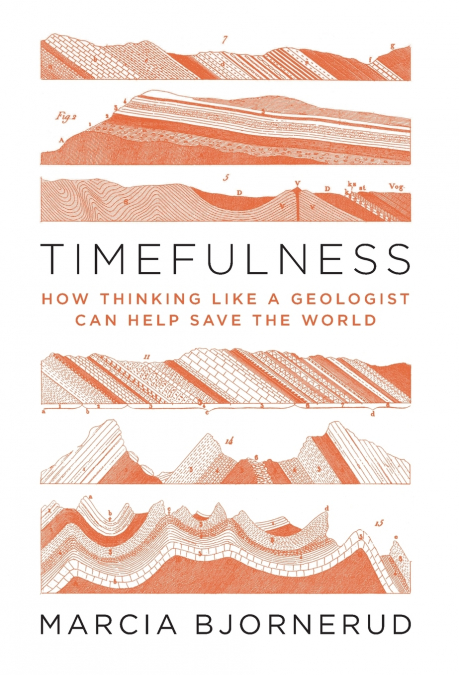
  • Timefulness
    Marcia Bjornerud
    Why an awareness of Earth’s temporal rhythms is critical to our planetary survivalFew of us have any conception of the enormous timescales in our planet’s long history, and this narrow perspective underlies many of the environmental problems we are creating for ourselves. The passage of nine days, which is how long a drop of water typically stays in Earth’s atmosphere, is somet...
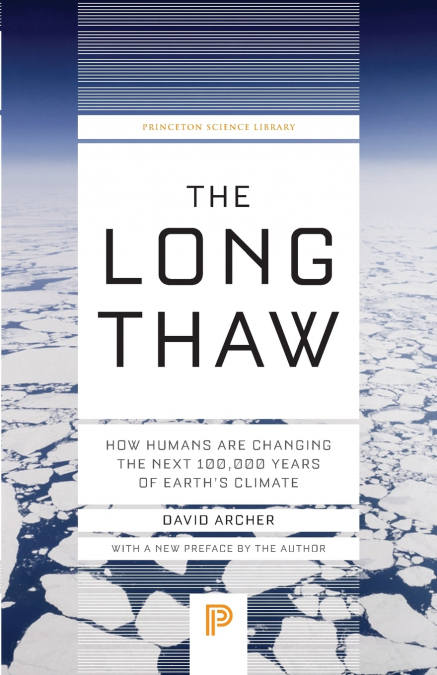
  • The Long Thaw
    David Archer
    Why a warmer climate may be humanity’s longest-lasting legacyThe human impact on Earth’s climate is often treated as a hundred-year issue lasting as far into the future as 2100, the year in which most climate projections cease. In The Long Thaw, David Archer, one of the world’s leading climatologists, reveals the hard truth that these changes in climate will be 'locked in,' ess...
    Disponible

    24,10 €

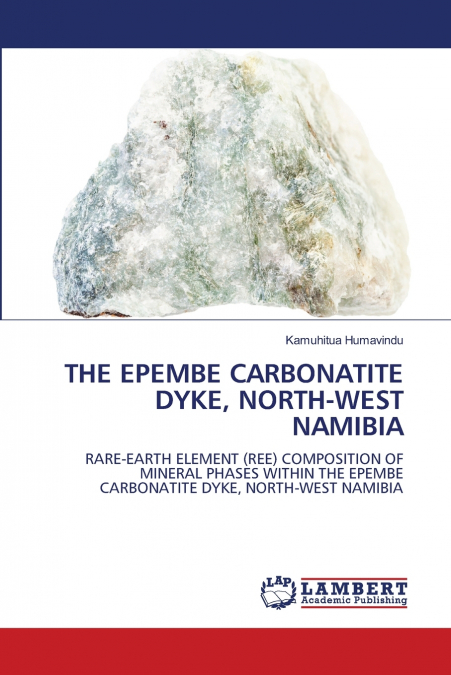
  • THE EPEMBE CARBONATITE DYKE, NORTH-WEST NAMIBIA
    Kamuhitua Humavindu
    This book gives a bright perspective on the nature of carbonatites along with different magmatic and hydrothermal processes that affect the distribution of these dykes. In the past there has been several debates on the enrichment mechanisms of rare-earth elements, making it a significant book especially now with the increase in technology. The research is filled with exciting f...
    Disponible

    75,64 €