Deep Crustal Structure of the Son-Narmada-Tapti Lineament, Central India

Deep Crustal Structure of the Son-Narmada-Tapti Lineament, Central India

G. Dhanunjaya Naidu

68,21 €
IVA incluido
Disponible
Editorial:
Springer Nature B.V.
Año de edición:
2016
Materia
Geología y la litosfera
ISBN:
9783662521816
68,21 €
IVA incluido
Disponible

Selecciona una librería:

  • Librería Samer Atenea
  • Librería Aciertas (Toledo)
  • Kálamo Books
  • Librería Perelló (Valencia)
  • Librería Elías (Asturias)
  • Donde los libros
  • Librería Kolima (Madrid)
  • Librería Proteo (Málaga)

With a length of about 1200 km, the Son-Narmada-Tapti Lineament (NSL) is one of the most prominent geomorphic features in the Indian subcontinent. Anomalous conductive bodies are delineated at mid-lower crustal depths below major earthquake epicentral zones. The region has been interpreted as the collision zone of the Indian Plate with the Eurasian Plate. The NSL zone is therefore also known to be the second most important tectonic feature in the Indian geology, after the Himalayas. The present thesis describes significant new insight into the seismotectonics of this Central India tectonic zone, based on thorough magnetotelluric studies. The main objectives of the present study are: (i) to delineate subtrappean sediments across the NSL region along four different traverses, (ii) to understand the characterization of geo-electrical structure of the crust and examine the nature of geo-electrical signatures of the known faults, (iii) to integrate the results with other geophysical data such as seismicity, gravity and heat flow, in order to understand the tectonic scenario of the region. Deep electromagnetic (magnetotelluric) analyses were integrated in this study with gravity, seismic and heat flow studies and distinct, delineated deep crustal features. The resulting high conductivity is justified with the presence of fluids at mid-lower crustal depths. The migration of these fluids from mantle to mid-lower crustal depths through pre-existing brittle fracture/fault zones were obviously caused by the plume related to the Deccan volcanism. Migration of the fluids generated a higher fluid pressure along the faults and resulted in earthquakes. Based on the geo-electric sections derived along the four traverses of the Narmada-Son Lineament Zone, the present study gives important clues on the subduction/collision history in this important tectonic zone.
Artículos relacionados

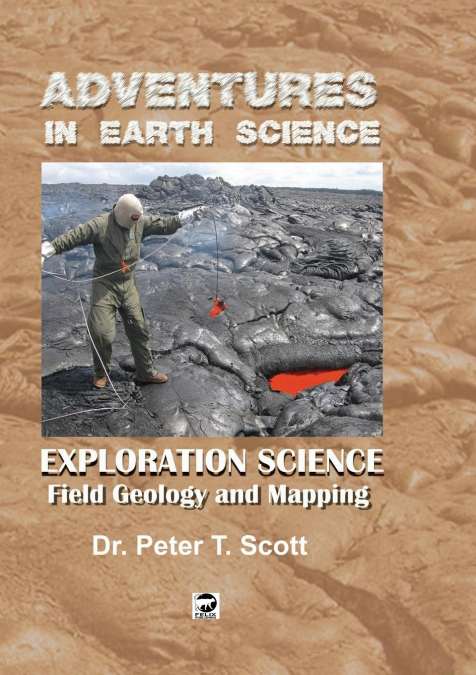
  • Exploration Science
    Dr Peter T Scott
    About Exploration ScienceHave you wondered what the science of geology is all about?Together we will explore of the surface and sub-surface of the Earth, the sub-branches of geology, including mineralogy, petrology (rocks), palaeontology (fossils), geochemistry, seismology (earthquakes), engineering geology, and many more.The scientific method used by all scientists as well as ...
    Disponible

    30,12 €

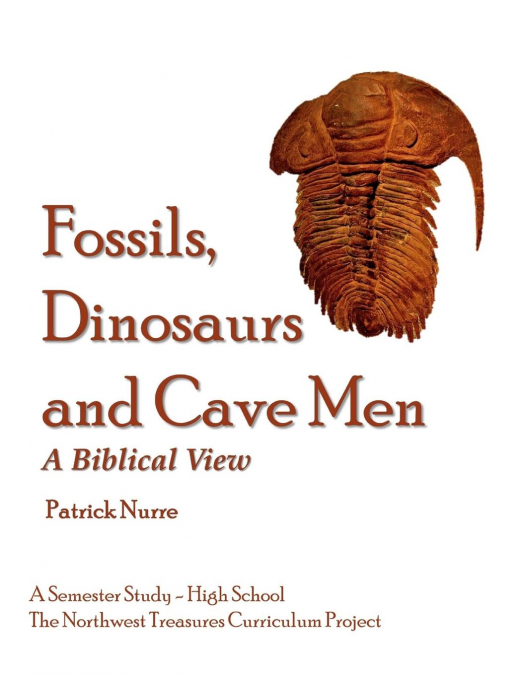
  • Fossils, Dinosaurs and Cave Men
    Patrick Nurre
    This textbook is a high school, semester study of the differences between the Biblcal and secular views of fossils, dinosaurs, and cave men.  Topics include the cause and mechanism for a global flood, the geologic time table, living fossils, the Tower of Babel, modern classification of dinosaurs, and more.  Students will also learn to interpret the geologic column from a Biblic...
    Disponible

    43,86 €

  • Adventures in Earth Science
    Dr Peter T Scott
    ADVENTURES in EARTH SCIENCE is not just an in-depth textbook but a series of adventures across seven continents and beyond in the sciences of astronomy, geology, meteorology and oceanography. It has been written with over forty years of experience in studying, researching and teaching earth science. Whilst it has been designed for senior high school and junior university or col...
    Disponible

    142,25 €

  • Timefulness
    Marcia Bjornerud
    Why an awareness of Earth’s temporal rhythms is critical to our planetary survivalFew of us have any conception of the enormous timescales in our planet’s long history, and this narrow perspective underlies many of the environmental problems we are creating for ourselves. The passage of nine days, which is how long a drop of water typically stays in Earth’s atmosphere, is somet...
  • The Long Thaw
    David Archer
    Why a warmer climate may be humanity’s longest-lasting legacyThe human impact on Earth’s climate is often treated as a hundred-year issue lasting as far into the future as 2100, the year in which most climate projections cease. In The Long Thaw, David Archer, one of the world’s leading climatologists, reveals the hard truth that these changes in climate will be 'locked in,' ess...
    Disponible

    24,10 €

  • THE EPEMBE CARBONATITE DYKE, NORTH-WEST NAMIBIA
    Kamuhitua Humavindu
    This book gives a bright perspective on the nature of carbonatites along with different magmatic and hydrothermal processes that affect the distribution of these dykes. In the past there has been several debates on the enrichment mechanisms of rare-earth elements, making it a significant book especially now with the increase in technology. The research is filled with exciting f...
    Disponible

    75,64 €