 Librería Samer Atenea
 Kálamo Books
 Librería Elías (Asturias)
 Librería Kolima (Madrid)
 Librería Proteo (Málaga)
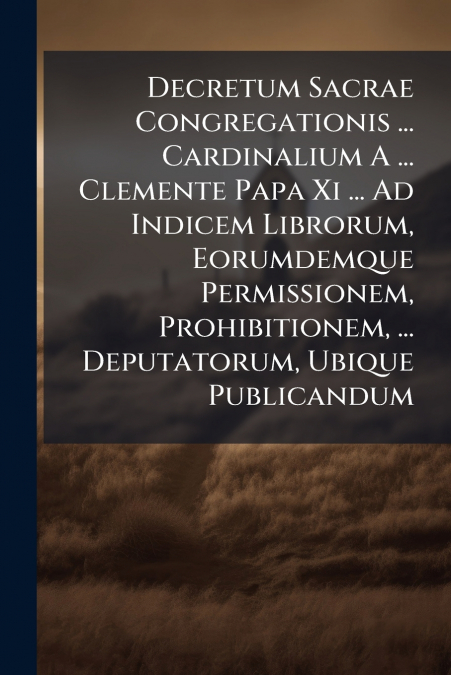
This historical document, 'Decretum Sacrae Congregationis ... Cardinalium A ... Clemente Papa XI ... Ad Indicem Librorum, Eorumdemque Permissionem, Prohibitionem, ... Deputatorum, Ubique Publicandum,' offers insight into the workings of the Catholic Church’s efforts to control the spread of information through its Index Librorum Prohibitorum. This decree, issued under Pope Clement XI, provides a glimpse into the criteria and processes used to determine which books were deemed heretical or dangerous and therefore forbidden to be read by Catholics. The text reveals not only the titles of prohibited works but also the justifications for their censure, offering a valuable resource for understanding the intellectual and religious climate of the time. Students of religious history, legal history, and censorship will find this primary source material invaluable for understanding the complex relationship between power, knowledge, and belief. This edition preserves the original text, making it accessible to scholars and researchers interested in the history of the Catholic Church and its impact on European thought.This work has been selected by scholars as being culturally important, and is part of the knowledge base of civilization as we know it. This work was reproduced from the original artifact, and remains as true to the original work as possible. Therefore, you will see the original copyright references, library stamps (as most of these works have been housed in our most important libraries around the world), and other notations in the work.This work is in the public domain in the United States of America, and possibly other nations. Within the United States, you may freely copy and distribute this work, as no entity (individual or corporate) has a copyright on the body of the work.As a reproduction of a historical artifact, this work may contain missing or blurred pages, poor pictures, errant marks, etc. Scholars believe, and we concur, that this work is important enough to be preserved, reproduced, and made generally available to the public. We appreciate your support of the preservation process, and thank you for being an important part of keeping this knowledge alive and relevant.