

 Librería Samer Atenea
 Kálamo Books
 Librería Elías (Asturias)
 Librería Kolima (Madrid)
 Librería Proteo (Málaga)
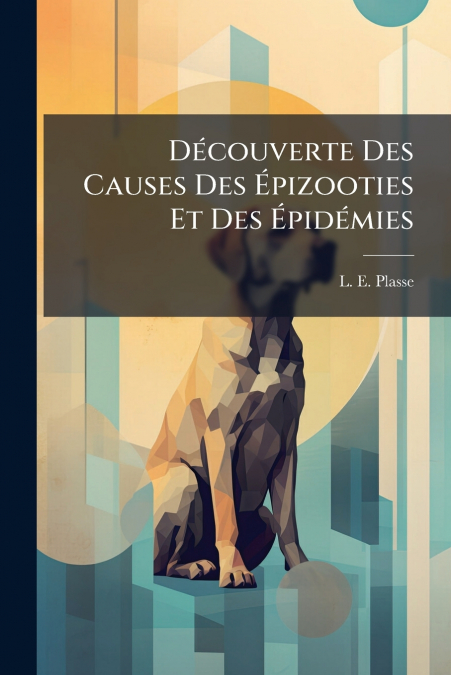
Découverte Des Causes Des Épizooties Et Des Épidémies by L. E. Plasse, with the subtitle 'Causes Et Distinction De Deux Genres De Charbon......,' is a significant historical work on the causes and distinctions of epizootics and epidemics, focusing particularly on two types of anthrax. Written in French, this treatise offers insights into 19th-century veterinary medicine and public health practices. Plasse’s work provides valuable historical context for understanding the evolution of disease control and prevention strategies.This text sheds light on early efforts to differentiate between various forms of anthrax and to understand the causes of widespread animal and human illnesses. Researchers and historians of medicine will find Plasse’s observations and analyses particularly compelling for their detailed exploration of the scientific understanding of disease during this era. The book’s value lies in its contribution to the historical record of medical science and its potential to inform contemporary studies of disease transmission and control.This work has been selected by scholars as being culturally important, and is part of the knowledge base of civilization as we know it. This work was reproduced from the original artifact, and remains as true to the original work as possible. Therefore, you will see the original copyright references, library stamps (as most of these works have been housed in our most important libraries around the world), and other notations in the work.This work is in the public domain in the United States of America, and possibly other nations. Within the United States, you may freely copy and distribute this work, as no entity (individual or corporate) has a copyright on the body of the work.As a reproduction of a historical artifact, this work may contain missing or blurred pages, poor pictures, errant marks, etc. Scholars believe, and we concur, that this work is important enough to be preserved, reproduced, and made generally available to the public. We appreciate your support of the preservation process, and thank you for being an important part of keeping this knowledge alive and relevant.





