Aulus Cornelius Celsus / Theodoor Jansson Ab Almeloveen
 Librería Samer Atenea
 Kálamo Books
 Librería Elías (Asturias)
 Librería Kolima (Madrid)
 Librería Proteo (Málaga)
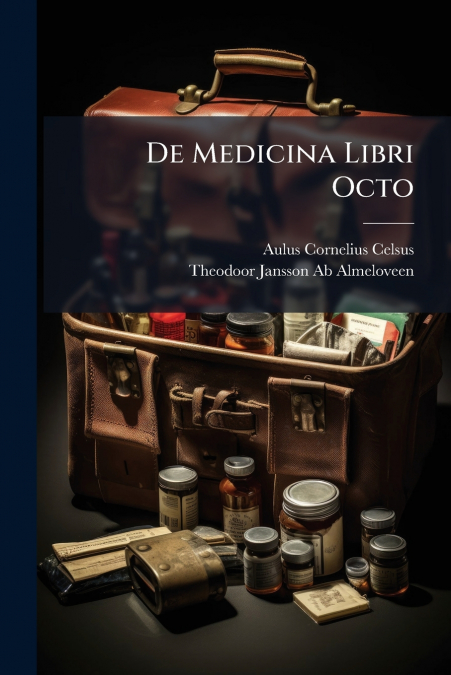
De Medicina Libri Octo, written by Aulus Cornelius Celsus, is a comprehensive encyclopedia of Roman medicine, likely compiled in the first century CE. This work, presented here in its original Latin, covers a vast array of medical knowledge, from surgery and pharmacology to diet and hygiene. Celsus meticulously details various diseases, their symptoms, and treatments, providing invaluable insights into the medical practices of the Roman world.Celsus’s treatise is prized not only for its encyclopedic nature but also for its clear and elegant prose. The work demonstrates a deep understanding of Greek medical traditions, which Celsus adeptly synthesized and adapted for a Roman audience. This edition, carefully prepared by Theodoor Jansson Ab Almeloveen, offers scholars and enthusiasts alike a critical resource for studying the history of medicine and the intellectual achievements of classical antiquity. 'De Medicina' remains a cornerstone of medical history, offering a fascinating glimpse into the evolution of medical thought and practice.This work has been selected by scholars as being culturally important, and is part of the knowledge base of civilization as we know it. This work was reproduced from the original artifact, and remains as true to the original work as possible. Therefore, you will see the original copyright references, library stamps (as most of these works have been housed in our most important libraries around the world), and other notations in the work.This work is in the public domain in the United States of America, and possibly other nations. Within the United States, you may freely copy and distribute this work, as no entity (individual or corporate) has a copyright on the body of the work.As a reproduction of a historical artifact, this work may contain missing or blurred pages, poor pictures, errant marks, etc. Scholars believe, and we concur, that this work is important enough to be preserved, reproduced, and made generally available to the public. We appreciate your support of the preservation process, and thank you for being an important part of keeping this knowledge alive and relevant.