 Librería Samer Atenea
 Kálamo Books
 Librería Elías (Asturias)
 Librería Kolima (Madrid)
 Librería Proteo (Málaga)
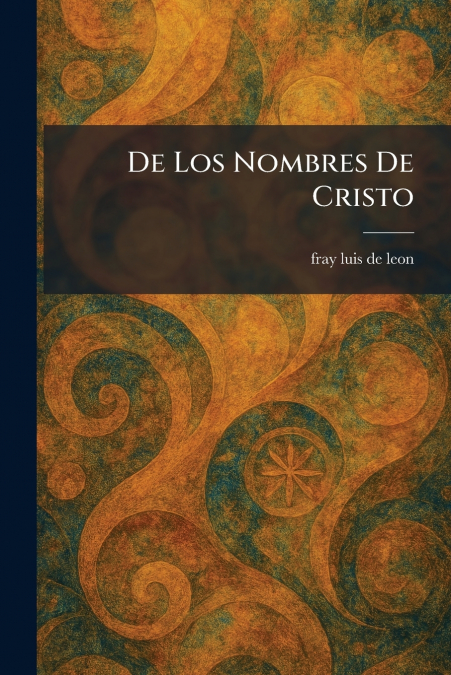
'De Los Nombres De Cristo' es una de las obras cumbres de la literatura mÃstica y teológica del Siglo de Oro español. Escrita por el fraile agustino Fray Luis de León, esta obra maestra presenta un diálogo platónico entre tres personajes que se retiran a la paz de la naturaleza para meditar sobre los diversos apelativos que las Sagradas Escrituras atribuyen a Jesucristo.A través de un análisis profundo de nombres como 'Pimpollo', 'Pastor', 'Monte' y 'Esposo', el autor despliega una exégesis bÃblica de gran rigor combinada con una prosa lÃrica excepcional. La obra representa la sÃntesis perfecta del humanismo renacentista, donde la filosofÃa clásica y la tradición cristiana se encuentran para elevar el alma hacia la contemplación divina. Fray Luis de León emplea un lenguaje armonioso y elegante que no solo busca instruir al lector en la doctrina teológica, sino también conmover su espÃritu mediante la belleza de la palabra.Considerada una pieza fundamental de la prosa castellana, esta obra sigue siendo un referente esencial para los estudiosos de la literatura, la teologÃa y la mÃstica, destacando por su valor intelectual y su trascendencia espiritual.This work has been selected by scholars as being culturally important, and is part of the knowledge base of civilization as we know it. This work was reproduced from the original artifact, and remains as true to the original work as possible. Therefore, you may see the original copyright references, library stamps (as most of these works have been housed in our most important libraries around the world), and other notations in the work.This work is in the public domain in the United States of America, and possibly other nations. Within the United States, you may freely copy and distribute this work, as no entity (individual or corporate) has a copyright on the body of the work.As a reproduction of a historical artifact, this work may contain missing or blurred pages, poor pictures, errant marks, etc. Scholars believe, and we concur, that this work is important enough to be preserved, reproduced, and made generally available to the public. We appreciate your support of the preservation process, and thank you for being an important part of keeping this knowledge alive and relevant.