De l’oreille à l’écoute

De l’oreille à l’écoute

De l'oreille à l'écoute

Nathalie Toye-Dubs

112,02 €
IVA incluido
Disponible
Editorial:
British Archaeological Reports (Oxford) Ltd
Año de edición:
2016
Materia
Historia antigua: hasta c. 500 e. c.
ISBN:
9781407314600
Páginas:
256
Encuadernación:
Bolsillo
112,02 €
IVA incluido
Disponible

Selecciona una librería:

  • Librería Samer Atenea
  • Librería Aciertas (Toledo)
  • Kálamo Books
  • Librería Perelló (Valencia)
  • Librería Elías (Asturias)
  • Donde los libros
  • Librería Kolima (Madrid)
  • Librería Proteo (Málaga)

This book deals with a category of documents attesting to piety from individuals in ancient Egypt which develops the topic of a god who listens to prayer. The reference corpus is made up of stelae, with depictions of one or more human ears-sometimes accompanied by the depiction of an offering-and votive ears, along with prayers on various objects where the invoked deity is referred to as the god who listens to prayer. These testimonies occur only during the New Kingdom (1539-1080 BC); after this period there is almost no further mention of a god who listens to prayer, though personal piety continues to increase until the Late Period. If the corpus of ear stelae is extended to include all items that mention the god who listens, a surprising chronological partition emerges which enables a link to be established between the abandonment of ear stelae and the development of oracular consultations by individuals. It therefore appears that the “hearing documents” are a key driver of change in the New Kingdom official religion, rather than being a mere consequence of it. The book contains a preface, a foreword, the main text, a bibliography, appendices, plates and indices. The documentation corpus is listed in the appendices. Ce livre s’intéresse à une catégorie de documents de piété laissés par des individus en Egypte ancienne qui développent le thème du dieu qui écoute les prières. Le corpus de base se compose de stèles avec une ou plusieurs représentations d’oreilles de type humain-parfois accompagné d’une scène d’offrande-et d’oreilles votives ainsi que de prières présentent sur différents objets, dans lesquelles la divinité est qualifiée de divinité qui écoute les prières.Ces témoignages sont attestés seulement au Nouvel Empire (1539-1080 a. J-C) ; après cette période, il n’y a presque plus de mentions du dieu qui écoute les prières alors que la piété personnelle ne cesse de se développer jusqu’aux époques tardives.L’élargissement du corpus des stèles à oreilles à celui des mentions du dieu qui écoute permet d’éclaircir cette répartition chronologique surprenante et d’établir le lien entre l’abandon des stèles à oreilles et le développement des consultations oraculaires par les privés.Ainsi il apparaît que plutôt qu’une conséquence, les « documents de l’écoute » se révèlent être un des facteurs clés des modifications qui s’opèrent dans la religion d’État au Nouvel Empire. Ce livre contient une préface, un avant-propos, le texte principal, une bibliographie, des annexes et des index. Le corpus documentaire est donné sous forme de listing en les annexes. 
Artículos relacionados

  • Iron Age Societies in the Severn-Cotswolds
    Tom Moore
    The central theme of this study is an examination of the processes of change in Iron Age social organisation and identity on a regional scale using the Severn-Cotswolds area in England as a case study. It aims to provide a coherent narrative of the period in the region based on the wealth of current data now available, providing a basic storyboard against which future studies c...
    Disponible

    144,57 €

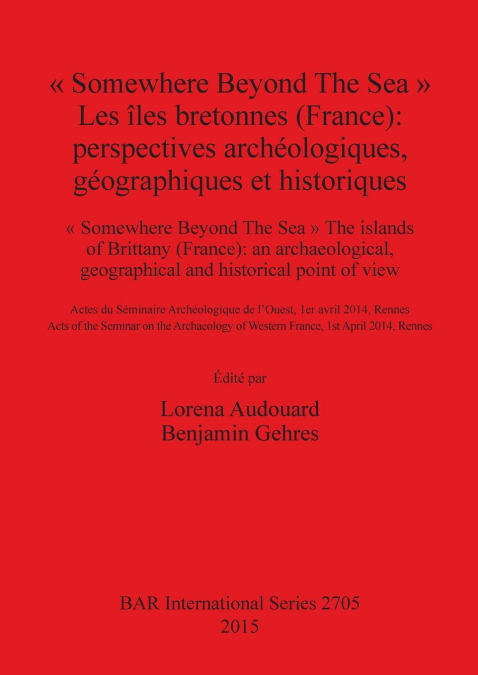
  • Somewhere Beyond The Sea Les îles bretonnes (France)
    The Seminar on the Archaeology of Western France, which focused on the islands of Brittany, was held on 1 April 2014 at the University of Rennes 1. The desire to organize this seminar arose spontaneously from the dynamism which currently animates archaeological research on island spaces of the western seaboard of France. Indeed, the seminar took place during a pivotal period of...
    Disponible

    86,11 €

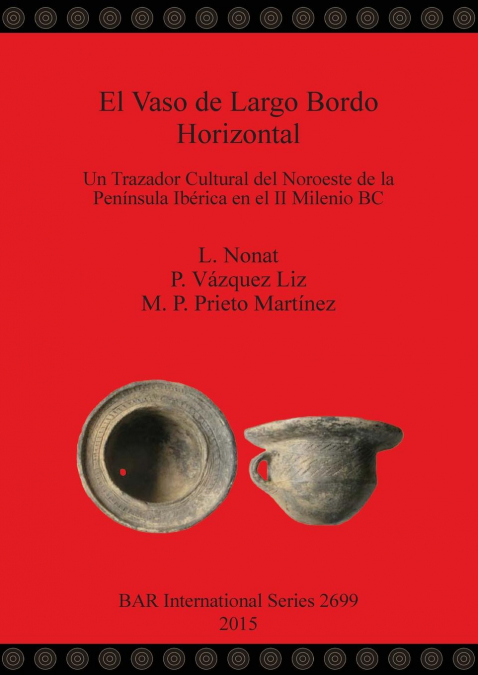
  • El Vaso de Largo Bordo Horizontal
    L. Nonat / LNonat / M. P. Prieto Martínez / MPPrieto Martínez / P. Vázquez Liz / PVázquez Liz
    In this paper the authors study a specific type of pottery from the northwest Iberian Peninsula, known as the Wide Horizontal Rim (WHR) vessel. One of its distinctive aspects is precisely the fact that it is exclusively found in this region, which now comprises the Spanish region of Galicia and northern Portugal, as far south as the River Duero. This type of pottery, of which t...
    Disponible

    115,71 €

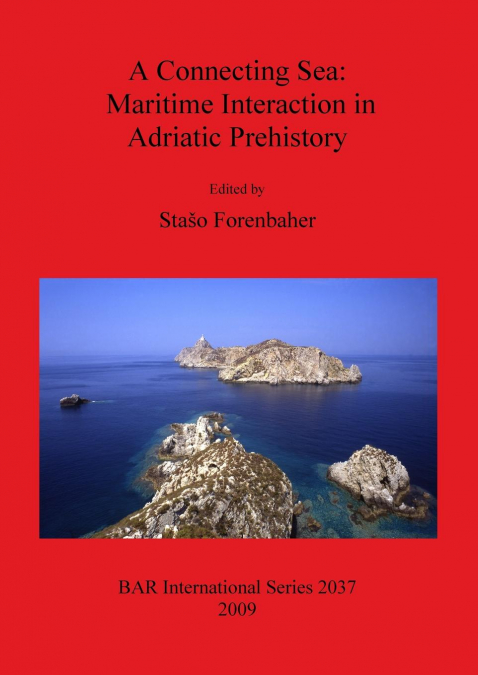
  • A Connecting Sea
    Stašo Forenbaher
    This book includes papers stemming from a session at the EAA conference held in Zadar in September 2007.                          ...
    Disponible

    79,97 €

  • The Roman Pottery Production Site at Wickham Barn, Chiltington, East Sussex
    Chris Butler / Malcolm Lyne
    The excavations undertaken at Chiltington in East Sussex revealed two Roman pottery kilns, as well as remains from prehistory and from medieval period.The kilns are well documented, and all the finds were examined and catalogued. Three phases were identified. The pottery produced on the site indicate a strong New Forest influence. ...
    Disponible

    55,62 €

  • Kurgans, Ritual Sites, and Settlements
    Edited by: Jeannine Davis-Kimball, Eileen M. Murphy, Ludmila Koryakova and Leonid T. YablonskyThis richly illustrated volume adds immensely to the small but growing corpus of Eurasian Archaeology published in the English language. Comprised of thirty articles, the authors have focused on the Bronze Age, continuing to include the first millennium BC Early Iron Age, with a termin...
    Disponible

    158,26 €