
Inicio > Derecho > Derecho internacional > Das russische Verfassungsrecht auf dem Weg zum Föderalismus und zurück. Zum Konflikt von Rechtsnormen und -wirklichkeit in der Russländischen Föderation von 1991 bis 2009
Das russische Verfassungsrecht auf dem Weg zum Föderalismus und zurück. Zum Konflikt von Rechtsnormen und -wirklichkeit in der Russländischen Föderation von 1991 bis 2009

Das russische Verfassungsrecht auf dem Weg zum Föderalismus und zurück. Zum Konflikt von Rechtsnormen und -wirklichkeit in der Russländischen Föderation von 1991 bis 2009

Das russische Verfassungsrecht auf dem Weg zum Föderalismus und zurück. Zum Konflikt von Rechtsnormen und -wirklichkeit in der Russländischen Föderation von 1991 bis 2009

Anna Dost

57,10 €
IVA incluido
Disponible
Editorial:
ibidem
Año de edición:
2012
Materia
Derecho internacional
ISBN:
9783838202921
57,10 €
IVA incluido
Disponible

Selecciona una librería:

  • Librería Samer Atenea
  • Librería Aciertas (Toledo)
  • Kálamo Books
  • Librería Perelló (Valencia)
  • Librería Elías (Asturias)
  • Donde los libros
  • Librería Kolima (Madrid)
  • Librería Proteo (Málaga)

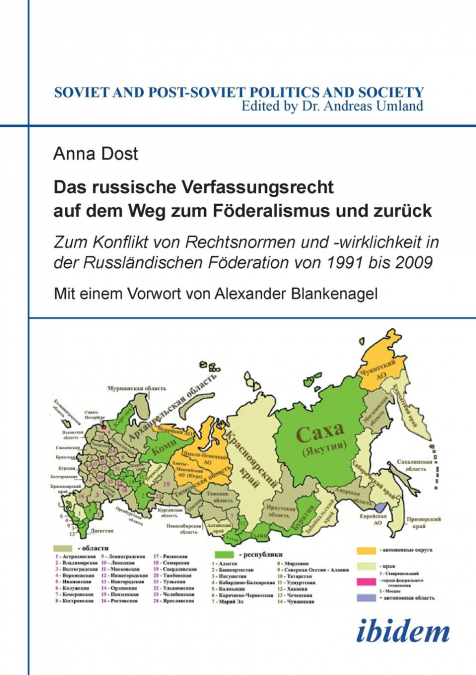
Große Territorialstaaten organisieren sich häufig föderal. Die „scheinföderale' Tradition der UdSSR bot der Russischen Föderation allerdings keine guten Startbedingungen. Ihre Entwicklung vor und nach 1993 führte zu einem Nebeneinander sich widersprechender Bestimmungen auf zentraler Ebene und in den sog. Föderationssubjekten (Gliedstaaten). Rechtsnormen reflektieren in der Russischen Föderation noch häufiger als in anderen Staaten aktuelle Machtkonstellationen und sind unbeständig. Darüber hinaus führt die teilweise Selbständigkeit der Föderationssubjekte in der Rechtswirklichkeit angesichts autoritärer Regionalregime zu einer Verstärkung von Rechtsunsicherheit. Auch die jüngste Stärkung zentripetaler Tendenzen hatte nicht mehr, sondern eher weniger Rechtsstaatlichkeit zur Folge.Insofern als Verfassungswirklichkeit nur anhand informaler Prozesse dargestellt werden kann, entwickelt diese Studie eine „Theorie des Informalen'. Darauf aufbauend werden der verfassungsrechtliche föderale Aufbau, die Aufteilung der Gesetzgebungskompetenzen, die föderalen Institutionen und der Beitrag der föderalen Gliedstaaten zum Gesetzgebungsprozess sowohl mit traditionellen juristischen Methoden als auch auf informale Prozesse hin untersucht. Nach einer Betrachtung der Rechtsprechung des Verfassungsgerichts zu föderalen Fragen wird das spezifische Verhältnis zweier Subjekte, der Republik Tatarstan und des Sverdlovsker Gebiets, zum Moskauer Zentrum analysiert. Beide Regionen ringen um die Stärkung föderaler Tendenzen, und es werden ihre Erfolge kurz bilanziert. Die Arbeit wirft über eine rechtliche Untersuchung hinaus Licht auf die politische und gesellschaftliche Wirklichkeit des russischen Föderalismus. 3
Artículos relacionados

  • Comparative regulation, economic analysis, and applications of private equity in the united states and european union
    Irini Liakopoulou
    The present work examines the economics and legal doctrine of private equity. After a consideration of private equity’s origins, the book will explore the evolution of private equity in the United States and Europe. The reference economic model then will be reconstructed, with particular attention to financial flows to and from private equity firms and funds. This reconstructio...
  • Complicity in International Law
    Dimitris Liakopoulous
    Complicity in International Law aims to analyze questions arising from a state’s complicity in conflict with another state or an international organization. On the basis of international legal provisions, a state that assists the illicit fact of another state or an international organization in turn commits an offense if it is aware of the main fact and is bound by the same obl...
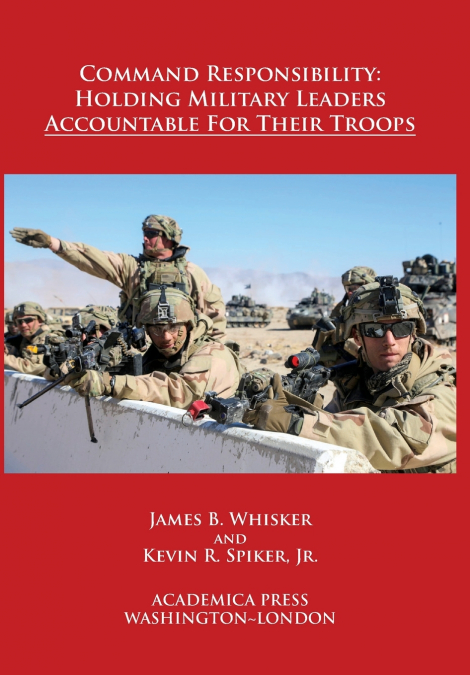
  • Command responsibility
    James B Whisker / Kevin R Spiker
    Command responsibility, or executive accountability, assumes that leaders are responsible for the actions of their subordinates. If subordinates misbehave, violate basic moral laws, transgress international law, or thwart international standards of behavior, their leader may be called before to justice. Standards that set the boundaries of human action have been evolving for ma...
  • International Organizations and Reparations
    Dimitris Liakopoulos
    In the first part of this book, noted legal scholar Dimtris Liakopoulos deals with reconstructing the legal regulatory framework governing human rights violations in the activities of organizations. After identifying rules that are generally applicable to organizations’ offenses and govern the profile of reparations, this study assesses primary rules that guarantee the right to...
  • International Organizations and Legal Sanctions Against Governments
    Dimitris Liakopoulos
    This book examines the relationship between governments and international organizations under international law. After surveying the policing powers of international organizations under international law, it illustrates some normative aspects of law that distinguish regulation from enforcement via study of recent legal cases before international judicial bodies. According to Di...
  • The EU Foreign Subsidies Regulation
    Andreas Reindl / Isabelle Van Damme
    'The EU Foreign Subsidies Regulation' is a pioneering manual authored by legal experts Andreas Reindl and Isabelle Van Damme. This essential guide, the first of its kind, is tailored for legal practitioners, offering a thorough exploration of the tools and mechanisms embedded within this novel European regulatory framework. The authors meticulously dissect the EU Foreign Subsid...