Das Eeg

Das Eeg

B. Rockstroh / T. Elbert / W. Lutzenberger

91,28 €
IVA incluido
Disponible
Editorial:
Springer Nature B.V.
Año de edición:
1984
Materia
Psicología
ISBN:
9783540134473
91,28 €
IVA incluido
Disponible

Selecciona una librería:

  • Librería Samer Atenea
  • Librería Aciertas (Toledo)
  • Kálamo Books
  • Librería Perelló (Valencia)
  • Librería Elías (Asturias)
  • Donde los libros
  • Librería Kolima (Madrid)
  • Librería Proteo (Málaga)

In seinem ersten Bericht über Messungen elektrischer Aktivitäten beim Menschen kommt der Jenaer Psychiater Hans Berger 1929 zu dem Schluß: 'Ich glaube in der Tat, daß die von mir hier ausführlich geschilderte cerebrale Kurve im Gehirn ent­ steht und dem Elektrocerebrogramm der Säugetiere von Neminski entspricht. Da ich aus sprachlichen Gründen das Wort ,Elektrocerebrogramm’, das sich aus grie­ chischen und lateinischen Bestandteilen zusammensetzt, für barbarisch halte, möchte ich für diese von mir hier zum erstenmal beim Menschen nachgewiesene Kurve in Anlehnung an den Namen ,Elektrokardiogramm’ den Namen ,Elektren­ kephalogramm’ vorschlagen' (S. 567). Dies war wohl die Geburtsstunde des EEGs beim Menschen. Von Berger oder Neminski (s. Brazier 1984) wurden Frequenzbän­ der als 'Wellen erster (10-15/s) und zweiter (20-32/s) Ordnung' beschrieben; heute sprechen wir in ähnlicher Weise von 'Alpha'- und 'Beta'-Wellen. Bereits in der ersten Hälfte des 19. Jahrhunderts wurden Galvanis Befunde, daß elektrische Veränderungen die Basis von Nerven- und Muskelaktivität dar­ stellen, akzeptiert. Daraufhin folgte auch bald die Frage nach elektrischen Pro­ zessen im Gehirn. Dem Liverpooler Physiologen Richard Caton ist die Ent­ deckung zuzuschreiben, daß 'feeble currents of varyingdirection pass through the multiplier when the electrodes are placed on two points of the external surfa­ ce, or one electrode on the grey matter and one on the surface of the skull' (1875, S. 278). Die registrierten Strom schwankungen wurden also schon vor der Jahr­ hundertwende als 'Ausdruck der Tätigkeit der Hirnrinde' (zit. bei Berger 1929) bewertet, so von Caton (1875) oder Fleischl von Marxow (s. Brazier 1984).


Artículos relacionados

  • Drinkers of Infinity
    Arthur Koestler
    This selection of essays, book-reviews, broadcast talks and papers delivered to learned societies reflects the extraordinary breadth of Arthur Koestler’s interests. From the trial of Galileo to the pleasures of canoeing down the Loire, from a detailed examination of the ‘memory’ of flatworms to an equally detailed examination of the futility of quarantining dogs, the author wri...
    Disponible

    17,24 €

  • Gordy the Rabbit has ADHD
    Jessie Shepherd
    Often when people are given a mental health disorder diagnosis the weaknesses are clear and overwhelmingly emphasized, while the strengths are ignored or forgotten. The mental health children's book series 'What Mental Disorder?' challenges the stigma against therapy and diagnosis. It enlists the reader to view the character as a whole being and not as a mental issu...
    Disponible

    16,30 €

  • The Paradoxical Ego
    Eugene Halliday / Zhu Kabere
    Three particular themes are basic to this study. First, that the human race and its environment are involved in a slowly progressive process of revelation and understanding of its inherent features; and that we are all participating in this ongoing evolutionary cycle. Second, and closely related to the first tenet, man is not separable from his environment. We all share in this...
    Disponible

    14,56 €

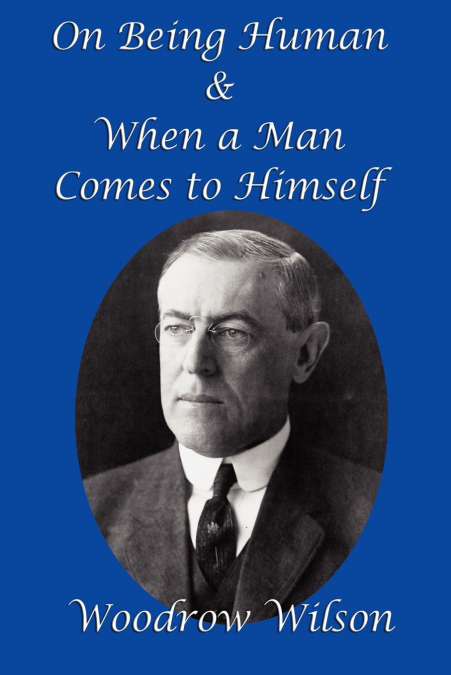
  • On Being Human and When a Man Comes to Himself
    Woodrow Wilson
    Before he became the 28th President of the United States (1913-21), the 34th Governor of New Jersey (1911-13), or even the 13th President of Princeton University (1902-10), Woodrow Wilson (1856-1924) was a scholar and professor. In 1885, he received his Ph.D. in history and political science from Johns Hopkins University, and in 1897, he was granted tenure at Princeton Universi...
    Disponible

    6,28 €

  • Bridge Over The River Why
    David Cooper / Deborah Cooper
    'In Bridge Over the River Why, the Coopers have succeeded in a dual task documenting their own journey through the grief of losing their son Eli by suicide, while at the same time providing a valuable resource for anyone who has had to face the same terrible tragedy. They start with the premise that 'doing and feeling' are the key components of moving forward and have a core me...
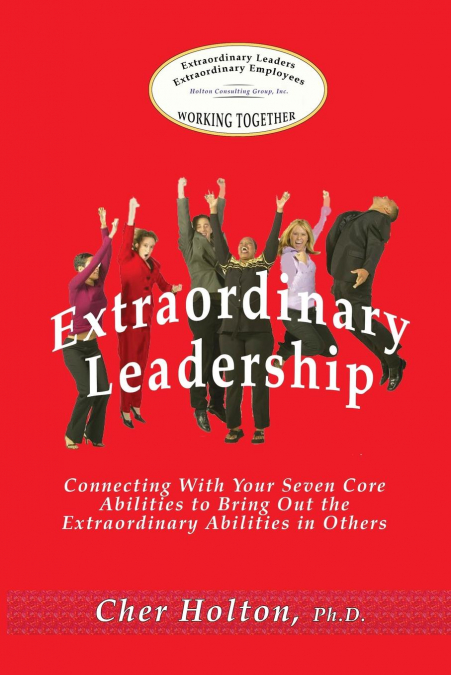
  • Extraordinary Leadership
    Cher Holton
    This transformational leadership book, grounded in state-of-the-art research and proven by real-life application in the trenches, moves beyond traditional leadership theories to introduce you to seven incredible Core Abilities and shows you how to connect with them to become an Extraordinary Leader who can bring out the very best in your people.All the techniques in the world w...
    Disponible

    23,85 €