 Librería Samer Atenea
 Kálamo Books
 Librería Elías (Asturias)
 Librería Kolima (Madrid)
 Librería Proteo (Málaga)
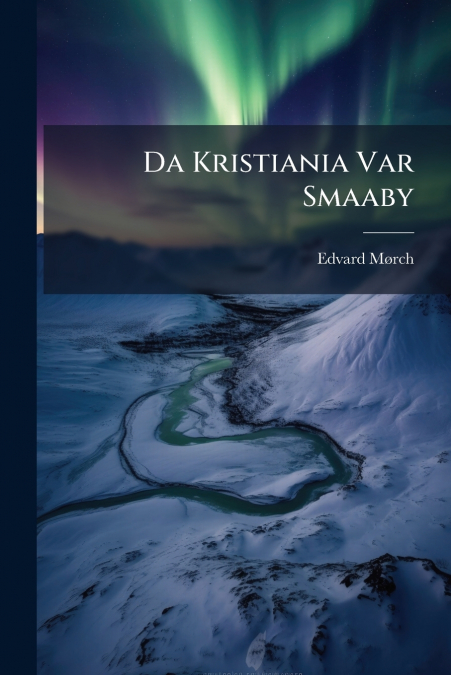
I 'Da Kristiania Var Smaaby', Edvard Mørch deler sine erindringer fra en svunden tid, hvor Oslo, dengang kendt som Kristiania, var en langt mindre og mere intim by. Gennem Mørchs levende beskrivelser får læseren et unikt indblik i livet i Kristiania i det 19. århundrede, med dens skikke, personligheder og sociale strukturer. Bogen er ikke blot en personlig beretning, men også et værdifuldt historisk dokument, der kaster lys over en vigtig periode i byens udvikling. Mørchs observationer er skarpe og detaljerede, hvilket gør bogen til en fascinerende læsning for alle med interesse for Oslos historie og det norske samfunds udvikling. Med 'Da Kristiania Var Smaaby' får læseren en sjælden mulighed for at træde tilbage i tiden og opleve Kristiania, før byen voksede til den moderne metropol, den er i dag. En uundværlig bog for lokalhistorikere og alle, der ønsker at forstå Oslos rødder.This work has been selected by scholars as being culturally important, and is part of the knowledge base of civilization as we know it. This work was reproduced from the original artifact, and remains as true to the original work as possible. Therefore, you will see the original copyright references, library stamps (as most of these works have been housed in our most important libraries around the world), and other notations in the work.This work is in the public domain in the United States of America, and possibly other nations. Within the United States, you may freely copy and distribute this work, as no entity (individual or corporate) has a copyright on the body of the work.As a reproduction of a historical artifact, this work may contain missing or blurred pages, poor pictures, errant marks, etc. Scholars believe, and we concur, that this work is important enough to be preserved, reproduced, and made generally available to the public. We appreciate your support of the preservation process, and thank you for being an important part of keeping this knowledge alive and relevant.