
Inicio > Humanidades > Filosofía > Filosofía no occidental > Filosofía oriental y de la India > D. T. Suzuki on the Unconscious in Zen Art, Meditation, and Enlightenment
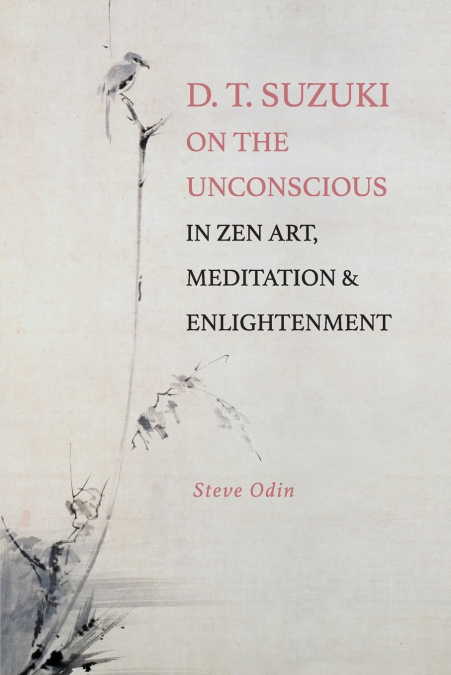
D. T. Suzuki on the Unconscious in Zen Art, Meditation, and Enlightenment

D. T. Suzuki on the Unconscious in Zen Art, Meditation, and Enlightenment

Steve Odin

167,20 €
IVA incluido
Consulta disponibilidad
Editorial:
State University of New York Press
Año de edición:
2025
Materia
Filosofía oriental y de la India
ISBN:
9798855803044

Selecciona una librería:

  • Librería Samer Atenea
  • Librería Aciertas (Toledo)
  • Kálamo Books
  • Librería Perelló (Valencia)
  • Librería Elías (Asturias)
  • Donde los libros
  • Librería Kolima (Madrid)
  • Librería Proteo (Málaga)

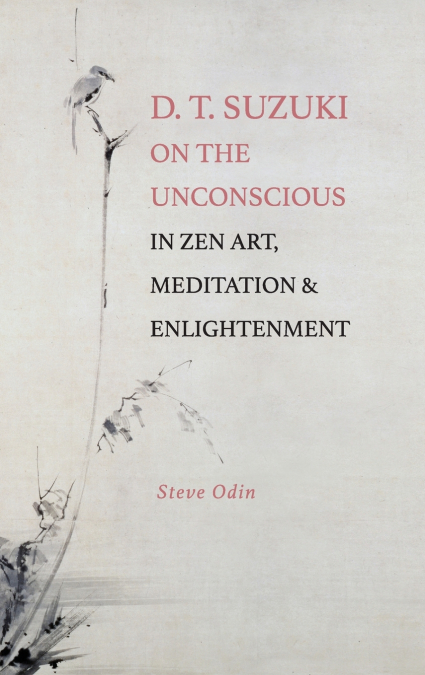
A comprehensive study of D. T. Suzuki’s Zen philosophy and philosophical psychology in relation to his Buddhist understanding of the 'cosmic Unconscious.'This book explores how the Japanese philosopher D. T. Suzuki (1870-1966) developed an integral synthesis of Eastern and Western sources to establish a modern philosophical psychology of the 'cosmic Unconscious,' which he in turn used as the basis to interpret every aspect of Zen art, meditation, and enlightenment. Beyond Freud’s personal unconscious and Jung’s collective unconscious, according to Suzuki, is the cosmic Unconscious of Zen, which as absolute nothingness is the fountain of inexhaustible creative potentialities and the source of all Zen-inspired arts. The book demonstrates that, like the Kyoto School of modern Japanese philosophy, Suzuki’s Zen endeavors to overcome the existential problem of nihilism or relative nothingness by shifting to the openness of absolute nothingness wherein emptiness is fullness and all things are disclosed in the evanescent beauty of their suchness. Suzuki, however, formulates his scheme in terms of a depth psychology where the cosmic Unconscious is the encompassing locus of absolute nothingness. Ultimately, the book argues that, by integrating both Eastern and Western views of the unconscious psyche, including the different schools of Zen and Mahayana Buddhism, as well as American, French, and German theories of the unconscious, Suzuki’s Zen concept of the cosmic Unconscious constitutes a significant original contribution to philosophical psychology.


Artículos relacionados

  • Bhagavad Gītā
    Swami Lakshmanjoo
    This treasure of knowledge was one of the last works by Swami Lakshmanjoo. He said, "It was a new revelation of the supreme secrets, hidden in the Kashmiri recension of the Bhagavad Gita." Based on Abhinavagupta's commentary of the Gitarthasamgraha, "The Essence of the Gita", Swamiji declared that, "this revelation was initiated by his direct experience of the state of Univ...
  • Fiery World III
    Agni Yoga Society
    Fiery World III is the eleventh book from the Agni Yoga Series which is composed of fourteen books. In them is found a synthesis of ancient Eastern beliefs and modern Western thought and a bridge between the spiritual and the scientific. Unlike previous yogas, Agni Yoga is a path not of physical disciplines, meditation, or asceticism—but of practice in daily life. It is the yog...
    Disponible

    14,47 €

  • Bhagavad Gī̄tā
    Swami Lakshmanjoo
    This treasure of knowledge was one of the last works by Swami Lakshmanjoo. He said, "It was a new revelation of the supreme secrets, hidden in the Kashmiri recension of the Bhagavad Gita." Based on Abhinavagupta's commentary of the Gitarthasamgraha, "The Essence of the Gita", Swamiji declared that, "this revelation was initiated by his direct experience of the state of Univ...
    Disponible

    26,24 €

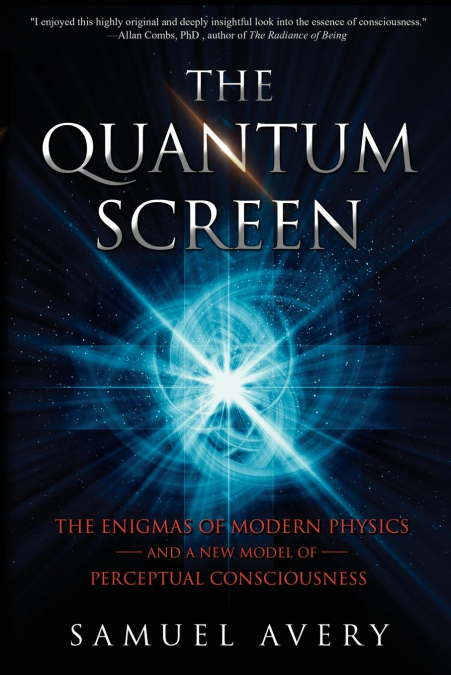
  • The Quantum Screen
    Samuel Avery
    What is the connection between physics and consciousness? In this groundbreaking new book, Samuel Avery presents the quantum screen, a paradigm-shifting model of perceptual consciousness and of the world. This model looks to the enigmas of modern physics to demonstrate the primacy of consciousness—the essential oneness of spirit and matter.Our intellectual culture is divided be...
    Disponible

    13,80 €

  • Confucian Analects
    Confucius
    The superior man bends his attention to what is radical. That being established, all practical courses naturally grow up. Filial piety and fraternal submission,-are they not the root of all benevolent actions?To rule a country of a thousand chariots, there must be reverent attention to business, and sincerity; economy in expenditure, and love for men; and the employment of the ...
  • Leaves of Morya’s Garden II
    Agni Yoga Society
    Leaves of Morya's Garden II (Illumination) is the second book from the Agni Yoga Series which is composed of fourteen books. In them is found a synthesis of ancient Eastern beliefs and modern Western thought and a bridge between the spiritual and the scientific. Unlike previous yogas, Agni Yoga is a path not of physical disciplines, meditation, or asceticism—but of practice...
    Disponible

    12,10 €

Otros libros del autor

  • D. T. Suzuki on the Unconscious in Zen Art, Meditation, and Enlightenment
    Steve Odin
    A comprehensive study of D. T. Suzuki’s Zen philosophy and philosophical psychology in relation to his Buddhist understanding of the 'cosmic Unconscious.'This book explores how the Japanese philosopher D. T. Suzuki (1870-1966) developed an integral synthesis of Eastern and Western sources to establish a modern philosophical psychology of the 'cosmic Unconscious,' which he in tu...
    Disponible

    50,91 €

  • Tragic Beauty in Whitehead and Japanese Aesthetics
    Steve Odin
    This book examines Whitehead’s process aesthetics focusing the penumbral beauty of darkness and the tragic beauty of perishability, while establishing parallels with the Japanese sense of evanescent beauty. It clarifies how both traditions develop a religio-aesthetic vision of tragic beauty and its reconciliation in the supreme ecstasy of peace. ...
    Disponible

    67,75 €

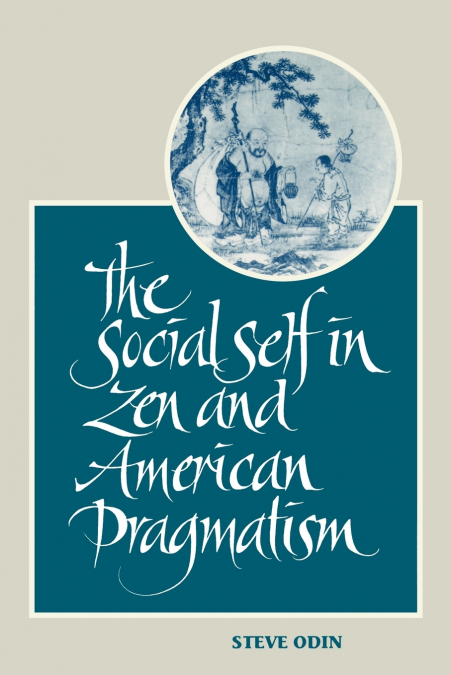
  • The Social Self in Zen and American Pragmatism
    Steve Odin
    The first book on East-West comparative thought to critically analyze the Zen Buddhist model of self in modern Japanese philosophy from the standpoint of American pragmatismThe thesis of this work is that in both modern Japanese philosophy and American pragmatism there has been a paradigm shift from a monological concept of self as an isolated 'I' to a dialogical concept of the...
    Disponible

    50,20 €