 Librería Samer Atenea
 Kálamo Books
 Librería Elías (Asturias)
 Librería Kolima (Madrid)
 Librería Proteo (Málaga)
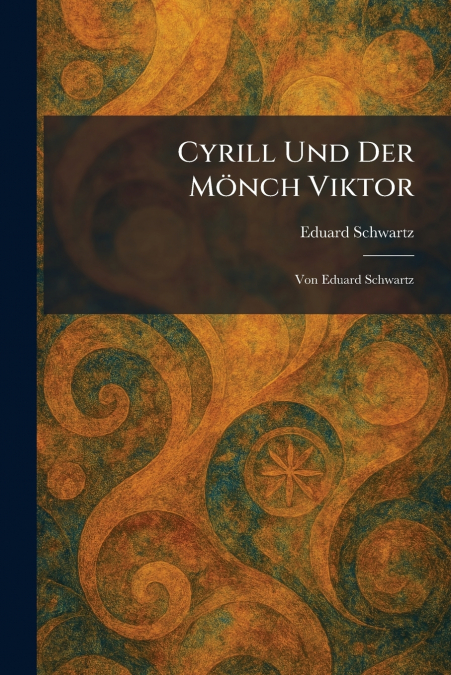
In 'Cyrill Und Der Mo?nch Viktor' präsentiert der renommierte Philologe und Kirchenhistoriker Eduard Schwartz eine tiefgreifende Untersuchung zur Kirchengeschichte der Spätantike. Das Werk widmet sich der komplexen Beziehung und den theologischen Auseinandersetzungen zwischen Cyrill von Alexandria und dem Mönch Viktor. Schwartz analysiert dabei die kirchenpolitischen Spannungen des 5. Jahrhunderts und beleuchtet die entscheidende Rolle des Mönchtums innerhalb der dogmatischen Konflikte dieser Zeit.Durch die kritische Auswertung historischer Quellen bietet dieser Text wertvolle Einblicke in die Entwicklung der christlichen Lehre und die Machtstrukturen der frühen Kirche. 'Cyrill Und Der Mo?nch Viktor' ist ein unverzichtbares Referenzwerk für Wissenschaftler und Leser, die sich für Patristik, antike Philologie und die Ursprünge kirchlicher Institutionen interessieren. Die sachliche und präzise Darstellung macht die historischen Akteure und ihre Beweggründe in einem entscheidenden Moment der Religionsgeschichte greifbar.This work has been selected by scholars as being culturally important, and is part of the knowledge base of civilization as we know it. This work was reproduced from the original artifact, and remains as true to the original work as possible. Therefore, you may see the original copyright references, library stamps (as most of these works have been housed in our most important libraries around the world), and other notations in the work.This work is in the public domain in the United States of America, and possibly other nations. Within the United States, you may freely copy and distribute this work, as no entity (individual or corporate) has a copyright on the body of the work.As a reproduction of a historical artifact, this work may contain missing or blurred pages, poor pictures, errant marks, etc. Scholars believe, and we concur, that this work is important enough to be preserved, reproduced, and made generally available to the public. We appreciate your support of the preservation process, and thank you for being an important part of keeping this knowledge alive and relevant.