

 Librería Samer Atenea
 Kálamo Books
 Librería Elías (Asturias)
 Librería Kolima (Madrid)
 Librería Proteo (Málaga)
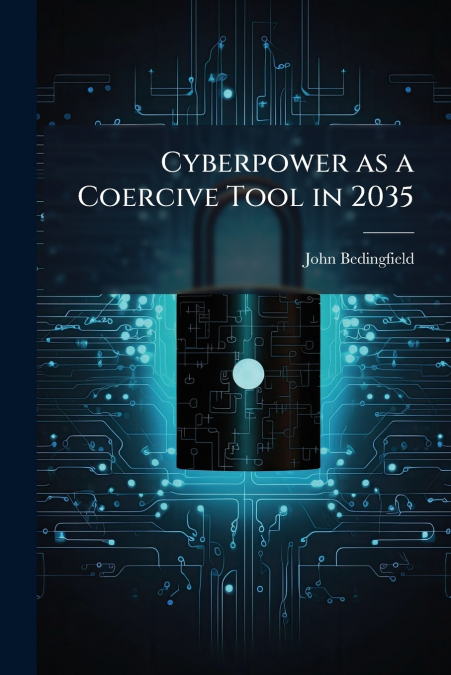
Although coercion by cyberpower alone may be limited today, if appropriate steps are taken, by the year 2035 cyberpower will be a useful coercive instrument of power. This essay explores the reasons why cyberpower is not coercive today, and ways it may become more coercive in the future. The cyber attacks employed against Estonia and Iran provide evidence cyberpower is currently not coercive, as do today’s unique cyber attributes. Subsequently, many experts criticize the coercive ability of cyber tools, arguing the ability to quickly deploy countermeasures to a cyber attack, imprecise cyber tools, and lack of attribution; are all reasons why cyber may not be coercive. However, as technology continues to improve and proliferate, and cyber tools are further explored, just as in the early days of airpower, cyberpower may provide increasingly precise tools. Furthermore, increased attribution and weapons providing repeatable and reliable effects may emerge from a concerted investment effort. Therefore, the essay concludes, the United States should invest in forensics, repeatable tools, defense, and cyber models, simulations, and analysis to ensure dominance is maintained as cyber progresses toward a more coercive power.This work has been selected by scholars as being culturally important, and is part of the knowledge base of civilization as we know it. This work was reproduced from the original artifact, and remains as true to the original work as possible. Therefore, you will see the original copyright references, library stamps (as most of these works have been housed in our most important libraries around the world), and other notations in the work.This work is in the public domain in the United States of America, and possibly other nations. Within the United States, you may freely copy and distribute this work, as no entity (individual or corporate) has a copyright on the body of the work.As a reproduction of a historical artifact, this work may contain missing or blurred pages, poor pictures, errant marks, etc. Scholars believe, and we concur, that this work is important enough to be preserved, reproduced, and made generally available to the public. We appreciate your support of the preservation process, and thank you for being an important part of keeping this knowledge alive and relevant.





