
Inicio > > Programación informática/desarrollo de software > Cyber-Physical System Design from an Architecture Analysis Viewpoint
Cyber-Physical System Design from an Architecture Analysis Viewpoint

Cyber-Physical System Design from an Architecture Analysis Viewpoint


135,88 €
IVA incluido
Disponible
Editorial:
Springer Nature B.V.
Año de edición:
2018
Materia
Programación informática/desarrollo de software
ISBN:
9789811351365
135,88 €
IVA incluido
Disponible

Selecciona una librería:

  • Librería Samer Atenea
  • Librería Aciertas (Toledo)
  • Kálamo Books
  • Librería Perelló (Valencia)
  • Librería Elías (Asturias)
  • Donde los libros
  • Librería Kolima (Madrid)
  • Librería Proteo (Málaga)

Providing a wide variety of technologies for ensuring the safety and dependability of cyber-physical systems (CPS), this book offers a comprehensive introduction to the architecture-centric modeling, analysis, and verification of CPS. In particular, it focuses on model driven engineering methods including architecture description languages, virtual prototyping, and formal analysis methods. CPS are based on a new design paradigm intended to enable emerging software-intensive systems. Embedded computers and networks monitor and control the physical processes, usually with the help of feedback loops where physical processes affect computations and vice versa. The principal challenges in system design lie in this constant interaction of software, hardware and physics. Developing reliable CPS has become a critical issue for the industry and society, because many applications such as transportation, power distribution, medical equipment and tele-medicine are dependent on CPS. Safety and security requirements must be ensured by means of powerful validation tools. Satisfying such requirements, including quality of service, implies having formally proven the required properties of the system before it is deployed.The book is concerned with internationally standardized modeling languages such as AADL, SysML, and MARTE. As the effectiveness of the technologies is demonstrated with industrial sample cases from the automotive and aerospace sectors, links between the methods presented and industrial problems are clearly understandable. Each chapter is self-contained, addressing specific scientific or engineering problems, and identifying further issues. In closing, it includes perspectives on future directions in CPS design from an architecture analysis viewpoint.


Artículos relacionados

  • SPARK 2014 Reference Manual
    AdaCore / Altran UK Ltd
    SPARK 2014 is a programming language and a set of verification tools designed to meet the needs of high-assurance software development. SPARK 2014 is based on Ada 2012, both subsetting the language to remove features that defy verification, but also extending the system of contracts and aspects to support modular, formal verification.This manual is available online for free at ...
    Disponible

    19,91 €

  • Software and Intelligent Sciences
    Yingxu Wang
    The junction of software development and engineering combined with the study of intelligence has created a bustling intersection of theory, design, engineering, and conceptual thought. Software and Intelligent Sciences: New Transdisciplinary Findings sits at a crossroads and informs advanced researchers, students, and practitioners on the developments in computer science, theor...
  • Power System Planning Technologies and Applications
    Fawwaz Elkarmi / Nazih Abu Shikhah / Nazih Abu-Shikhah
    Planning is an important function of the management of any business, providing knowledge of future prospects and enabling prudent and appropriate decision-making. Planning is especially critical for power systems, since electricity is a fundamental part of modern societies and many conventional electrical energy resources currently in use are limited. Power System Planning Tech...
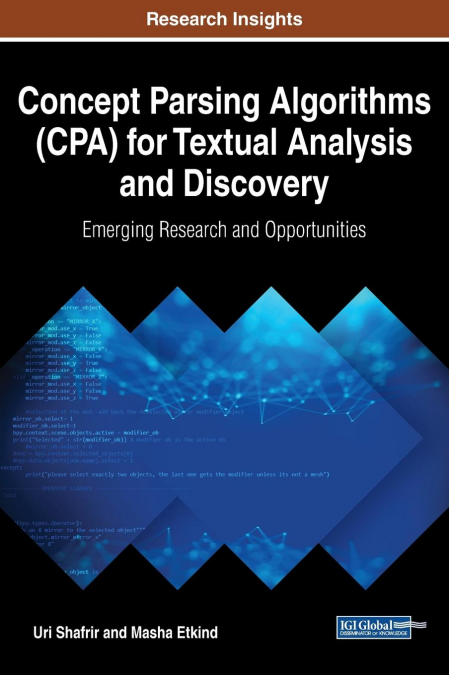
  • Concept Parsing Algorithms (CPA) for Textual Analysis and Discovery
    Masha Etkind / Uri Shafrir
    Text analysis tools aid in extracting meaning from digital content. As digital text becomes more and more complex, new techniques are needed to understand conceptual structure. Concept Parsing Algorithms (CPA) for Textual Analysis and Discovery: Emerging Research and Opportunities provides an innovative perspective on the application of algorithmic tools to study unstructured d...
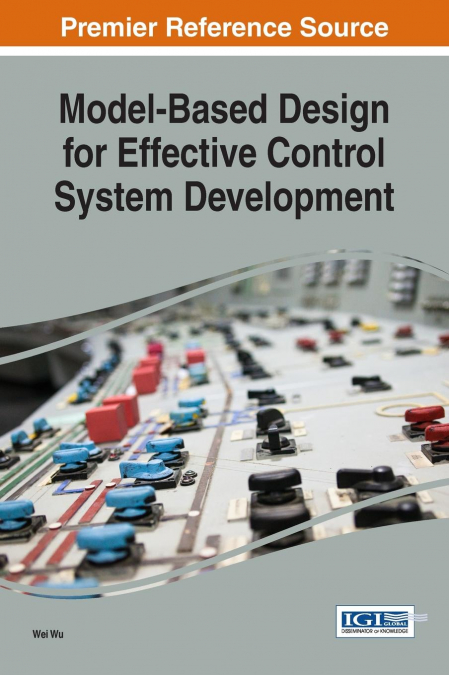
  • Model-Based Design for Effective Control System Development
    Wei Wu
    Control systems are an integral aspect of modern society and exist across numerous domains and applications. As technology advances more and more, the complexity of such systems continues to increase exponentially. Model-Based Design for Effective Control System Development is a critical source of scholarly information on model-centric approaches and implementations for control...
  • Verification, Validation and Testing in Software Engineering
    ...