 Librería Samer Atenea
 Kálamo Books
 Librería Elías (Asturias)
 Librería Kolima (Madrid)
 Librería Proteo (Málaga)
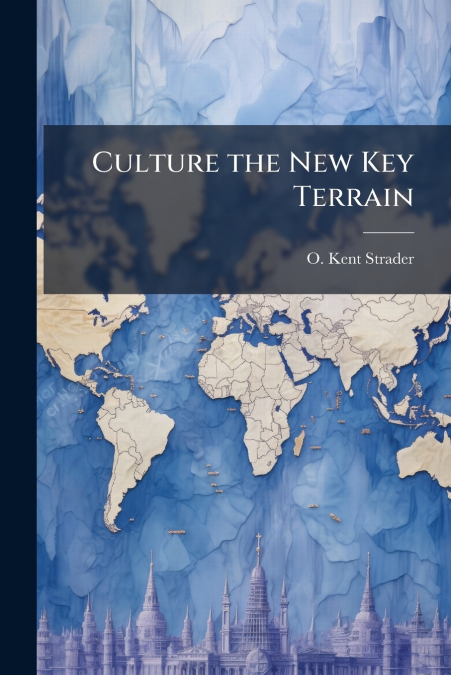
The purpose of this monograph is to provide operational commanders and staff with a glimpse of the potential of non-lethal power of culture. This monograph suggests that it maybe possible to weaponize culture, specifically through the use of cultural intelligence. In order to weaponize culture, commanders and staffs must develop competence culturally to leverage the key relationships, dependencies and vulnerabilities. Competence is 'the fusion of cultural understanding with cultural intelligence that allows focused insight into current operations.' Finally, the purpose of this monograph is to convince operational leaders that a systems approach to culture is the best method of deduction to achieve cultural competence. The framework this monograph employees includes international relations, history, theory and an analysis of current doctrine. After establishing why culture has become they new key terrain this monograph suggests modification to the Joint Intelligence Preparation of the Battlefield process and ways to incorporate cultural competence into campaign design using a systems approach to culture. The first half of this monograph makes the case for a 'new world order' that demands operational commanders and staff view the world as a complex, globalized, interconnected place. Second, it defines the three terms that are used extensively, namely, culture, cultural competence and cultural intelligence. Third, it consults military theory to examine how it has dealt with culture. There is a clear conceptual transition at this point from which the author describes how the phenomenon of culture has become a dominant aspect of war in the late twentieth century. Given this fact, and the apparent need to understand US military culture in relation to all the actors, allies, neutrals, adversaries and local population, this monograph suggests a framework for analytically and rationally comparing all the actor’s cultures to one another. It then suggests a systems approach iThis work has been selected by scholars as being culturally important, and is part of the knowledge base of civilization as we know it. This work was reproduced from the original artifact, and remains as true to the original work as possible. Therefore, you will see the original copyright references, library stamps (as most of these works have been housed in our most important libraries around the world), and other notations in the work.This work is in the public domain in the United States of America, and possibly other nations. Within the United States, you may freely copy and distribute this work, as no entity (individual or corporate) has a copyright on the body of the work.As a reproduction of a historical artifact, this work may contain missing or blurred pages, poor pictures, errant marks, etc. Scholars believe, and we concur, that this work is important enough to be preserved, reproduced, and made generally available to the public. We appreciate your support of the preservation process, and thank you for being an important part of keeping this knowledge alive and relevant.