 Librería Samer Atenea
 Kálamo Books
 Librería Elías (Asturias)
 Librería Kolima (Madrid)
 Librería Proteo (Málaga)
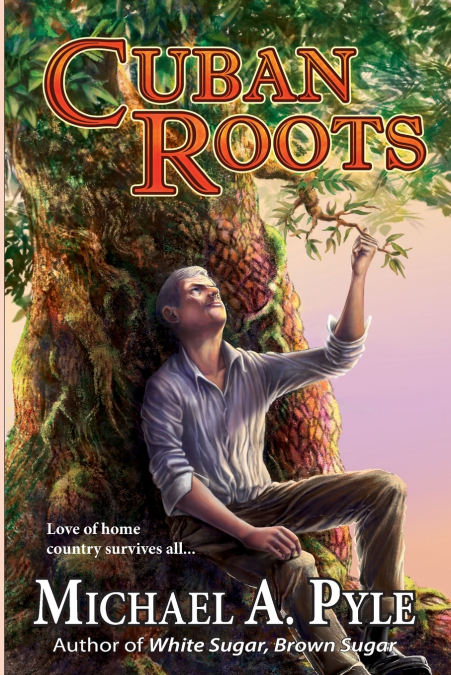
When Fidel Castro dies, eighty-four-year-old Cuban-American attorney Luis Morales is forced to confront a past he has spent a lifetime trying to understand.In Miami, Castro’s death sends crowds into the streets in celebration. In Cuba, Luis’s sister mourns. Luis does neither. His feelings are far more complicated, because his own life has been inseparably tangled with Cuba’s turbulent history.As a young man in Santiago de Cuba, Luis was swept into the events surrounding Fidel Castro’s 1953 attack on the Moncada Barracks and imprisoned alongside the revolutionaries, even though he had never intended to join their cause. In the years that followed, he witnessed the fall of Batista, the triumph of the Revolution, the transformation of Cuban society, and the painful fracture of families divided by politics, exile, fear, and distance.Decades later, Luis has built a successful law practice and family life in Miami, but Cuba has never stopped being home. He regularly returns to the island to deliver inheritances, financial assistance, and personal support to Cubans in need. His devotion to those who remained behind places him at odds with members of Miami’s Cuban exile community-and even with his own daughter, Elena, who sees his actions as a betrayal of everything their family endured.Then Luis suffers a catastrophic heart attack and a series of strokes. Trapped inside a body that can no longer speak or move, he retreats into memory. The past becomes vivid again: childhood in Santiago, youthful love, imprisonment, revolution, family separation, loss, and the country he left but never truly abandoned.At the same time, his son Franklin travels through Cuba to continue his father’s work. What begins as an obligation becomes a journey of discovery. Franklin encounters relatives, strangers, memories, and realities that challenge what he thought he knew about Cuba, exile, loyalty, and belonging. Even Elena is forced to reconsider convictions she has carried for decades.Moving between contemporary Miami and Cuba and the dramatic years surrounding the Cuban Revolution, Cuban Roots is a sweeping multigenerational novel about family, exile, identity, memory, political division, and the enduring pull of home.The novel explores both sides of the Cuban experience: those who left and those who stayed, those who condemned the Revolution and those who believed in it, and the children and grandchildren who inherited the consequences of choices they did not make. Rather than offering easy political answers, Cuban Roots asks a more intimate question: what happens when history divides a family but cannot erase its shared roots?For readers of Cuban historical fiction, Cuban-American fiction, immigrant family sagas, and novels about the Cuban Revolution, Operation Pedro Pan, exile, and cultural identity, Cuban Roots is ultimately a story about reconciliation-between generations, between opposing memories of history, and between a man and the homeland that shaped him.Because no matter how far Luis travels from Cuba, one truth remains:You can leave your homeland, but your roots may never leave you.