Inicio > Humanidades > Historia > Crisis in Costa Rica
Crisis in Costa Rica

Crisis in Costa Rica

John Patrick Bell

26,81 €
IVA incluido
Disponible
Editorial:
Univ of Chicago behalf of University of Texas
Año de edición:
1971
Materia
Historia
ISBN:
9780292772588
26,81 €
IVA incluido
Disponible

Selecciona una librería:

  • Librería Samer Atenea
  • Librería Aciertas (Toledo)
  • Kálamo Books
  • Librería Perelló (Valencia)
  • Librería Elías (Asturias)
  • Donde los libros
  • Librería Kolima (Madrid)
  • Librería Proteo (Málaga)

The Costa Rican revolution of 1948 capped an extended period of social tension and political unrest. This book analyzes the circumstances of 1940-1948 that led to a successful armed uprising. A secondary and related theme is the role of José Figueres Ferrer in marshaling disparate groups into a movement sufficiently cohesive to seize and hold power. In the 1940s the Communists, the Social Democrats (forerunners of the National Liberation Party), and the followers of Rafael Angel Calderón Guardia within the traditional National Republican party competed to lead the middle sector’s demand for modernization. Most accounts of this period have presented the Calderón regime as aristocratic or oligarchic in nature, yet as linked to an international Communist movement. John Patrick Bell, supporting his argument with considerable detail and documentation from newspapers and private papers, argues that Calderón came to depend upon his alliance with the Communist-oriented Vanguardia Popular to counteract the defection of the right wing of the National Republican party and that the sources of the Vanguardia Popular were basically indigenous. The calderonistas’ comprehensive program for social and economic reform had elicited strong conservative reaction, and this opposition was ready to push the charge of communism against Calderón. Costa Rica thus entered a period of violent political confrontation that culminated in the electoral victory of the conservative candidate, Otilio Ulate Blanco, in February 1948. When the calderonista majority in Congress annulled the election, José Figueres Ferrer launched a successful uprising purportedly to force ratification of Ulate’s election. In reality, however, Figueres had been planning a revolt for nearly six years to redirect modernization along social democratic lines. Figueres and his group, seeking even more radical reforms than the calderonistas, were able to use the opposition movement to their advantage, simply because they were prepared, even with force, when the right moment arrived. The National Liberation Movement, led to power by Figueres, dominated the national political development of Costa Rica for decades afterward. Eschewing a strictly chronological framework, Bell has utilized a topical structure that facilitates a full description of shifts in foreign policy in the United States and Latin America that affected the outcome of the struggle in Costa Rica.

Artículos relacionados

  • Raising Freedom's Banner
    Paul Harris
    World wide history of peaceful street demonstrations from their earliest beginning in eighteenth century England to their use throughout the world in the twenty-first century. Describes why some demonstration movements succeeded and others failed. Contrasts demonstrations within the law with civil disobedience demonstrations. Describes Peterloo, the Chartists, the Suffragettes,...
    Disponible

    23,59 €

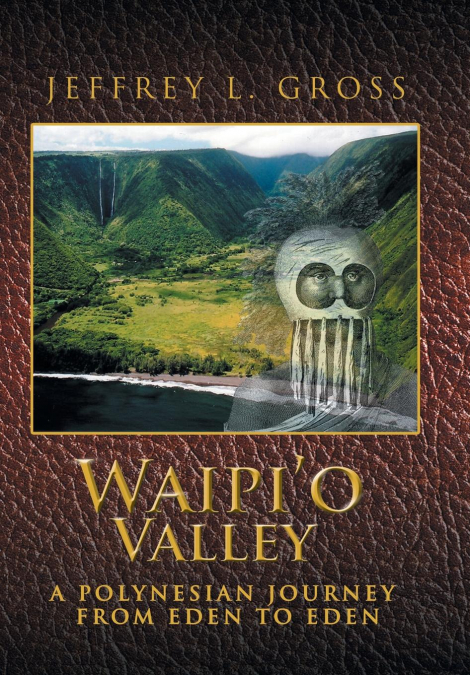
  • Waipi’o Valley
    Jeffrey L. Gross
    Waipi’o Valley: A Polynesian Journey from Eden to Eden recounts the remarkable migrations of the Polynesians across a third of the circumference of the earth. Their amazing journey began from Kalana i Hau’ola, the biblical “Garden of Eden” located along the shore of the Persian Gulf, extended to the Indus River Valley of ancient Vedic India, to Egypt where some ancestors of the...
  • Floralia
    June Rainsford Butler
    A century characterized by a growing interest in science, the opportunity for travel, and leisure for gardening furnishes the setting for Butler’s book. The rise of landscape gardening in England is traced, and the origin and history of its most famous gardens are given. The close relation between England and America in the field of horticulture is also discussed.Originally pub...
    Disponible

    61,20 €

  • President Wilson’s Addresses
    Woodrow Wilson
    'These addresses of President Woodrow Wilson are almost entirely concerned with political affairs, and more specifically with defining Americanism. Yet they also show that even as he moved from academia to the heights of politics, Wilson retained something of the teacher’s interest in showing the relation between specific instances and the general forms of thought or action of ...
  • The Story of my Life
    John Albert Macy
    The Story of My Life, is Helen Keller’s autobiography detailing her early life, especially her experiences with Anne Sullivan. The book is dedicated to inventor Alexander Graham Bell. The dedication reads, 'To ALEXANDER GRAHAM BELL Who has taught the deaf to speak and enabled the listening ear to hear speech from the Atlantic to the Rockies, I dedicate this Story of My Life.' ...
  • The Story of My Life Vol. 6 Spanish Passions
    Giacomo Casanova
    Casanova was an Italian adventurer and author from the Republic of Venice. His autobiography, Histoire de ma vie (Story of My Life), is regarded as one of the most authentic sources of the customs and norms of European social life during the 18th century. He has become so famous for his often complicated and elaborate affairs with women that his name is now synonymous with 'wom...