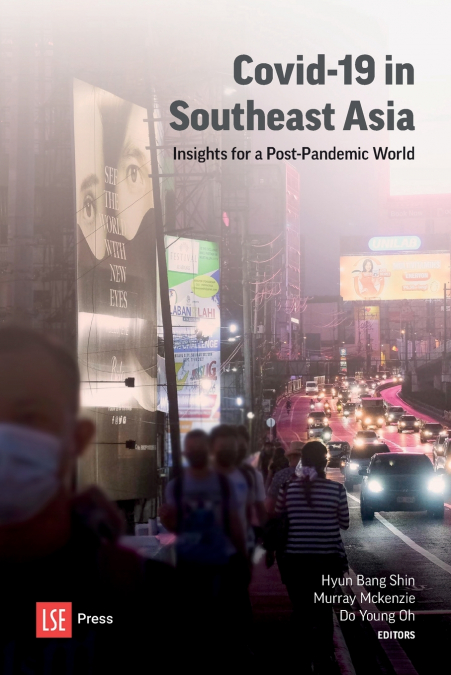

COVID-19 in Southeast Asia

COVID-19 in Southeast Asia


28,84 €
IVA incluido
Disponible
Editorial:
LSE Press
Año de edición:
2022
Materia
Estudios del desarrollo
ISBN:
9781909890763
28,84 €
IVA incluido
Disponible

Selecciona una librería:

  • Librería Samer Atenea
  • Librería Aciertas (Toledo)
  • Kálamo Books
  • Librería Perelló (Valencia)
  • Librería Elías (Asturias)
  • Donde los libros
  • Librería Kolima (Madrid)
  • Librería Proteo (Málaga)

COVID-19 has presented huge challenges to governments, businesses, civil societies, and people from all walks of life, but its impact has been highly variegated, affecting society in multiple negative ways, with uneven geographical and socioeconomic patterns. The crisis revealed existing contradictions and inequalities in society, compelling us to question what it means to return to 'normal' and what insights can be gleaned from Southeast Asia for thinking about a post-pandemic world.In this regard, this edited volume collects the informed views of an ensemble of social scientists - area studies, development studies, and legal scholars; anthropologists, architects, economists, geographers, planners, sociologists, and urbanists; representing academic institutions, activist and charitable organisations, policy and research institutes, and areas of professional practice - who recognise the necessity of critical commentary and engaged scholarship.These contributions represent a wide-ranging set of views, collectively producing a compilation of reflections on the following three themes in particular: (1) Urbanisation, digital infrastructures, economies, and the environment; (2) Migrants, (im)mobilities, and borders; and (3) Collective action, communities, and mutual action.Overall, this edited volume first aims to speak from a situated position in relevant debates to challenge knowledge about the pandemic that has assigned selective and inequitable visibility to issues, people, or places, or which through its inferential or interpretive capacity has worked to set social expectations or assign validity to certain interventions with a bearing on the pandemic’s course and the future it has foretold. Second, it aims to advance or renew understandings of social challenges, risks, or inequities that were already in place, and which, without further or better action, are to be features of our 'post-pandemic world' as well.This volume also contributes to the ongoing efforts to de-centre and decolonise knowledge production. It endeavours to help secure a place within these debates for a region that was among the first outside of East Asia to be forced to contend with COVID-19 in a substantial way and which has evinced a marked and instructive diversity and dynamism in its fortunes.
Artículos relacionados

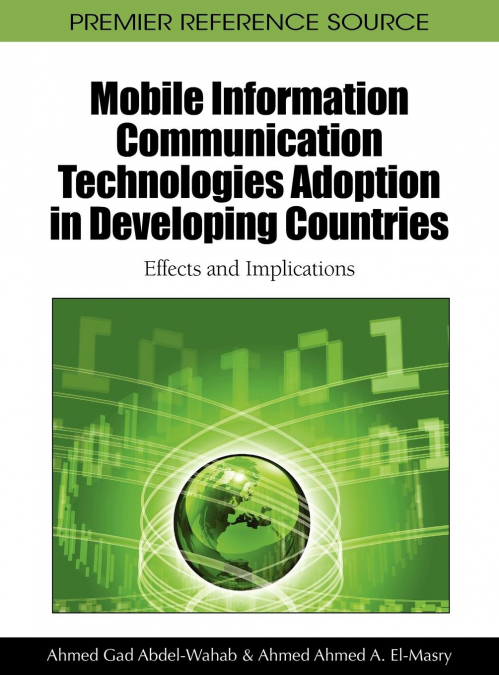
  • Mobile Information Communication Technologies Adoption in Developing Countries
    The mobile technology field is expanding with innovative research and discoveries that expand to all walks of life. Mobile technology may have its greatest impact in the developing world, because it brings telecommunication to districts that had never been reached before. Mobile Information Communication Technologies Adoption in Developing Countries: Effects and Implications re...
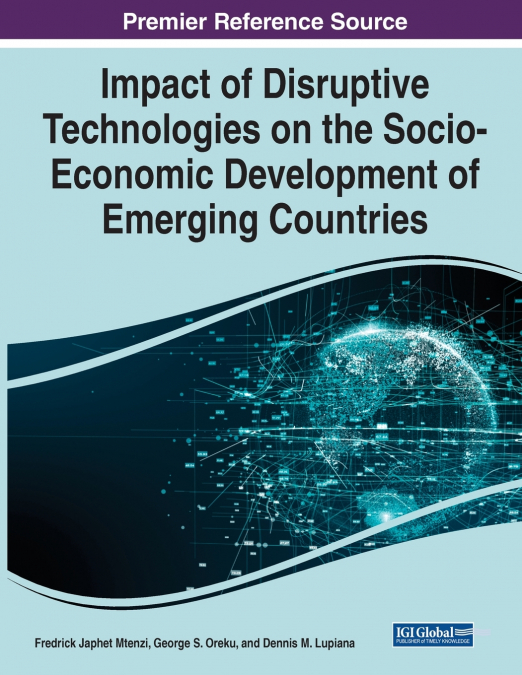
  • Impact of Disruptive Technologies on the Socio-Economic Development of Emerging Countries
    Global emergencies, such as the COVID-19 pandemic and environmental concerns, have challenged the readiness of societies and forced them to operate in more innovative ways. In response, the world has witnessed new technologies emerge and researchers continually finding better solutions to cope with these situations. It is crucial that these innovations are investigated so that ...
    Disponible

    222,57 €

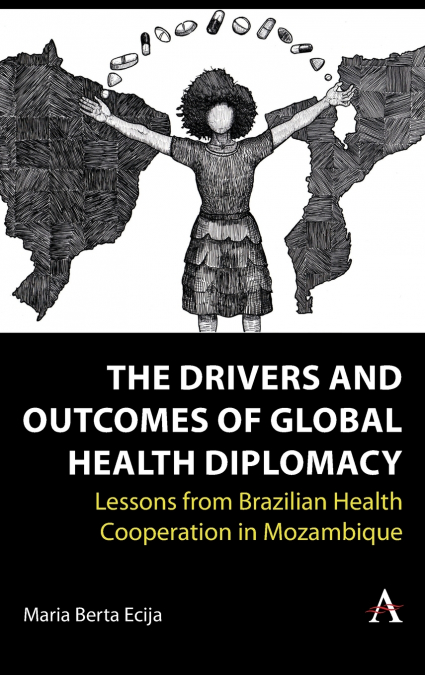
  • The Drivers and Outcomes of Global Health Diplomacy
    Maria Berta Ecija
    This book investigates the Brazilian health cooperation in Mozambique through the implementation of a pharmaceutical factory in Maputo. ...
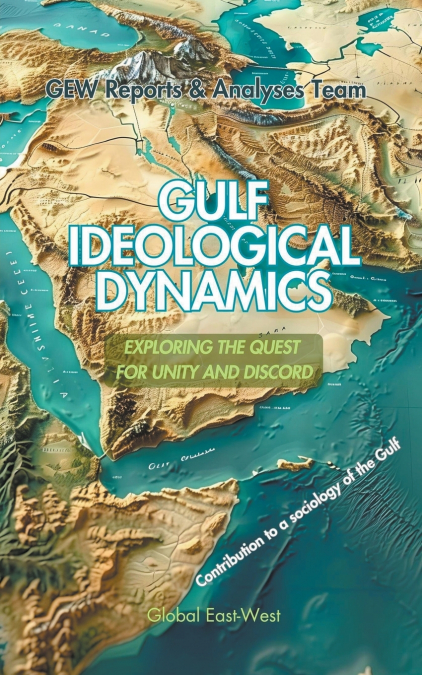
  • Gulf Ideological Dynamics
    GEW Reports & Analyses Team. / Hichem Karoui (Editor)
    The Gulf ideological system is a set of interconnected beliefs and principles governing the region’s political, economic, social, and cultural spheres. It combines various ideologies, including religious, nationalist, tribal, and pan-Islamic ideologies. It is shaped by a combination of historical, cultural, and socio-economic factors. Political alliances, economic shifts, socia...
    Disponible

    32,90 €

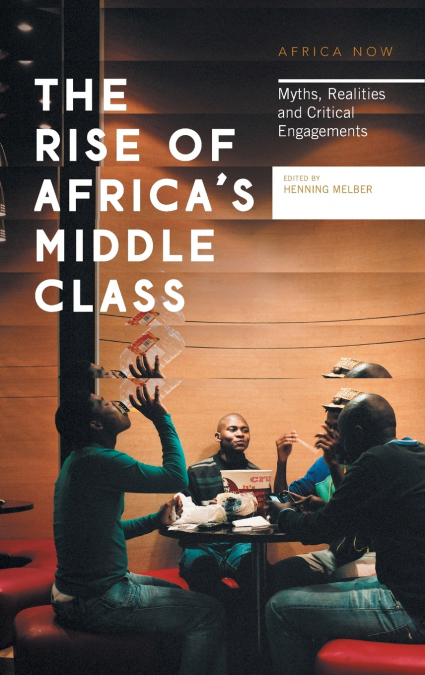
  • The Rise of Africa’s Middle Class
    Henning Melber
    Across Africa, a burgeoning middle class has become the poster child for the 'Africa rising' narrative. Ambitious, aspirational and increasingly affluent, this group is said to embody the values and hopes of the new Africa, with international bodies ranging from the United Nations Development Programme to the World Bank regarding them as important agents of both economi...
  • AIDS in Africa- How Did It Ever Happen
    Frank Ham
    This book offers a unique personal perspective on the HIV/AIDS crisis in Africa. It is a first person narrative of a European homosexual who tested positive in the early eighties. The author owes his survival to tell the tale not least to the drugs, which in his home country are accessible to any person who is HIV positive. Frank Ham visited Malawi in 1999 and repeatedly therea...
    Disponible

    36,43 €