
Corpo-luto

Corpo-luto

Eduardo Cardoso

10,35 €
IVA incluido
Disponible
Editorial:
Clube de Autores - Pensática, Unipessoal
Año de edición:
2023
Materia
Ética y filosofía moral
ISBN:
9786599003424
10,35 €
IVA incluido
Disponible

Selecciona una librería:

  • Librería Samer Atenea
  • Librería Aciertas (Toledo)
  • Kálamo Books
  • Librería Perelló (Valencia)
  • Librería Elías (Asturias)
  • Donde los libros
  • Librería Kolima (Madrid)
  • Librería Proteo (Málaga)

Em seu romance de estreia, Eduardo Cardoso apresenta em Corpo Luto um romance existencialista, cujo tema principal é o luto. O protagonista é o senhor Domenico Saviani. Psicanalista e professor universitário aposentado, casado e com um filho deste relacionamento. Domenico, na casa dos oitenta anos, tem a sua vida alterada com o surgimento do mal de Parkinson. A sua angústia aumenta quando perde a sua mulher e o sentido de viver lhe escapa - em um mundo em que cada vez mais os idosos são descartáveis. Após a morte da mãe, Lucca decide colocar o pai em um asilo.O velho, nascido no século passado, agora sozinho e à espera da morte, depressivo, angustiado e descrente, lança-se contra o mundo. O viver lhe é uma incógnita. A pergunta que se repetirá em todo o texto é: O que é o morrer? A questão dosuicídioestá implícita a todo momento. A personagem tenta entender os processos existenciais do que seria o morrer. Sendo assim, o que ele pretende entender é: por que estou morrendo aos poucos? Por que você, morte, não me leva agora?É na convivência com funcionários do asilo, em especial, a cuidadora Carla, que a narrativa em tom de monólogo passa a ser em diálogos. Diálogos esses que fazem com que Corpo Luto não seja apenas mais um livro que conta a história de um idoso em uma casa de repouso. Pelo contrário. Quando a personagem Carla, em sua simplicidade, começa a participar do enredo, é a partir deste momento que temos as grandes reflexões existenciais. De Nietzsche a Padre Fábio de Melo; de Dostoievski à morte de Cristo; Do Holocausto às Benevolentes; Das Benevolentes ao processo de alteridade por meio das ideias de Emmanuel Lévinas.Corpo Luto é envelhecer, Corpo Luto é a perda da esperança, Corpo luto é a perda da razão; Corpo Luto é alutapela sobrevivência, mesmo que a personagem diga que não deseja mais o viver. Em especial, Corpo Luto trata-se de umlutosocial - em uma sociedade em que as pessoas estão cada vez mais desistindo de viver. Corpo Luto não é um romance depressivo, mas intimista, que, por trás de todas essas mazelas da vida, apresenta de forma implícita, uma bela história de amor, que resiste ao tempo, que resiste à solidão, que resiste à morte.
Artículos relacionados

  • Ka Ab Ba Building The Lighted Temple
    Dr Terri R. Nelson / Dr Terri RNelson
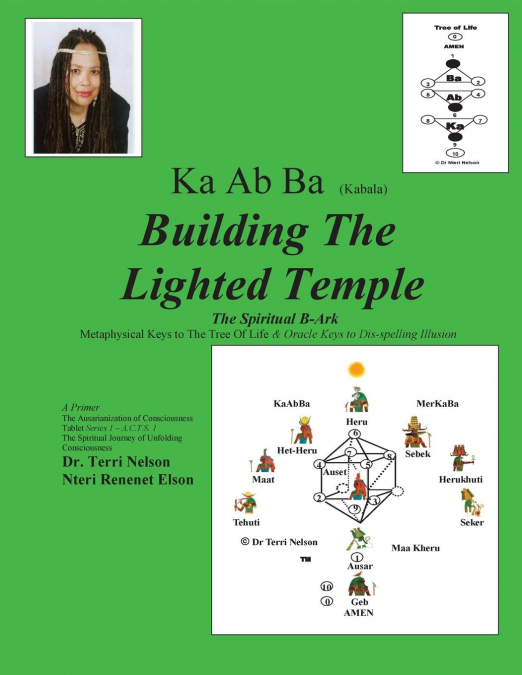
    The book KaAbBa Building The Lighted Temple/Metaphysical Keys to the Tree of Life draws a circle that is inclusive of the Afrikan origin of the Ancient Kemetic/Egyptian wisdom. It reveals the undeniable root and link of Ancient Africa to all the religious systems that would develop worldwide. This book is explosive in its power to convey the meaning of KaAbBa, the Medu Neter  (...
    Disponible

    37,41 €

  • Technoethics and the Evolving Knowledge Society
    Rocci Luppicini
    Recently, there has been a major push to rediscover the ethical dimension of technology across the sciences, social sciences, and humanities. Technoethics and the Evolving Knowledge Society: Ethical Issues in Technological Design, Research, Development, and Innovation examines human processes and practices connected to technology embedded within social, political, and moral sph...
  • Kant
    Immanuel Kant
    Kant’s Groundwork of the Metaphysics of Morals is one of the most important works in modern moral philosophy. It belongs beside Plato, Aristotle, Machiavelli, and Hobbes. Here Kant sets out to articulate and defend the Categorical Imperative - the fundamental principle that underlies moral reasoning - and to lay the foundation for a comprehensive account of justice and human vi...
  • On the Duty of Civil Disobedience
    HENRY DAVID THOREAU
    Civil Disobedience argues that citizens should not permit their governments to overrule their consciences, and that they have a duty to avoid allowing their acquiescence to enable the government to make them the agents of injustice. Thoreau was motivated in part by his disgust with slavery and the Mexican-American War, but the sentiments he expresses here are just as pertinent ...
  • Beyond Good and Evil
    Friedrich Nietzsche
    Nietzsche, though primarily a philosopher, wrote widely on art, philology, history, religion, tragedy, culture, and science.  In 1886, at the height of his powers, he published Beyond Good and Evil.  Here he examines much of the best of human thought--dogmatic philosophy, Judeo-Christian morality, science and democracy – and finds it lacking.  Rejecting “slave-morality” he pres...
  • Beyond Good and Evil
    Friedrich Nietzsche
    Nietzsche, though primarily a philosopher, wrote widely on art, philology, history, religion, tragedy, culture, and science.  In 1886, at the height of his powers, he published Beyond Good and Evil.  Here he examines much of the best of human thought--dogmatic philosophy, Judeo-Christian morality, science and democracy – and finds it lacking.  Rejecting “slave-morality” he pres...
    Disponible

    9,99 €

Otros libros del autor

  • A Gramática Das Ausências
    Eduardo Cardoso
    A Gramática das ausências é um livro de contos surpreendente, seja pelas diferentes técnicas narrativas, seja pela diversidade das histórias e das personagens. No entanto, o mais admirável é a habilidade do autor em amarrar essa multiplicidade de universos por meio de um único fio-condutor: a filosofia, ou seja, o espanto do ser humano diante da vida. “Será que as pessoas pensa...
    Disponible

    11,39 €