Inicio > Lenguas > Lingüistica > Conversational AI
Conversational AI

Conversational AI

Michael McTear

91,48 €
IVA incluido
Disponible
Editorial:
Springer Nature B.V.
Año de edición:
2020
Materia
Lingüistica
ISBN:
9783031010484
91,48 €
IVA incluido
Disponible

Selecciona una librería:

  • Librería Samer Atenea
  • Librería Aciertas (Toledo)
  • Kálamo Books
  • Librería Perelló (Valencia)
  • Librería Elías (Asturias)
  • Donde los libros
  • Librería Kolima (Madrid)
  • Librería Proteo (Málaga)

This book provides a comprehensive introduction to Conversational AI. While the idea of interacting with a computer using voice or text goes back a long way, it is only in recent years that this idea has become a reality with the emergence of digital personal assistants, smart speakers, and chatbots. Advances in AI, particularly in deep learning, along with the availability of massive computing power and vast amounts of data, have led to a new generation of dialogue systems and conversational interfaces. Current research in Conversational AI focuses mainly on the application of machine learning and statistical data-driven approaches to the development of dialogue systems. However, it is important to be aware of previous achievements in dialogue technology and to consider to what extent they might be relevant to current research and development. Three main approaches to the development of dialogue systems are reviewed: rule-based systems that are handcrafted using best practice guidelines; statistical data-driven systems based on machine learning; and neural dialogue systems based on end-to-end learning. Evaluating the performance and usability of dialogue systems has become an important topic in its own right, and a variety of evaluation metrics and frameworks are described. Finally, a number of challenges for future research are considered, including: multimodality in dialogue systems, visual dialogue; data efficient dialogue model learning; using knowledge graphs; discourse and dialogue phenomena; hybrid approaches to dialogue systems development; dialogue with social robots and in the Internet of Things; and social and ethical issues.

Artículos relacionados

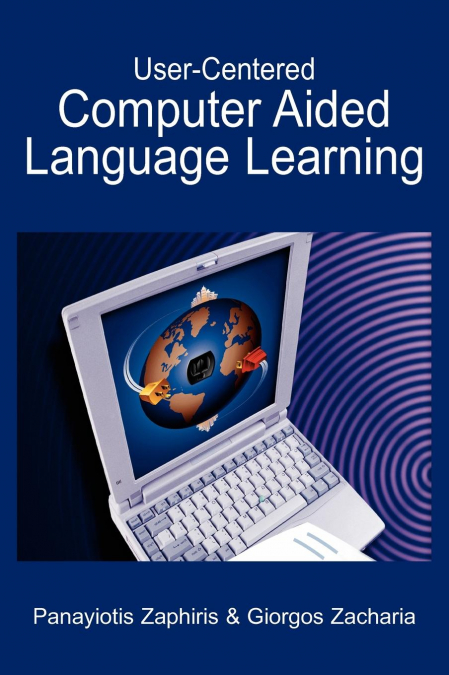
  • User-Centered Computer Aided Language Learning
    Giorgos Zacharia / Panayiotis Zaphiris
    ...
  • Deep Learning for Natural Language Processing
    Marco Antonio Valenzuela-Escárcega / Mihai Surdeanu
    ...
    Disponible

    47,60 €

  • Deep Learning for Natural Language Processing
    Marco Antonio Valenzuela-Escárcega / Mihai Surdeanu
    ...
  • Lecciones sobre espinosa medrano
    Luis Jaime Cisneros Vizquerra
    La obra de Juan de Espinosa Medrano, apodado en su tiempo «El Lunarejo» (c. 1629-1688), fue uno de los mayores focos de interés académico de Luis Jaime Cisneros (1921-2011). En 1980 aparecieron sus primeros trabajos dedicados a estudiar los textos capitales de Espinosa Medrano (el Apologético en favor de don Luis de Góngora, la Panegírica declamación por la protección de las ci...
    Disponible

    17,63 €

  • Lyre Book
    Matthew Kilbane
    Redefines modern lyric poetry at the intersection of literary and media studies.In The Lyre Book, Matthew Kilbane urges literary scholars to consider lyric not as a genre or a reading practice but as a media condition: the generative tension between writing and sound. In addition to clarifying issues central to the study of modern poetry--including its proximity to popular song...
    Disponible

    50,84 €

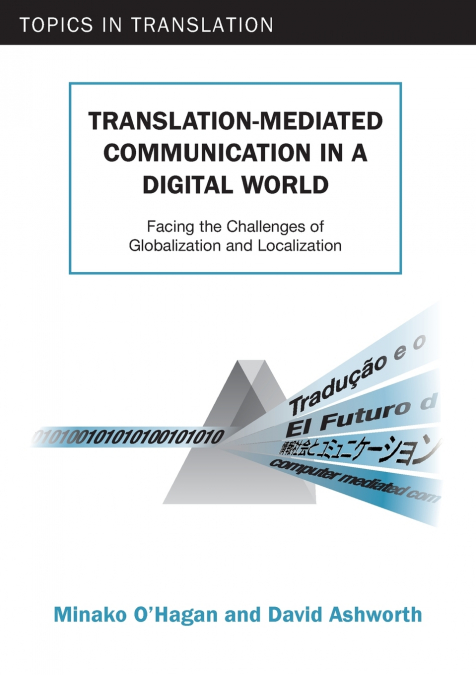
  • Translation-mediated Communication in a Digital World
    David Ashworth / Minako O’Hagan
    The Internet is accelerating globalization by exposing organizations and individuals to global audiences. This in turn is driving teletranslation and teleinterpretation, new types of multilingual support, which are functional in digital communications environments. The book describes teletranslation and teleinterpretation by exploring a number of key emerging contexts for langu...
    Disponible

    45,19 €