

 Librería Samer Atenea
 Kálamo Books
 Librería Elías (Asturias)
 Librería Kolima (Madrid)
 Librería Proteo (Málaga)
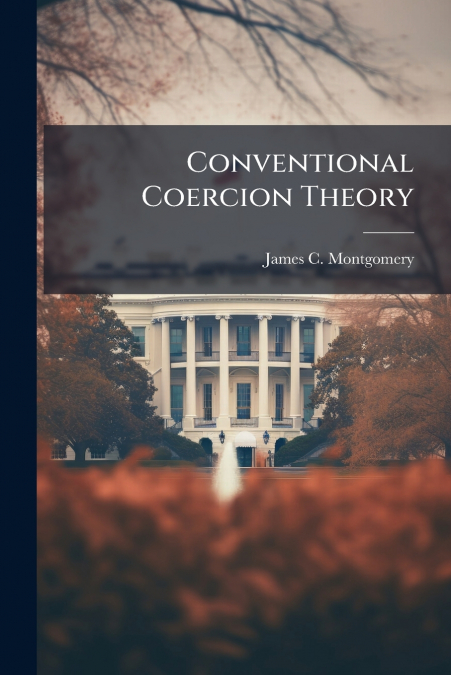
Abstract Operation Provide Comfort (OPC) achieved notable distinction because a coalition, with a relatively small military contingent, was able to protect the Kurds from a decidedly hostile Iraq, and they succeeded without a single hostile-fire casualty on either side. The U.S. and its allies have often relied upon a coercive denial strategy (and its associated attrition of enemy forces) to achieve political objectives, but in OPC the coalition utilized a different strategy. How does the unprecedented success in Operation Provide Comfort help us understand air power coercion theory and what lessons can be drawn for future coercive operations? This paper will attempt to show that all of the classic coercive prerequisites were met and, contrary to contemporary wisdom, military operations in Operation Provide Comfort demonstrated conventional Risk to be an effective coercive strategy. The operation will be analyzed in light of the applicable coercive air power strategies, requirements, and limitations. Based on the current accepted coercive theories, the coalition rightly planned and prepared for a denial campaign and executeda textbook Risk strategy. Rather than the mechanism of attriting the Iraqi military in the Kurdish region in order to convince Saddam that he had no chance of winning the conflict (the Denial Theory mechanism), the coalition was able to use the threat of further violence to achieve its objectives (the Risk Theory mechanism). By achieving all of the historic credibility requirements and applying the threat of coercive force upon Saddam’s vulnerability/value point, the coercion was fast, bloodless, and relatively inexpensive, and it achieved all of its stated objectives. By any definition, OPC was an unprecedented coercive success and clearly illustrated the efficacy of conventional Risk Theory as a coercive strategy.This work has been selected by scholars as being culturally important, and is part of the knowledge base of civilization as we know it. This work was reproduced from the original artifact, and remains as true to the original work as possible. Therefore, you will see the original copyright references, library stamps (as most of these works have been housed in our most important libraries around the world), and other notations in the work.This work is in the public domain in the United States of America, and possibly other nations. Within the United States, you may freely copy and distribute this work, as no entity (individual or corporate) has a copyright on the body of the work.As a reproduction of a historical artifact, this work may contain missing or blurred pages, poor pictures, errant marks, etc. Scholars believe, and we concur, that this work is important enough to be preserved, reproduced, and made generally available to the public. We appreciate your support of the preservation process, and thank you for being an important part of keeping this knowledge alive and relevant.





