Librería Samer Atenea
 Kálamo Books
 Librería Elías (Asturias)
 Librería Kolima (Madrid)
 Librería Proteo (Málaga)
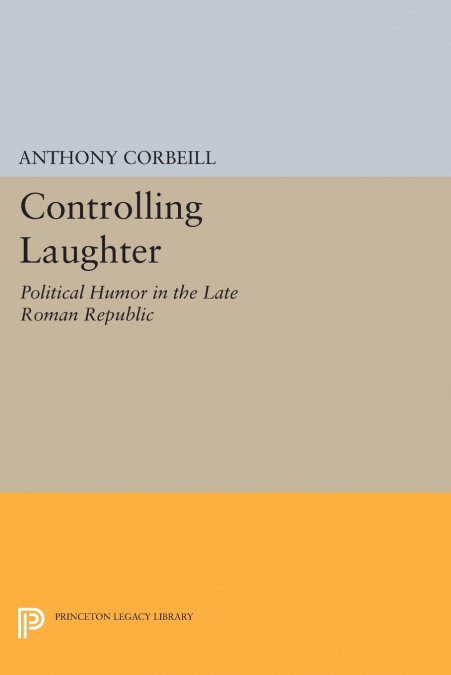
Although numerous scholars have studied Late Republican humor, this is the first book to examine its social and political context. Anthony Corbeill maintains that political abuse exercised real powers of persuasion over Roman audiences and he demonstrates how public humor both creates and enforces a society’s norms.Previous scholarship has offered two explanations for why abusive language proliferated in Roman oratory. The first asserts that public rhetoric, filled with extravagant lies, was unconstrained by strictures of propriety. The second contends that invective represents an artifice borrowed from the Greeks. After a fresh reading of all extant literary works from the period, Corbeill concludes that the topics exploited in political invective arise from biases already present in Roman society. The author assesses evidence outside political discourse-from prayer ritual to philosophical speculation to physiognomic texts-in order to locate independently the biases in Roman society that enabled an orator’s jokes to persuade. Within each instance of abusive humor-a name pun, for example, or the mockery of a physical deformity-resided values and preconceptions that were essential to the way a Roman citizen of the Late Republic defined himself in relation to his community.Originally published in 1996.The Princeton Legacy Library uses the latest print-on-demand technology to again make available previously out-of-print books from the distinguished backlist of Princeton University Press. These editions preserve the original texts of these important books while presenting them in durable paperback and hardcover editions. The goal of the Princeton Legacy Library is to vastly increase access to the rich scholarly heritage found in the thousands of books published by Princeton University Press since its founding in 1905.