 Librería Samer Atenea
 Kálamo Books
 Librería Elías (Asturias)
 Librería Kolima (Madrid)
 Librería Proteo (Málaga)
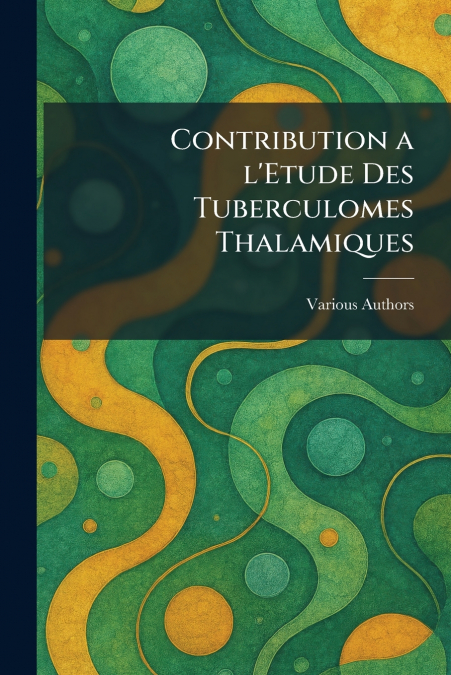
'Contribution a l’Etude Des Tuberculomes Thalamiques' est une étude clinique et pathologique approfondie consacrée aux lésions tuberculeuses situées dans le thalamus. Cet ouvrage médical du début du XXe siècle explore la complexité des manifestations neurologiques résultant de ces formations tumorales spécifiques, à une époque où la tuberculose représentait un défi majeur pour la santé publique. À travers des observations cliniques détaillées, l’Åuvre examine les symptômes sensitifs et moteurs associés aux atteintes thalamiques, offrant une perspective historique précieuse sur l’évolution de la neurologie et de la neuroanatomie. L’ouvrage s’intéresse particulièrement au diagnostic différentiel et à l’anatomie pathologique des tuberculomes, contribuant ainsi à la compréhension des syndromes thalamiques. Ce document constitue une ressource essentielle pour les chercheurs en histoire de la médecine, les neurologues et les spécialistes des maladies infectieuses souhaitant étudier les pratiques cliniques et les connaissances médicales de la fin des années 1920.This work has been selected by scholars as being culturally important, and is part of the knowledge base of civilization as we know it. This work was reproduced from the original artifact, and remains as true to the original work as possible. Therefore, you may see the original copyright references, library stamps (as most of these works have been housed in our most important libraries around the world), and other notations in the work.This work is in the public domain in the United States of America, and possibly other nations. Within the United States, you may freely copy and distribute this work, as no entity (individual or corporate) has a copyright on the body of the work.As a reproduction of a historical artifact, this work may contain missing or blurred pages, poor pictures, errant marks, etc. Scholars believe, and we concur, that this work is important enough to be preserved, reproduced, and made generally available to the public. We appreciate your support of the preservation process, and thank you for being an important part of keeping this knowledge alive and relevant.