Inicio > Humanidades > Historia > Conspiracy Theory in Latin Literature
Conspiracy Theory in Latin Literature

Conspiracy Theory in Latin Literature

Victoria Emma Pagán

26,85 €
IVA incluido
Disponible
Editorial:
Univ of Chicago behalf of University of Texas
Año de edición:
2012
Materia
Historia
ISBN:
9780292756809
26,85 €
IVA incluido
Disponible

Selecciona una librería:

  • Librería Samer Atenea
  • Librería Aciertas (Toledo)
  • Kálamo Books
  • Librería Perelló (Valencia)
  • Librería Elías (Asturias)
  • Donde los libros
  • Librería Kolima (Madrid)
  • Librería Proteo (Málaga)

Conspiracy theory as a theoretical framework has emerged only in the last twenty years; commentators are finding it a productive way to explain the actions and thoughts of individuals and societies. In this compelling exploration of Latin literature, Pagán uses conspiracy theory to illuminate the ways that elite Romans invoked conspiracy as they navigated the hierarchies, divisions, and inequalities in their society. By seeming to uncover conspiracy everywhere, Romans could find the need to crush slave revolts, punish rivals with death or exile, dismiss women, denigrate foreigners, or view their emperors with deep suspicion. Expanding on her earlier Conspiracy Narratives in Roman History, Pagán here interprets the works of poets, satirists, historians, and orators-Juvenal, Tacitus, Suetonius, Terence, and Cicero, among others-to reveal how each writer gave voice to fictional or real actors who were engaged in intrigue and motivated by a calculating worldview. Delving into multiple genres, Pagán offers a powerful critique of how conspiracy and conspiracy theory can take hold and thrive when rumor, fear, and secrecy become routine methods of interpreting (and often distorting) past and current events. In Roman society, where knowledge about others was often lacking and stereotypes dominated, conspiracy theory explained how the world worked. The persistence of conspiracy theory, from antiquity to the present day, attests to its potency as a mechanism for confronting the frailties of the human condition.


Artículos relacionados

  • Raising Freedom's Banner
    Paul Harris
    World wide history of peaceful street demonstrations from their earliest beginning in eighteenth century England to their use throughout the world in the twenty-first century. Describes why some demonstration movements succeeded and others failed. Contrasts demonstrations within the law with civil disobedience demonstrations. Describes Peterloo, the Chartists, the Suffragettes,...
    Disponible

    23,59 €

  • Waipi’o Valley
    Jeffrey L. Gross
    Waipi’o Valley: A Polynesian Journey from Eden to Eden recounts the remarkable migrations of the Polynesians across a third of the circumference of the earth. Their amazing journey began from Kalana i Hau’ola, the biblical “Garden of Eden” located along the shore of the Persian Gulf, extended to the Indus River Valley of ancient Vedic India, to Egypt where some ancestors of the...
  • Floralia
    June Rainsford Butler
    A century characterized by a growing interest in science, the opportunity for travel, and leisure for gardening furnishes the setting for Butler’s book. The rise of landscape gardening in England is traced, and the origin and history of its most famous gardens are given. The close relation between England and America in the field of horticulture is also discussed.Originally pub...
    Disponible

    61,20 €

  • President Wilson’s Addresses
    Woodrow Wilson
    'These addresses of President Woodrow Wilson are almost entirely concerned with political affairs, and more specifically with defining Americanism. Yet they also show that even as he moved from academia to the heights of politics, Wilson retained something of the teacher’s interest in showing the relation between specific instances and the general forms of thought or action of ...
  • The Story of my Life
    John Albert Macy
    The Story of My Life, is Helen Keller’s autobiography detailing her early life, especially her experiences with Anne Sullivan. The book is dedicated to inventor Alexander Graham Bell. The dedication reads, 'To ALEXANDER GRAHAM BELL Who has taught the deaf to speak and enabled the listening ear to hear speech from the Atlantic to the Rockies, I dedicate this Story of My Life.' ...
  • The Story of My Life Vol. 6 Spanish Passions
    Giacomo Casanova
    Casanova was an Italian adventurer and author from the Republic of Venice. His autobiography, Histoire de ma vie (Story of My Life), is regarded as one of the most authentic sources of the customs and norms of European social life during the 18th century. He has become so famous for his often complicated and elaborate affairs with women that his name is now synonymous with 'wom...

Otros libros del autor

  • Rome and the Literature of Gardens
    Victoria Emma Pagán
    "Rome and the Literature of Gardens" explores the garden as a powerful locus of transformation and transgression in the "De Re Rustica" of Columella, the "Satires" of Horace, the "Annals" of Tacitus, and the "Confessions" of Saint Augustine. In keeping with the approach of this series, a concluding chapter examines the reincarnation of these expressions in the contemporary play...
    Disponible

    47,51 €

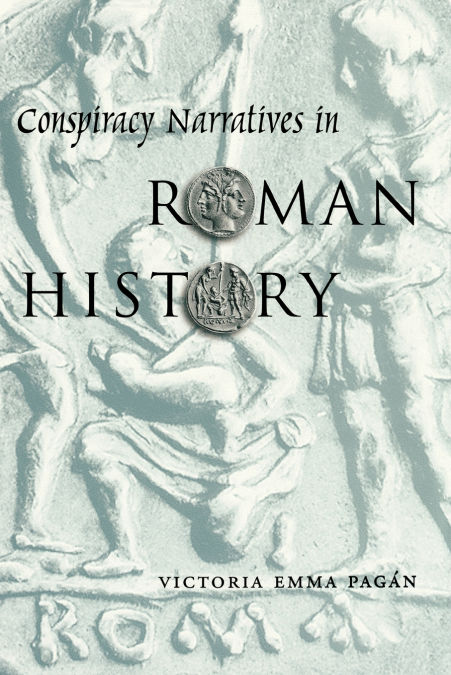
  • Conspiracy Narratives in Roman History
    Victoria Emma Pagán
    Conspiracy is a thread that runs throughout the tapestry of Roman history. From the earliest days of the Republic to the waning of the Empire, conspiracies and intrigues created shadow worlds that undermined the openness of Rome’s representational government. To expose these dark corners and restore a sense of order and safety, Roman historians frequently wrote about famous con...
    Disponible

    26,81 €