CONNECTED INDUSTRY

CONNECTED INDUSTRY

RALF LUIS DE MOURA

79,58 €
IVA incluido
Disponible
Editorial:
Eliva Press
Año de edición:
2025
ISBN:
9789999327534
79,58 €
IVA incluido
Disponible

Selecciona una librería:

  • Librería Samer Atenea
  • Librería Aciertas (Toledo)
  • Kálamo Books
  • Librería Perelló (Valencia)
  • Librería Elías (Asturias)
  • Donde los libros
  • Librería Kolima (Madrid)
  • Librería Proteo (Málaga)

In an increasingly digital and interconnected world, the integration between automation systems and information technology has become a vital competitive advantage. This book offers a comprehensive and accessible examination of industrial networks, ranging from fundamental concepts to real-world protocols and architectures employed in modern automation.Structured in a didactic and progressive manner, the content covers the historical evolution of industrial networks, the relevance of IT/OT convergence, layered communication models such as the OSI model, and key aspects of network topologies, transmission modes, and physical media commonly found in industrial environments. Core concepts, such as deterministic communication, real-time requirements, error control, and the structure of the data link and application layers, are clearly explained.The book features dedicated chapters on widely adopted industrial protocols, highlighting the main characteristics, advantages, limitations, and typical use cases.The book provides readers with knowledge to navigate the complexity of modern industrial connectivity-an essential pillar for Industry 4.0 and the Industrial Internet of Things (IIoT).This book is ideal for engineering students, automation professionals, and anyone seeking to understand and implement industrial networks, whether in educational settings or as a practical reference for field applications.


Artículos relacionados

  • Technological Change and the British Iron Industry, 1700-1870
    Charles K. Hyde
    This book describes technological change in an industry that played a central role in the Indsutrial Revolution. While earlier scholars have examined isolated aspects of ironmaking in the eighteenth- and nineteenth-century Britain, Charles Hyde surveys all aspects of its development. Costs, prices, profits, shrewd leaders, competition, new inventions, and productivity all figur...
    Disponible

    71,94 €

  • Corporate Governance in Asia
    ...
    Disponible

    72,99 €

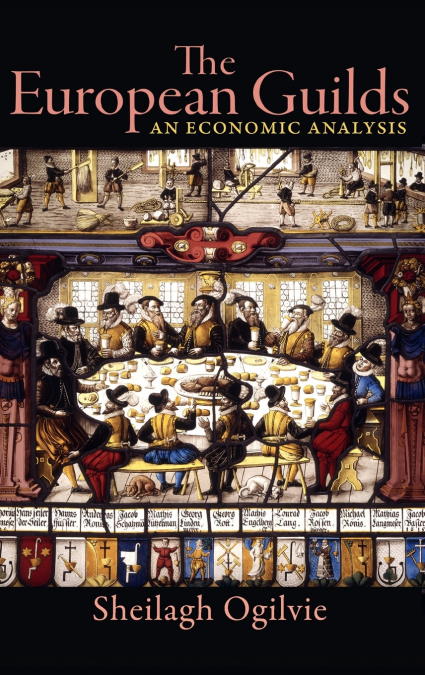
  • The European Guilds
    Sheilagh Ogilvie
    A comprehensive analysis of European craft guilds through eight centuries of economic historyGuilds ruled many crafts and trades from the Middle Ages to the Industrial Revolution, and have always attracted debate and controversy. They were sometimes viewed as efficient institutions that guaranteed quality and skills. But they also excluded competitors, manipulated markets, and ...
  • Technological Change and the British Iron Industry, 1700-1870
    Charles K. Hyde
    This book describes technological change in an industry that played a central role in the Indsutrial Revolution. While earlier scholars have examined isolated aspects of ironmaking in the eighteenth- and nineteenth-century Britain, Charles Hyde surveys all aspects of its development. Costs, prices, profits, shrewd leaders, competition, new inventions, and productivity all figur...
  • Technology Differences over Space and Time
    Francesco Caselli
    Technology Differences over Space and Time looks at how countries use their productive resources-such as workers, skills, equipment and structures, and natural resources. Francesco Caselli develops methods to assess the efficiency with which productive inputs are used, and how these efficiencies vary across countries and over time.Caselli finds that richer countries use skilled...
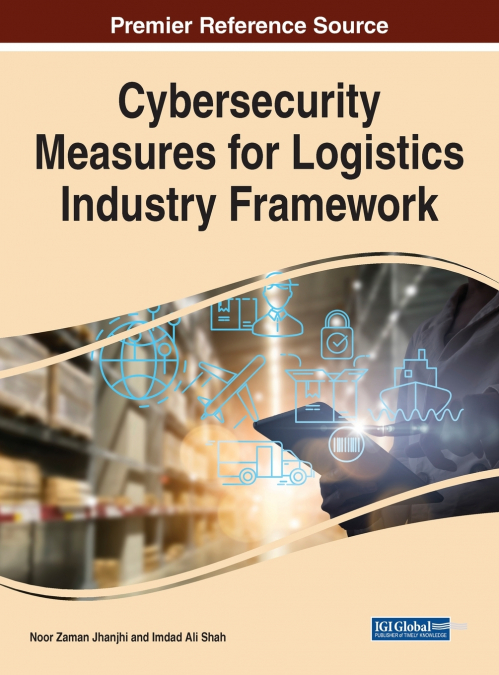
  • Cybersecurity Measures for Logistics Industry Framework
    Global supply chains are becoming more customer-centric and sustainable thanks to next-generation logistics management technologies. Automating logistics procedures greatly increases the productivity and efficiency of the workflow. There is a need, however, to create flexible and dynamic relationships among numerous stakeholders and the transparency and traceability of the supp...