 Librería Samer Atenea
 Kálamo Books
 Librería Elías (Asturias)
 Librería Kolima (Madrid)
 Librería Proteo (Málaga)
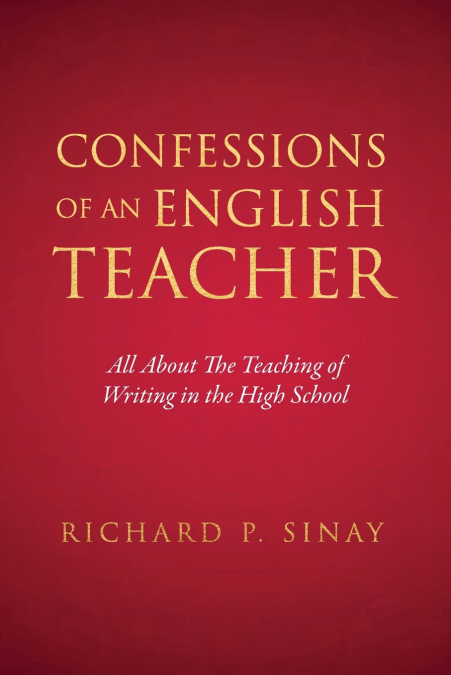
I was sitting in a department meeting when we were asked to break into groups during a think tank session. The principal approved the time that we could use to encourage curriculum development and improvement. The principal attended the meeting, sat down with our group, and we began discussing ways to improve the English department’s curriculum. In Part I of the book, I share some background on the teaching of writing. In Chapter 1, I provide a brief history of the evolution of high school writing instruction over the last 60 or so years. The teaching of writing evolved over those years, and I share the changes. In Chapter 2, I explain why English teachers are not prepared to teach writing at the secondary level. Three opportunities in their education might have prepared the English teacher for the classroom, but all three opportunities were missed. In Chapter 3, I argue why it is vital for English departments to have an organized writing program. A writing program should build on skills that students learn at each grade level. In Chapter 4, I discuss the importance of English teachers receiving instruction in teaching writing, whether they are English majors or trained in the Education Department. In Chapter 5, I discuss the consequences of the lack of writing-instruction training that colleges are not providing. In Chapter 6, I present the fact that the teaching of grammar in isolation from the teaching of writing is a total waste of time. Chapter 7 argues the importance of teaching writing as a process. Teaching students to apply the process when they write their papers helps them understand that writing is a process of revision. We write, and then we revise. Writing evolves over the course of the writing. This book has been transformed several times to reach its final form. Chapter 8 provides those opportunities for English teachers to learn how to teach writing. Given that the college does not give that instruction, it is incumbent on the English teacher to identify resources to help them become better teachers of writing. Chapter 9 allows the reader to understand how to teach grammar in the context of a student’s writing. I share approaches to the teaching of sentence structure, usage, and mechanics in the context of a student’s writing. Chapter 10 deals with the problem of the English teacher’s paper load. I present ways an English teacher can make life simpler by adjusting the number of essays assigned. Chapter 11 examines the evaluation of writing, and I argue that the English teacher’s reputation rests on the haphazard way they evaluate students’ essays. While English teachers must work to remain unified in their evaluation of writing, I realize how difficult that goal is to achieve. Chapter 12 then offers the evaluation method I used to determine the quality of the writing students did for me. The evaluation system should be transparent and fair. I use the COLM method to evaluate writing. Chapter 13 is an essential commentary on the pedagogical approach to the teaching of writing. Students need to be shown how to write before they are expected to do it on their own. In Part III of the book, I make some claims about the English teacher that may not be popular. In Chapter 14, I claim that English teachers need to be writers. That is, they need to write with their students and demonstrate the process to them by becoming one of them. It works well.