

 Librería Samer Atenea
 Kálamo Books
 Librería Elías (Asturias)
 Librería Kolima (Madrid)
 Librería Proteo (Málaga)
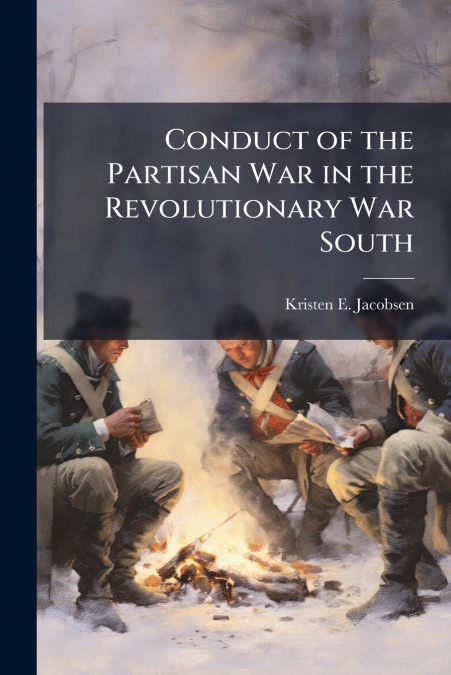
The partisan war in the Revolutionary War South demonstrated the vital linkage between the civil and military authorities. In the policies created to persuade the people of the righteousness of the American cause and neutralize opposition, the civil leadership of South Carolina inadvertently set the conditions for a violent civil war. The experiences derived from a century’s worth of almost constant conflict, both internal and external, determined the nature of the ensuing civil war. Upon the occupation by the British in 1780, the calm that settled over the Southern colonies was brief, as British military leaders addressed the political problem in such as way as to lead to renewed revolt and an effective partisan campaign. The civil war became intertwined with the overall campaigns of the American and British forces, with the nature of the leaders having equal effect on the concurrent civil war.This work has been selected by scholars as being culturally important, and is part of the knowledge base of civilization as we know it. This work was reproduced from the original artifact, and remains as true to the original work as possible. Therefore, you will see the original copyright references, library stamps (as most of these works have been housed in our most important libraries around the world), and other notations in the work.This work is in the public domain in the United States of America, and possibly other nations. Within the United States, you may freely copy and distribute this work, as no entity (individual or corporate) has a copyright on the body of the work.As a reproduction of a historical artifact, this work may contain missing or blurred pages, poor pictures, errant marks, etc. Scholars believe, and we concur, that this work is important enough to be preserved, reproduced, and made generally available to the public. We appreciate your support of the preservation process, and thank you for being an important part of keeping this knowledge alive and relevant.





