 Librería Samer Atenea
 Kálamo Books
 Librería Elías (Asturias)
 Librería Kolima (Madrid)
 Librería Proteo (Málaga)
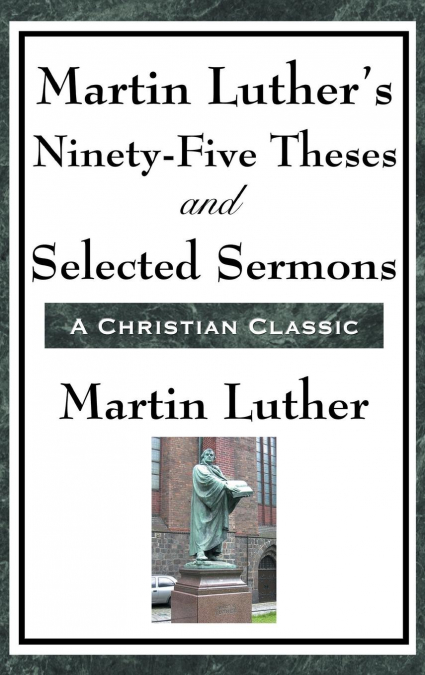
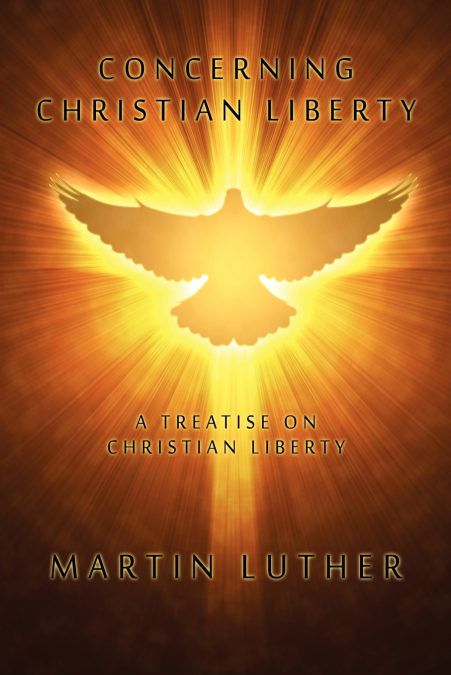
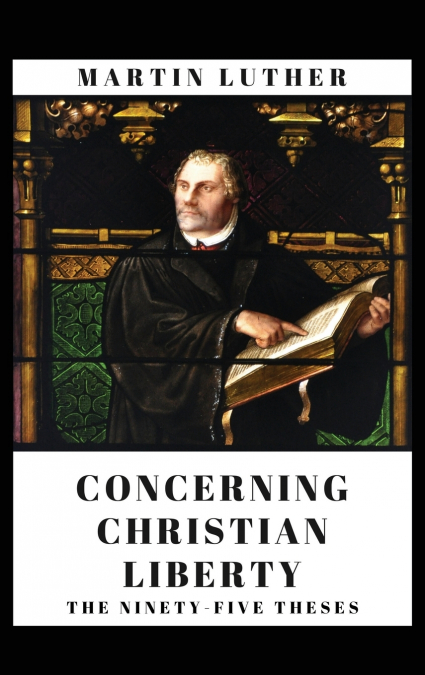
'A Christian is the most free lord of all, and subject to none.' - Martin LutherPublished in 1520 at the dawn of the Protestant Reformation, Concerning Christian Liberty stands among Martin Luther’s most decisive theological writings. In this influential treatise, Luther develops the doctrine of justification by faith alone, affirming the spiritual freedom of the believer while redefining the relationship between faith, works, and salvation.Included alongside the treatise are the historic Ninety-Five Theses, whose critique of indulgences and ecclesiastical authority spread rapidly across Germany and Europe, igniting a religious transformation that reshaped Western Christianity. Luther’s challenge to papal authority, expressed also in letters addressed to Archbishop Albrecht of Mainz, John Staupitz, and Pope Leo X, ultimately led to his excommunication and marked the irreversible beginning of the Reformation.Bringing together theology, history, and spiritual reflection, this volume presents the essential texts that transformed Christian thought and altered the course of European civilization. It remains a foundational work for readers interested in Protestant theology, Lutheran doctrine, the history of the Reformation, and the enduring question of Christian freedom.'Hence a right faith in Christ is an incomparable treasure, carrying with it universal salvation and preserving from all evil, as it is said,'He that believeth and is baptized shall be saved; but he that believeth not shall be damned'(Mark XVI. 16). Isaiah, looking to this treasure, predicted, 'The consumption decreed shall overflow with righteousness. For the Lord God of hosts shall make a consumption, even determined (verbum abbreviatum et consummans), in the midst of the land' (Isa. X. 22, 23). As if he said, 'Faith, which is the brief and complete fulfilling of the law, will fill those who believe with such righteousness that they will need nothing else for justification.' Thus, too, Paul says, 'For with the heart man believeth unto righteousness' (Rom. X. 10).''45. Christians are to be taught that he who sees a man in need, and passes him by, and gives [his money] for pardons, purchases not the indulgences of the pope, but the indignation of God.'