Inicio > Humanidades > Filosofía > Concept Formation in the Humanities and the Social Sciences
Concept Formation in the Humanities and the Social Sciences

Concept Formation in the Humanities and the Social Sciences

T. Pawlowski

132,75 €
IVA incluido
Consulta disponibilidad
Editorial:
Springer Nature B.V.
Año de edición:
1980
Materia
Filosofía
ISBN:
9789027710963

Selecciona una librería:

  • Librería Samer Atenea
  • Librería Aciertas (Toledo)
  • Kálamo Books
  • Librería Perelló (Valencia)
  • Librería Elías (Asturias)
  • Donde los libros
  • Librería Kolima (Madrid)
  • Librería Proteo (Málaga)

Uniqueness of style versus plurality of styles: in terms of these aesthetic categories one of the most important differences between the recent past and the present can be described. This difference manifests itself in all spheres of life - in fashion, in everyday life, in the arts, in science. What is of interest for my purposes in this book are its manifestations in the processes of con­ cept formation as they occur in the humanities, broadly conceived. Here the following methodological approaches seem to dominate the scene. 1. A tendency to apply semiotic concepts in various fields of research. 2. Attempts to introduce metrical concepts and measurement, even into disciplines tra­ ditionally considered as unamenable to mathematical treatment, like aesthetics and theory of art. 3. Efforts to fmd ways of formulating empirically testable, operational criteria for the application of concepts, especially concepts which refer to objects directly not observable, like dispositions, attitudes, character or personality traits. Care is also taken to take advantage of the conceptual apparatus of methodology to express problems in the humanities with the highest possible degree of clarity and precision. 4. Analysis of the p~rsuasive function oflanguage and its possible uses in science and in everyday life. The above tendencies are present in this book. It is divided into two parts: I. Methods of Concept Formation, and II. Applications. In the first part some general methods of concept formation are presented and their merits discussed.

Artículos relacionados

  • Introduction to a Future Way of Thought
    Kostas Axelos / Kenneth Mills
    'Technologists only change the world in various ways in generalized indifference; the point is to think the world and interpret the changes in its unfathomability, to perceive and experience the difference binding being to the nothing.'Anticipating the age of planetary technology Kostas Axelos, a Greek-French philosopher, approaches the technological question in this book, firs...
    Disponible

    18,58 €

  • Capsule
    John Kenneth Press
    Join John and Adam as they wander the mean streets of Japan on a psychedelic fueled search for identity. While fun for the average reader, this book could also serve as a philosphy textbook because of its ordered exploration of sources of identity. Ultimately this trip through nationalist attacks, sex, and drugs, will take you to a better understanding of yourself and your pl...
    Disponible

    11,51 €

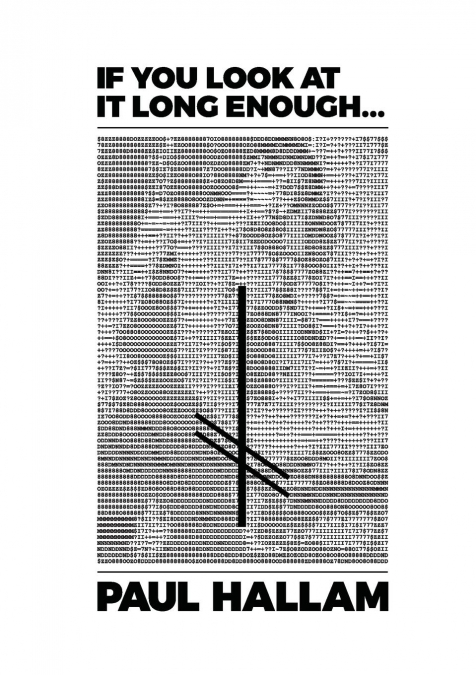
  • If you look at it long enough...
    Paul Hallam
    Originally written for an academic journal, If you look at it long enough... is primarily a personal account of Paul Hallam’s recollections of “self-abuse” through the consumption of porn over several decades. Challenging the familiar form of an “academic essay,” this autobiographical narrative raises several questions in relation to our contemporary morals related to sex in ge...
    Disponible

    11,30 €

  • The Teachers of Gurdjieff
    Rafael Lafort / Rafael Lefort
    When The Teachers of Gurdjieff was first published more than 50 years ago, it made a considerable stir. George Ivanovich Gurdjieff had been one of the most famous mystics in the West in the first half of the 20th century - a teaching master who had many fashionable and influential pupils. He had a striking appearance and manner of teaching, and his teaching proved to be very in...
    Disponible

    20,45 €

  • Manifesto of the Communist Party
    Karl Marx
    The Communist Manifesto was first published on February 21, and it is one of the world’s most influential political tracts. Commissioned by the Communist League and written by communist theorists Karl Marx and Friedrich Engels, it laid out the League’s purposes and program. The Manifesto suggested a course of action for a proletarian (working class) revolution to overthrow the ...
  • The Art of Literature
    Arthur Schopenhauer
    Collected here are eight short essays, On Authorship, On Style, On the Study of Latin, On Men of Learning, On Thinking for Ones Self, On Criticism, On Reputation, On Genius, by the world renowned philosopher Arthur Achopenhauer. ...

Otros libros del autor

  • Concept Formation in the Humanities and the Social Sciences
    T. Pawlowski
    Uniqueness of style versus plurality of styles: in terms of these aesthetic categories one of the most important differences between the recent past and the present can be described. This difference manifests itself in all spheres of life - in fashion, in everyday life, in the arts, in science. What is of interest for my purposes in this book are its ...
    Disponible

    134,10 €

  • Aesthetic Values
    T. Pawlowski
    What is aesthetic value? A property in an object? An experience of a perceiving person? An ideal object existing in a mysterious sphere, inaccessible to normal cognition? Does it appear in one form only, or in many forms, perhaps infinitely many? Is it something constant, immutable, or rather something susceptible to change, depending on the individua...
    Disponible

    134,57 €

  • Aesthetic Values
    T. Pawlowski
    What is aesthetic value? A property in an object? An experience of a perceiving person? An ideal object existing in a mysterious sphere, inaccessible to normal cognition? Does it appear in one form only, or in many forms, perhaps infinitely many? Is it something constant, immutable, or rather something susceptible to change, depending on the individua...