Computational Electrodynamics

Computational Electrodynamics

Computational Electrodynamics

Wim Schoenmaker

120,67 €
IVA incluido
Disponible
Editorial:
River Publishers
Año de edición:
2017
ISBN:
9788793519848
120,67 €
IVA incluido
Disponible

Selecciona una librería:

  • Librería Samer Atenea
  • Librería Aciertas (Toledo)
  • Kálamo Books
  • Librería Perelló (Valencia)
  • Librería Elías (Asturias)
  • Donde los libros
  • Librería Kolima (Madrid)
  • Librería Proteo (Málaga)

Computational Electrodynamics is a vast research field with a wide variety of tools. In physics the principle of gauge invariance plays a pivotal role as a guide towards a sensible formulation of the laws of nature as well as computing the properties of elementary particles using the lattice formulation of gauge theories, yet the gauge principle has played a much less pronounced role in performing computation in classical electrodynamics. In this work the author will demonstrate that starting from the gauge formulation of electrodynamics using the electromagnetic potentials leads to computational tools that can very well compete with the conventional electromagnetic field-based tools. Once accepting the formulation based on gauge fields, the computational code is very transparent due to the mimetic mapping of the electrodynamic variables on the computational grid. Although the illustrations and applications originate from microelectronic engineering, the method has a much larger range of applicability. Therefore this book is of interest to everyone having interest in computational electrodynamics. The volume is organized as follows: In part 1, a detailed introduction and overview is presented of the Maxwell equations as well as the derivation of the current and charge densities is different materials. Semiconductors are responding to electromagnetic fields in a non-linear way and the induced complications are discussed in detail. In part 2, the transition of the theory of electrodynamics, using the gauge potentials, to a formulation that can serve as the gateway to computational code is presented. In part 3, the feasibility and success of the methods of part 2 are demonstrated by a collection of microelectronic device designs. Part 4 focuses on a set of topical themes that brings the reader to the frontier of research in building the simulation tools using the gauge principle in computational electrodynamics.Technical topics discussed in the book include: Electromagnetic Field Equations Constitutive Relations Discretization and Numerical Analysis Finite Element and Finite Volume Methods Design of Integrated Passive Components
Artículos relacionados

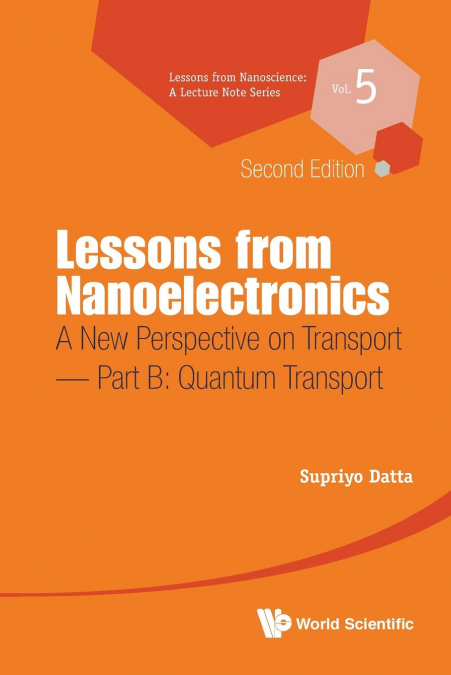
  • LESSON FR NANOELEC (2ND ED)(P2)
    DATTA SUPRIYO / Supriyo Datta
    Everyone is familiar with the amazing performance of a modern smartphone, powered by a billion-plus nanotransistors, each having an active region that is barely a few hundred atoms long. The same amazing technology has also led to a deeper understanding of the nature of current flow and heat dissipation on an atomic scale which is of broad relevance to the general problems of n...
  • LESSON FR NANOELEC (2ND ED)(P2)
    DATTA SUPRIYO / Supriyo Datta
    Everyone is familiar with the amazing performance of a modern smartphone, powered by a billion-plus nanotransistors, each having an active region that is barely a few hundred atoms long. The same amazing technology has also led to a deeper understanding of the nature of current flow and heat dissipation on an atomic scale which is of broad relevance to the general problems of n...
    Disponible

    57,62 €

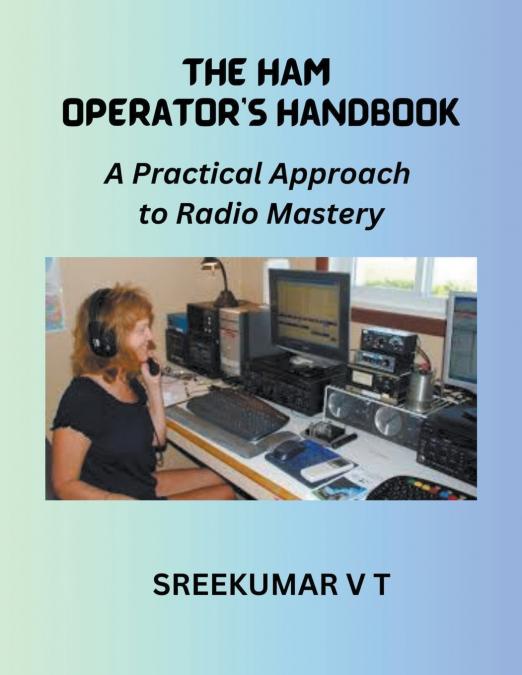
  • The HAM Operator’s Handbook
    SREEKUMAR V T / V T SREEKUMAR
    Unlock the secrets of amateur radio with 'The HAM Operator’s Handbook,' a comprehensive guide that takes you on a journey from the basics of radio communication to the cutting edge of HAM technology. Whether you’re a novice seeking to obtain your first license or a seasoned operator looking to deepen your mastery, this handbook is your essential companion in the world of amateu...
  • Delay-Adaptive Linear Control
    Miroslav Krstic / Yang Zhu
    Actuator and sensor delays are among the most common dynamic phenomena in engineering practice, and when disregarded, they render controlled systems unstable. Over the past sixty years, predictor feedback has been a key tool for compensating such delays, but conventional predictor feedback algorithms assume that the delays and other parameters of a given system are known. When ...
  • Mastering Electronics Repair
    SREEKUMAR V T / V T SREEKUMAR
    'Mastering Electronics Repair: A Practical Handbook for Beginners and Experts' is a comprehensive guide that covers everything from the basics of electronics to advanced repair techniques. Whether you’re just starting out or you’re an experienced repair expert looking to expand your skills, this book has something for you.The book begins with an introduction to basic electronic...
  • Electronics Made Easy
    SREEKUMAR V T / V T SREEKUMAR
    'Electronics Made Easy: A Beginner’s Handbook' is a comprehensive guide designed to introduce beginners to the fascinating world of electronics. This book covers everything you need to know to get started with electronics, from the basics of circuit theory to practical projects you can build at home. Whether you’re a complete novice or have some experience with electronics, thi...