 Librería Samer Atenea
 Kálamo Books
 Librería Elías (Asturias)
 Librería Kolima (Madrid)
 Librería Proteo (Málaga)
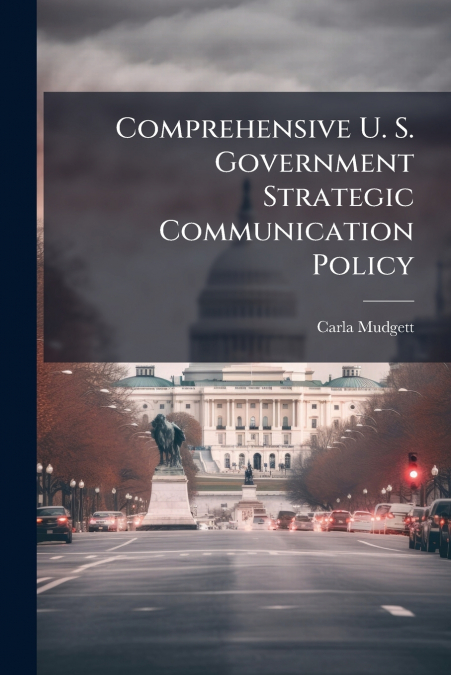
Strategic communication policy directly affects U.S. national interests. The United States is doing a poor job of promoting its messages around the world. Global opinion polls have shown a sharp drop in support for the United States over the past eight years, and many attribute that drop to the government’s lack of ability to communicate strategically. The United States’ strategic communication failure has cost the country friends and allies, and it also hurts the country’s ability to carry out its Overseas Contingency Operations missions in Afghanistan and Iraq. This paper examines strategic communication in past and current U.S. foreign policy. It applies lessons learned from the case study of U.S. strategic communication efforts during World War II to the current operating environment. The paper concludes with a list of recommendations for the future of U.S. government strategic communication policy, along with several proposals for future research.This work has been selected by scholars as being culturally important, and is part of the knowledge base of civilization as we know it. This work was reproduced from the original artifact, and remains as true to the original work as possible. Therefore, you will see the original copyright references, library stamps (as most of these works have been housed in our most important libraries around the world), and other notations in the work.This work is in the public domain in the United States of America, and possibly other nations. Within the United States, you may freely copy and distribute this work, as no entity (individual or corporate) has a copyright on the body of the work.As a reproduction of a historical artifact, this work may contain missing or blurred pages, poor pictures, errant marks, etc. Scholars believe, and we concur, that this work is important enough to be preserved, reproduced, and made generally available to the public. We appreciate your support of the preservation process, and thank you for being an important part of keeping this knowledge alive and relevant.