Inicio > > Programación informática/desarrollo de software > Compositionality, Concurrency, and Partial Correctness
Compositionality, Concurrency, and Partial Correctness

Compositionality, Concurrency, and Partial Correctness

Job Zwiers

66,32 €
IVA incluido
Disponible
Editorial:
Springer Nature B.V.
Año de edición:
1989
Materia
Programación informática/desarrollo de software
ISBN:
9783540508458
66,32 €
IVA incluido
Disponible

Selecciona una librería:

  • Librería Samer Atenea
  • Librería Aciertas (Toledo)
  • Kálamo Books
  • Librería Perelló (Valencia)
  • Librería Elías (Asturias)
  • Donde los libros
  • Librería Kolima (Madrid)
  • Librería Proteo (Málaga)

The hierarchical decomposition of programs into smaller ones is generally considered imperative to master the complexity of large programs. The impact of this principle of program decomposition on the specification and verification of parallel executed programs is the subject of this monograph. Two important yardsticks for verification methods, those of compositionality and modularity, are made precise. The problem of reusing software is addressed by the introduction of the notion of specification adaptation. Within this context, different methods for specifying the observable behavior with respect to partial correctness of communicating processes are considered, and in particular the contrast between the 'programs are predicates' and the 'programs are predicate transformers' paradigms is shown. The associated formal proof systems are proven sound and complete in various senses with respect to the denotational semantics of the programming language, and they are related to each other to give an in-depth comparison between the different styles of program verification. The programming language TNP used here is near to actual languages like Occam. It combines CCS/CSP style communication based programming with state based programming, and allows dynamically expanding and shrinking networks of processes.


Artículos relacionados

  • SPARK 2014 Reference Manual
    AdaCore / Altran UK Ltd
    SPARK 2014 is a programming language and a set of verification tools designed to meet the needs of high-assurance software development. SPARK 2014 is based on Ada 2012, both subsetting the language to remove features that defy verification, but also extending the system of contracts and aspects to support modular, formal verification.This manual is available online for free at ...
    Disponible

    19,91 €

  • Software and Intelligent Sciences
    Yingxu Wang
    The junction of software development and engineering combined with the study of intelligence has created a bustling intersection of theory, design, engineering, and conceptual thought. Software and Intelligent Sciences: New Transdisciplinary Findings sits at a crossroads and informs advanced researchers, students, and practitioners on the developments in computer science, theor...
  • Power System Planning Technologies and Applications
    Fawwaz Elkarmi / Nazih Abu Shikhah / Nazih Abu-Shikhah
    Planning is an important function of the management of any business, providing knowledge of future prospects and enabling prudent and appropriate decision-making. Planning is especially critical for power systems, since electricity is a fundamental part of modern societies and many conventional electrical energy resources currently in use are limited. Power System Planning Tech...
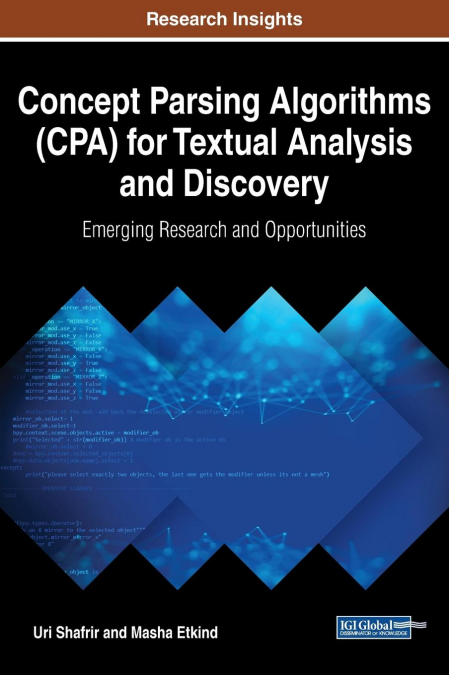
  • Concept Parsing Algorithms (CPA) for Textual Analysis and Discovery
    Masha Etkind / Uri Shafrir
    Text analysis tools aid in extracting meaning from digital content. As digital text becomes more and more complex, new techniques are needed to understand conceptual structure. Concept Parsing Algorithms (CPA) for Textual Analysis and Discovery: Emerging Research and Opportunities provides an innovative perspective on the application of algorithmic tools to study unstructured d...
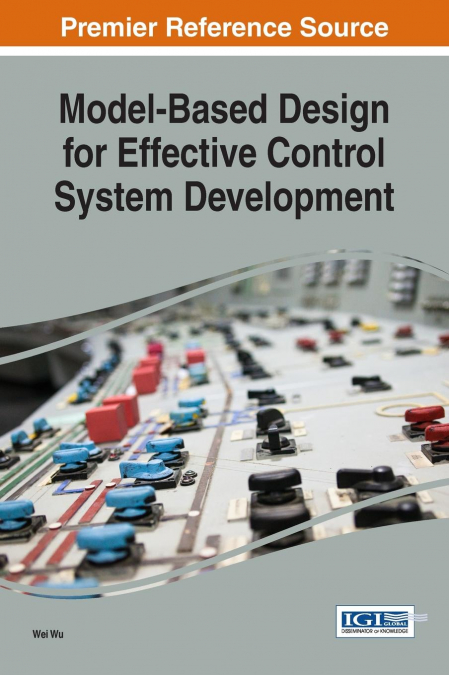
  • Model-Based Design for Effective Control System Development
    Wei Wu
    Control systems are an integral aspect of modern society and exist across numerous domains and applications. As technology advances more and more, the complexity of such systems continues to increase exponentially. Model-Based Design for Effective Control System Development is a critical source of scholarly information on model-centric approaches and implementations for control...
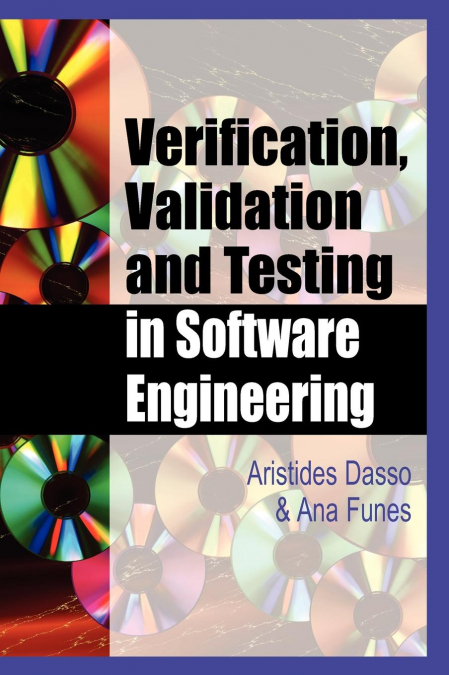
  • Verification, Validation and Testing in Software Engineering
    ...