 Librería Samer Atenea
 Kálamo Books
 Librería Elías (Asturias)
 Librería Kolima (Madrid)
 Librería Proteo (Málaga)
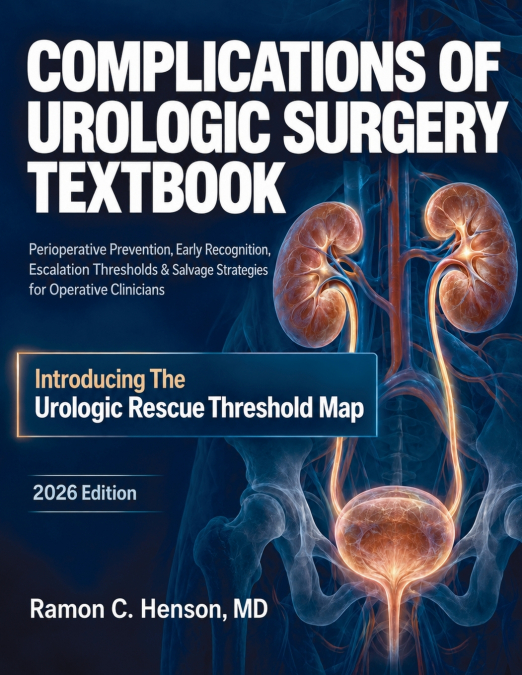
Recognize the Deviation, Define the Threshold, Preserve Function Urologic complications rarely remain confined to one structure. Bleeding, urinary leakage, obstruction, infection, bowel injury, device failure, and tissue ischemia can quickly threaten renal function, continence, sexual function, fertility, graft survival, or life. Written for residents, fellows, practicing urologists, and perioperative surgical teams, this textbook connects operative anatomy and injury mechanism to early recognition, management-directed imaging, escalation timing, source control, reconstruction, and functional recovery across the major domains of urologic surgery. The reader moves from the first abnormal postoperative signal to a defined diagnostic pivot, intervention threshold, rescue strategy, and follow-up plan. Clinical Capabilities Developed Across the Text Prevent avoidable injury - risk architecture, positioning safeguards, access planning, infection control, and surveillance matched to each operation Interpret early warning patterns - physiologic trends, pain trajectories, drain changes, urine output, laboratory shifts, and functional loss placed in operative context Select management-directed imaging - CT angiography, CT urography, cystography, pyelography, ultrasound, renography, endoscopy, and urodynamics linked to decisions Control urgent sources - resuscitation, decompression, drainage, embolization, debridement, endoscopic control, and reoperation thresholds organized by physiology Preserve reconstructive options - staged repair, tissue protection, diversion, reimplantation, revision, and salvage framed around viability and future function Manage procedure-specific harm - complications of stone, renal, adrenal, ureteral, bladder, prostate, urethral, pelvic, prosthetic, pediatric, and transplant surgery Protect long-term outcomes - surveillance and rehabilitation for renal decline, stricture, recurrent infection, pain, continence loss, sexual dysfunction, and quality-of-life consequences Use the threshold map to turn postoperative deviation into timely, function-preserving action.