Inicio > Humanidades > Historia > Commodities, Cash, and Clerics
Commodities, Cash, and Clerics

Commodities, Cash, and Clerics

Commodities, Cash, and Clerics

Donald Gene Pace

19,58 €
IVA incluido
Disponible
Editorial:
AuthorHouse
Año de edición:
2009
Materia
Historia
ISBN:
9781449017712
19,58 €
IVA incluido
Disponible

Selecciona una librería:

  • Librería Samer Atenea
  • Librería Aciertas (Toledo)
  • Kálamo Books
  • Librería Perelló (Valencia)
  • Librería Elías (Asturias)
  • Donde los libros
  • Librería Kolima (Madrid)
  • Librería Proteo (Málaga)

The massive movement of pioneer migrants into the Great American West has long captured the attention of writers. As with immigration to America generally, the prime motive for trans-Atlantic uprooting and settlement was economic. Yet there are major exceptions, such as John Winthrop’s Puritans, whose city-on-a-hill motives were largely other-worldly. So it was with the great Mormon migration that resulted in the unlikely confluence of desert and Saints in the Great Basin. These members of The Church of Jesus Christ of Latter-day Saints, imbued with the religious zeal needed to reenact the Hebrew exodus on an American stage, had been the victims of intolerance and bigotry. Their momentous spiritual odyssey in the West required economic diligence to achieve. Their economy was in many ways typical of that of other areas; cash was used, but commodities were also a major means of exchange. Yet there was a major difference, a practice seen nowhere else in America on the scale to which it emerged in Utah. For numerous Latter-day Saints, the first and foremost religious duty, and economic priority, was to give away one-tenth of their increase to the Church. Payment of the religious tithe became both common and extensive, so much so that the management of commodities became a major concern. This area of public resource management not only had religious implications, but also economic and social welfare consequences. As settlements expanded, tithing donations likewise grew, and an accompanying network of bishops proliferated to manage the tithing resources at the local, regional, and central levels. It is on these leaders, these ecclesiastical managers of donated resources that could melt, rot, make noise, and even run away, that this book focuses.


Artículos relacionados

  • Raising Freedom's Banner
    Paul Harris
    World wide history of peaceful street demonstrations from their earliest beginning in eighteenth century England to their use throughout the world in the twenty-first century. Describes why some demonstration movements succeeded and others failed. Contrasts demonstrations within the law with civil disobedience demonstrations. Describes Peterloo, the Chartists, the Suffragettes,...
    Disponible

    23,59 €

  • Waipi’o Valley
    Jeffrey L. Gross
    Waipi’o Valley: A Polynesian Journey from Eden to Eden recounts the remarkable migrations of the Polynesians across a third of the circumference of the earth. Their amazing journey began from Kalana i Hau’ola, the biblical “Garden of Eden” located along the shore of the Persian Gulf, extended to the Indus River Valley of ancient Vedic India, to Egypt where some ancestors of the...
  • Floralia
    June Rainsford Butler
    A century characterized by a growing interest in science, the opportunity for travel, and leisure for gardening furnishes the setting for Butler’s book. The rise of landscape gardening in England is traced, and the origin and history of its most famous gardens are given. The close relation between England and America in the field of horticulture is also discussed.Originally pub...
    Disponible

    61,20 €

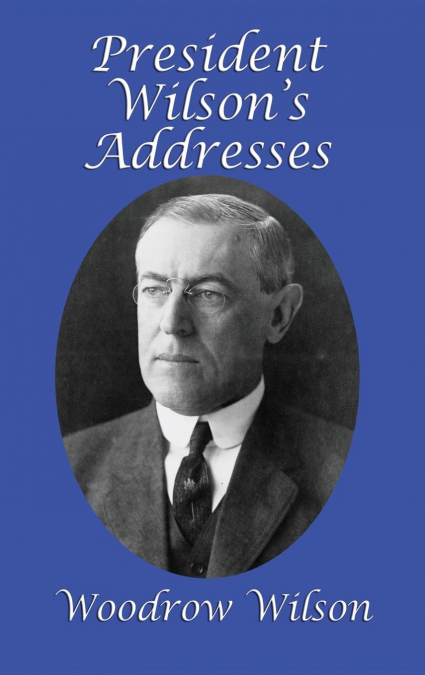
  • President Wilson’s Addresses
    Woodrow Wilson
    'These addresses of President Woodrow Wilson are almost entirely concerned with political affairs, and more specifically with defining Americanism. Yet they also show that even as he moved from academia to the heights of politics, Wilson retained something of the teacher’s interest in showing the relation between specific instances and the general forms of thought or action of ...
  • The Story of my Life
    John Albert Macy
    The Story of My Life, is Helen Keller’s autobiography detailing her early life, especially her experiences with Anne Sullivan. The book is dedicated to inventor Alexander Graham Bell. The dedication reads, 'To ALEXANDER GRAHAM BELL Who has taught the deaf to speak and enabled the listening ear to hear speech from the Atlantic to the Rockies, I dedicate this Story of My Life.' ...
  • The Story of My Life Vol. 6 Spanish Passions
    Giacomo Casanova
    Casanova was an Italian adventurer and author from the Republic of Venice. His autobiography, Histoire de ma vie (Story of My Life), is regarded as one of the most authentic sources of the customs and norms of European social life during the 18th century. He has become so famous for his often complicated and elaborate affairs with women that his name is now synonymous with 'wom...

Otros libros del autor

  • Unfettering Confession
    Donald Gene Pace
    This book introduces two major theoretical perspectives that have been consistently overlooked: the performance nature of confession, and the incorrect classification of confession as only a subset of autobiography. As this book demonstrates, confession is not always autobiographical but is always performative. ...
    Disponible

    52,04 €