 Librería Samer Atenea
 Kálamo Books
 Librería Elías (Asturias)
 Librería Kolima (Madrid)
 Librería Proteo (Málaga)
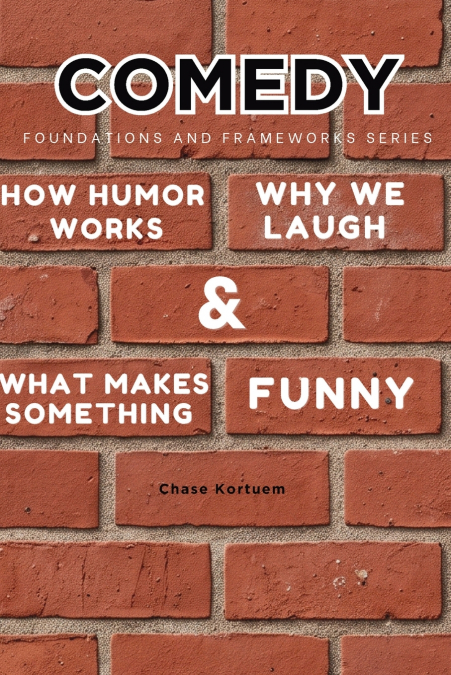
Comedy has rules, and this book explains them. Why does one punchline land while a nearly identical line dies in silence? What happens in the half second between hearing a joke and laughing at it? Nine chapters build on each other, starting with basic definitions and moving through joke mechanics, comic character, and the long argument over what comedy is allowed to touch. Ideas from psychology, linguistics, philosophy, and performance craft usually sit in separate corners. Here they are placed side by side, and every claim is tied to a named theory, a real study, or a technique working comedians use on stage. The chapters work through: - Humor, comedy, wit, and laughter treated as four separate things, with the etymology that explains why people confuse them - Four theories of why we laugh: superiority, relief, incongruity, and benign violation, including the cases where each one falls apart - What brain imaging shows about getting a joke, why laughter spreads through a room, and the two-stage process of surprise followed by resolution - Setup, target assumption, punchline, tags, callbacks, and the rule of three - Timing, pauses, and the reason extra words kill laughs - Puns, verbal irony, sarcasm, exaggeration, understatement, and the anti-joke that gets its laugh by refusing to be clever - Comic persona, the permission a strong persona grants a performer, status play between high and low characters, the double act, and why self-deprecation buys goodwill from a room - Stand-up, silent film gags, three-camera and single-camera sitcoms, satire, parody, and improv, with attention to how each form changes what can be funny - Punching up and punching down, the strongest objections to that framework, and why a joke that works on Tuesday fails on Wednesday Named examples run throughout, including Hobbes on sudden glory, Aristotle on the ridiculous, Henny Youngman’s three-word setup, Monty Python, Norm Macdonald, and The Simpsons. A historical timeline then traces comic storytelling across roughly 2,400 years, and a glossary defines every term introduced along the way, so nothing sits unexplained. Works cited and recommended readings point you toward the next book on the subject. Three kinds of readers get something different here: - Writers and performers who want to diagnose a bit instead of shrugging at it - Students and teachers in psychology, linguistics, film, literature, and media studies - Anyone who watches a lot of comedy and wants to see the machinery underneath it You already judge jokes accurately in real time, without effort and without knowing how you do it. This book brings that hidden skill up to the surface and hands you the concepts, frameworks, and vocabulary for it. A bit that isn’t working stops being a mystery and becomes a problem you can name and fix. You don’t need to be a singer to understand when someone sings well or is singing out of tune. The same goes for comedy, even though almost everyone can’t necessarily describe the mechanics. Think of it as music theory applied to comedy. Learn the mechanics of why funny things are funny.