 Librería Samer Atenea
 Librería Aciertas (Toledo)
 Kálamo Books
 Librería Perelló (Valencia)
 Librería Elías (Asturias)
 Donde los libros
 Librería Kolima (Madrid)
 Librería Proteo (Málaga)
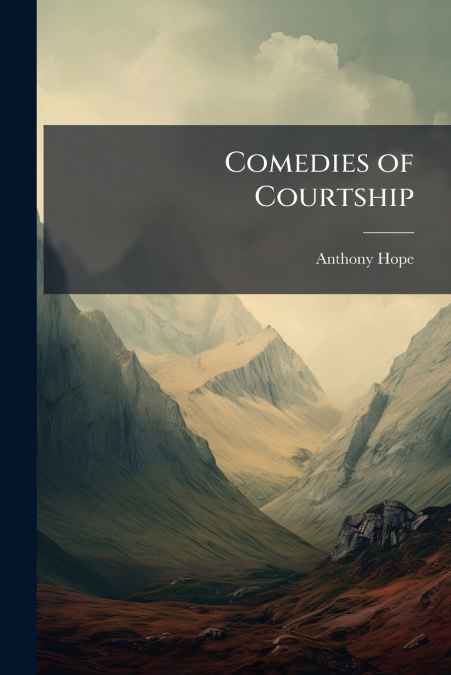
Comedies of Courtship, written by Anthony Hope and originally published in 1896, presents a delightful collection of short stories exploring the intricacies of love and marriage in late Victorian society. Hope, celebrated for his wit and insightful observations, crafts narratives that capture the nuances of courtship rituals and the societal expectations surrounding relationships. Each story offers a glimpse into the lives of characters navigating the complexities of affection, duty, and personal desire. With charming prose and engaging plots, these stories explore themes of social class, the pursuit of happiness, and the delicate balance between tradition and individual freedom. Readers will be entertained by the clever dialogue, memorable characters, and the enduring relevance of the human heart’s quest for connection. Comedies of Courtship remains a testament to Anthony Hope’s skill as a storyteller and his keen understanding of human nature.This work has been selected by scholars as being culturally important, and is part of the knowledge base of civilization as we know it. This work was reproduced from the original artifact, and remains as true to the original work as possible. Therefore, you will see the original copyright references, library stamps (as most of these works have been housed in our most important libraries around the world), and other notations in the work.This work is in the public domain in the United States of America, and possibly other nations. Within the United States, you may freely copy and distribute this work, as no entity (individual or corporate) has a copyright on the body of the work.As a reproduction of a historical artifact, this work may contain missing or blurred pages, poor pictures, errant marks, etc. Scholars believe, and we concur, that this work is important enough to be preserved, reproduced, and made generally available to the public. We appreciate your support of the preservation process, and thank you for being an important part of keeping this knowledge alive and relevant.