

 Librería Samer Atenea
 Kálamo Books
 Librería Elías (Asturias)
 Librería Kolima (Madrid)
 Librería Proteo (Málaga)
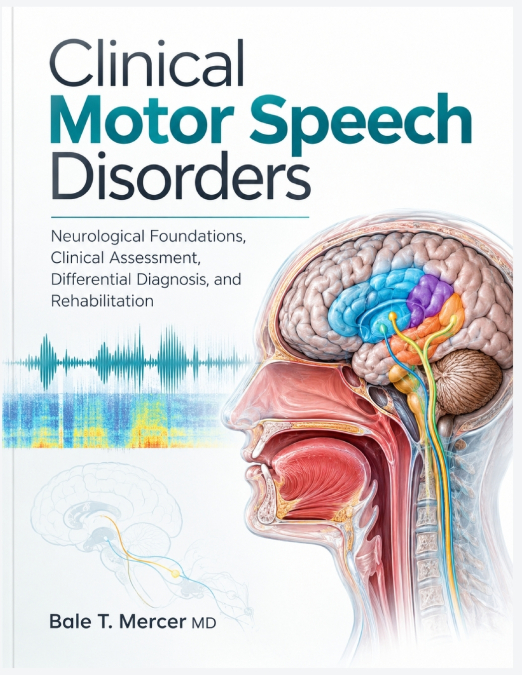
Motor speech disorders present complex clinical challenges at the intersection of neurology, speech science, and rehabilitation. Accurate diagnosis requires more than identifying altered speech characteristics; it demands an understanding of the neural systems responsible for speech production, the mechanisms underlying impaired motor control, and the ways these impairments affect communication in everyday life.Clinical Motor Speech Disorders provides a comprehensive examination of the neurological foundations, clinical manifestations, assessment principles, differential diagnosis, and rehabilitation of motor speech disorders. It connects the science of speech motor control with the clinical reasoning required to evaluate patients with dysarthria, acquired apraxia of speech, childhood apraxia of speech, and motor speech abnormalities associated with neurological, neuromuscular, and neurodegenerative conditions.The book examines the organization of neural systems involved in speech production, the physiological coordination of respiration, phonation, articulation, and prosody, and the mechanisms through which disruption of these systems produces distinct speech phenotypes. Particular attention is given to differentiating disorders that may share overlapping clinical features, including dysarthria, apraxia of speech, aphasia, and co-occurring communication impairments.Clinical assessment is treated as an integrated process involving case history, neurological context, perceptual speech analysis, intelligibility measurement, instrumental evaluation, and interpretation of functional communication. The discussion extends beyond diagnostic classification to consider how clinicians formulate complex cases, recognize diagnostic uncertainty, monitor progression, and select meaningful outcome measures.Rehabilitation is addressed through the principles of individualized intervention, evidence-based treatment planning, functional communication support, augmentative and alternative communication, and multidisciplinary care. The book also considers emerging applications of acoustic analysis, automated speech assessment, and digital communication technologies, emphasizing their potential value alongside their methodological limitations and the continuing importance of clinical judgment.Written for speech-language pathologists, neurologists, rehabilitation professionals, clinical researchers, educators, and advanced students, this volume offers a clinically grounded framework for understanding motor speech impairment across acquired, developmental, mixed, and progressive presentations.By integrating neurological mechanisms, diagnostic reasoning, assessment methods, and rehabilitation principles, Clinical Motor Speech Disorders supports a more precise and function-oriented approach to evaluating and managing speech motor impairment. Its emphasis on clinical interpretation and measurable communication outcomes makes it a valuable reference for professionals seeking to connect scientific knowledge with responsible, evidence-informed patient care.





