

 Librería Samer Atenea
 Kálamo Books
 Librería Elías (Asturias)
 Librería Kolima (Madrid)
 Librería Proteo (Málaga)
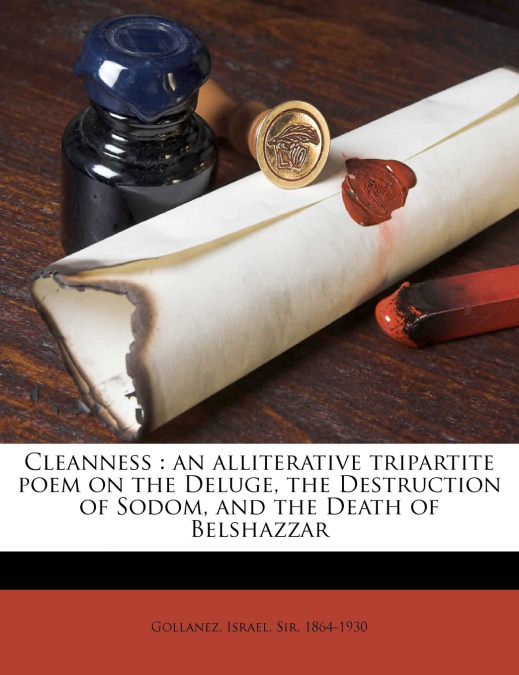
'Cleanness,' also known as 'Purity,' is a Middle English alliterative poem that forms part of the Cotton Nero A.x manuscript. This edition presents the poem, traditionally attributed to the Pearl Poet, in a meticulously prepared format, suitable for scholars and enthusiasts of medieval literature. The poem is structured in three parts, each exploring themes of cleanness and purity through vivid narratives. The first section recounts the story of the Deluge, emphasizing the destruction wrought by sin and the necessity of moral cleansing. The second section dramatically depicts the annihilation of Sodom and Gomorrah, illustrating the consequences of impurity and vice. The final part recounts the tale of Belshazzar’s feast and his subsequent demise, underscoring the importance of reverence and the dangers of sacrilege. Sir Israel Gollancz’s edition provides valuable insights into the poem’s historical and literary context, enhancing the reader’s appreciation of its enduring themes and artistic merit. 'Cleanness' remains a significant work in the Middle English canon, offering profound reflections on morality, divine justice, and the human condition.This work has been selected by scholars as being culturally important, and is part of the knowledge base of civilization as we know it. This work was reproduced from the original artifact, and remains as true to the original work as possible. Therefore, you will see the original copyright references, library stamps (as most of these works have been housed in our most important libraries around the world), and other notations in the work.This work is in the public domain in the United States of America, and possibly other nations. Within the United States, you may freely copy and distribute this work, as no entity (individual or corporate) has a copyright on the body of the work.As a reproduction of a historical artifact, this work may contain missing or blurred pages, poor pictures, errant marks, etc. Scholars believe, and we concur, that this work is important enough to be preserved, reproduced, and made generally available to the public. We appreciate your support of the preservation process, and thank you for being an important part of keeping this knowledge alive and relevant.





