Classical Indian Philosophy

Classical Indian Philosophy

Jonardon Ganeri / Peter Adamson

46,33 €
IVA incluido
Consulta disponibilidad
Editorial:
Oxford University Press
Año de edición:
2020
Materia
Filosofía oriental y de la India
ISBN:
9780198851769

Selecciona una librería:

  • Librería Samer Atenea
  • Librería Aciertas (Toledo)
  • Kálamo Books
  • Librería Perelló (Valencia)
  • Librería Elías (Asturias)
  • Donde los libros
  • Librería Kolima (Madrid)
  • Librería Proteo (Málaga)

Peter Adamson and Jonardon Ganeri present a lively introduction to one of the world’s richest intellectual traditions: the philosophy of classical India. They begin with the earliest extant literature, the Vedas, and the explanatory works that these inspired, known as Upaniá¹£ads. They also discuss other famous texts of classical Vedic culture, especially the MahÄ bhÄ rata and its most notable section, the Bhagavad-GÄta, alongside the rise of Buddhism and Jainism. In this opening section, Adamson and Ganeri emphasize the way that philosophy was practiced as a form of life in search of liberation from suffering. Next, the pair move on to the explosion of philosophical speculation devoted to foundational texts called ’sutras, ’ discussing such traditions as the logical and epistemological Ny^d=aya school, the monism of Advaita VedÄ nta, and the spiritual discipline of Yoga. In the final section of the book, they chart further developments within Buddhism, highlighting NagÄ rjuna’s radical critique of ’non-dependent’ concepts and the no-self philosophy of mind found in authors like DignÄ ga, and within Jainism, focusing especially on its ’standpoint’ epistemology. Unlike other introductions that cover the main schools and positions in classical Indian philosophy, Adamson and Ganeri’s lively guide also pays attention to philosophical themes such as non-violence, political authority, and the status of women, while considering textual traditions typically left out of overviews of Indian thought, like the CÄ rvÄ ka school, Tantra, and aesthetic theory as well. Adamson and Ganeri conclude by focusing on the much-debated question of whether Indian philosophy may have influenced ancient Greek philosophy and, from there, evaluate the impact that this area of philosophy had on later Western thought.


Artículos relacionados

  • Bhagavad Gītā
    Swami Lakshmanjoo
    This treasure of knowledge was one of the last works by Swami Lakshmanjoo. He said, "It was a new revelation of the supreme secrets, hidden in the Kashmiri recension of the Bhagavad Gita." Based on Abhinavagupta's commentary of the Gitarthasamgraha, "The Essence of the Gita", Swamiji declared that, "this revelation was initiated by his direct experience of the state of Univ...
  • Fiery World III
    Agni Yoga Society
    Fiery World III is the eleventh book from the Agni Yoga Series which is composed of fourteen books. In them is found a synthesis of ancient Eastern beliefs and modern Western thought and a bridge between the spiritual and the scientific. Unlike previous yogas, Agni Yoga is a path not of physical disciplines, meditation, or asceticism—but of practice in daily life. It is the yog...
    Disponible

    14,47 €

  • Bhagavad Gī̄tā
    Swami Lakshmanjoo
    This treasure of knowledge was one of the last works by Swami Lakshmanjoo. He said, "It was a new revelation of the supreme secrets, hidden in the Kashmiri recension of the Bhagavad Gita." Based on Abhinavagupta's commentary of the Gitarthasamgraha, "The Essence of the Gita", Swamiji declared that, "this revelation was initiated by his direct experience of the state of Univ...
    Disponible

    26,24 €

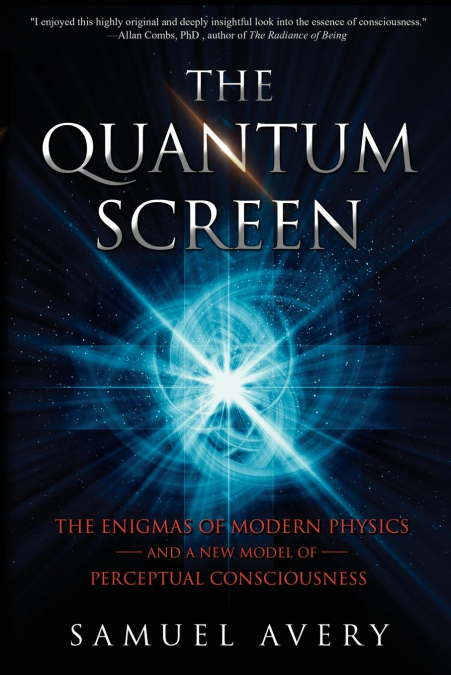
  • The Quantum Screen
    Samuel Avery
    What is the connection between physics and consciousness? In this groundbreaking new book, Samuel Avery presents the quantum screen, a paradigm-shifting model of perceptual consciousness and of the world. This model looks to the enigmas of modern physics to demonstrate the primacy of consciousness—the essential oneness of spirit and matter.Our intellectual culture is divided be...
    Disponible

    13,80 €

  • Confucian Analects
    Confucius
    The superior man bends his attention to what is radical. That being established, all practical courses naturally grow up. Filial piety and fraternal submission,-are they not the root of all benevolent actions?To rule a country of a thousand chariots, there must be reverent attention to business, and sincerity; economy in expenditure, and love for men; and the employment of the ...
  • Leaves of Morya’s Garden II
    Agni Yoga Society
    Leaves of Morya's Garden II (Illumination) is the second book from the Agni Yoga Series which is composed of fourteen books. In them is found a synthesis of ancient Eastern beliefs and modern Western thought and a bridge between the spiritual and the scientific. Unlike previous yogas, Agni Yoga is a path not of physical disciplines, meditation, or asceticism—but of practice...
    Disponible

    12,10 €