Inicio > Humanidades > Filosofía > Ética y filosofía moral > Christianity and Extraterrestrials?
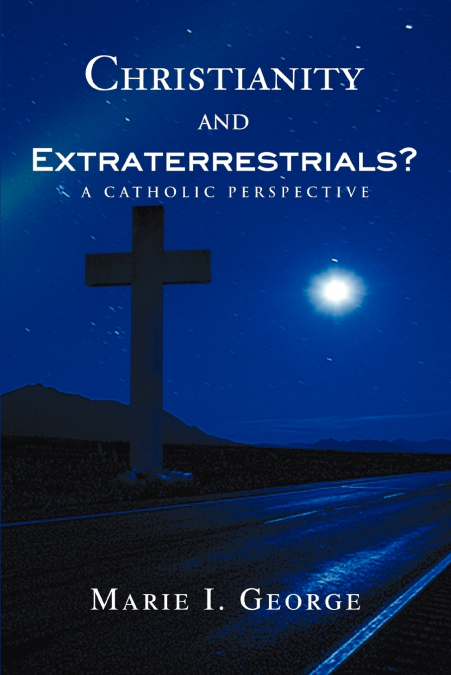
Christianity and Extraterrestrials?

Christianity and Extraterrestrials?

Christianity and Extraterrestrials?

Marie I. George / Marie IGeorge

17,37 €
IVA incluido
Disponible
Editorial:
iUniverse
Año de edición:
2005
Materia
Ética y filosofía moral
ISBN:
9780595358274
17,37 €
IVA incluido
Disponible

Selecciona una librería:

  • Librería Samer Atenea
  • Librería Aciertas (Toledo)
  • Kálamo Books
  • Librería Perelló (Valencia)
  • Librería Elías (Asturias)
  • Donde los libros
  • Librería Kolima (Madrid)
  • Librería Proteo (Málaga)

Does ETI existence spell the death of Christianity? The increasingly popular answer is ’yes'. Marie George argues, to the contrary, that Christian belief is compatible with ETI existence, by examining Roman Catholic teaching and Scripture. She then makes a case that while Christian belief does not exclude ETI existence, it does render it improbable. George goes on to expose the faulty reasoning behind the common opinion that science indicates that the universe surely contains other intelligent life forms. She closes with speculations on what the Catholic Church might eventually say about ETIs. Central to her analysis is the cosmic role of Christ.’I appreciate arguments like those in Christianity and Extraterrestrials?, laid out carefully and investigated thoroughly. If more writers proceeded with Dr. George’s care and courtesy, there would be new hope for peace in the world.'John L. Barger, Ph.D.Publisher, Sophia Institute Press'Although some of Dr. George’s claims are controversial, she is clearly an author seeking the truth and open to opposing arguments. Moreover, she has sought out the best sources and used them wisely-in short, an admirable scholarly presentation.'Michael J. CroweCavanaugh Professor Emeritus, University of Notre Dame and author of The Extraterrestrial Life Debate, 1750-1900
Artículos relacionados

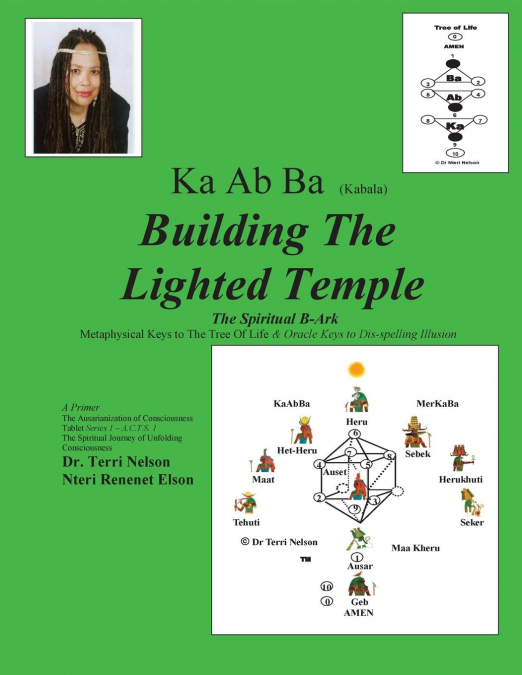
  • Ka Ab Ba Building The Lighted Temple
    Dr Terri R. Nelson / Dr Terri RNelson
    The book KaAbBa Building The Lighted Temple/Metaphysical Keys to the Tree of Life draws a circle that is inclusive of the Afrikan origin of the Ancient Kemetic/Egyptian wisdom. It reveals the undeniable root and link of Ancient Africa to all the religious systems that would develop worldwide. This book is explosive in its power to convey the meaning of KaAbBa, the Medu Neter  (...
    Disponible

    37,41 €

  • Technoethics and the Evolving Knowledge Society
    Rocci Luppicini
    Recently, there has been a major push to rediscover the ethical dimension of technology across the sciences, social sciences, and humanities. Technoethics and the Evolving Knowledge Society: Ethical Issues in Technological Design, Research, Development, and Innovation examines human processes and practices connected to technology embedded within social, political, and moral sph...
  • Kant
    Immanuel Kant
    Kant’s Groundwork of the Metaphysics of Morals is one of the most important works in modern moral philosophy. It belongs beside Plato, Aristotle, Machiavelli, and Hobbes. Here Kant sets out to articulate and defend the Categorical Imperative - the fundamental principle that underlies moral reasoning - and to lay the foundation for a comprehensive account of justice and human vi...
  • On the Duty of Civil Disobedience
    HENRY DAVID THOREAU
    Civil Disobedience argues that citizens should not permit their governments to overrule their consciences, and that they have a duty to avoid allowing their acquiescence to enable the government to make them the agents of injustice. Thoreau was motivated in part by his disgust with slavery and the Mexican-American War, but the sentiments he expresses here are just as pertinent ...
  • Beyond Good and Evil
    Friedrich Nietzsche
    Nietzsche, though primarily a philosopher, wrote widely on art, philology, history, religion, tragedy, culture, and science.  In 1886, at the height of his powers, he published Beyond Good and Evil.  Here he examines much of the best of human thought--dogmatic philosophy, Judeo-Christian morality, science and democracy – and finds it lacking.  Rejecting “slave-morality” he pres...
  • Beyond Good and Evil
    Friedrich Nietzsche
    Nietzsche, though primarily a philosopher, wrote widely on art, philology, history, religion, tragedy, culture, and science.  In 1886, at the height of his powers, he published Beyond Good and Evil.  Here he examines much of the best of human thought--dogmatic philosophy, Judeo-Christian morality, science and democracy – and finds it lacking.  Rejecting “slave-morality” he pres...
    Disponible

    9,99 €

Otros libros del autor