Inicio > Matemáticas y ciencia > Química > Química física > CHIRAL PHOTOCHEMICAL SCISSORS TARGETING PROTEINS
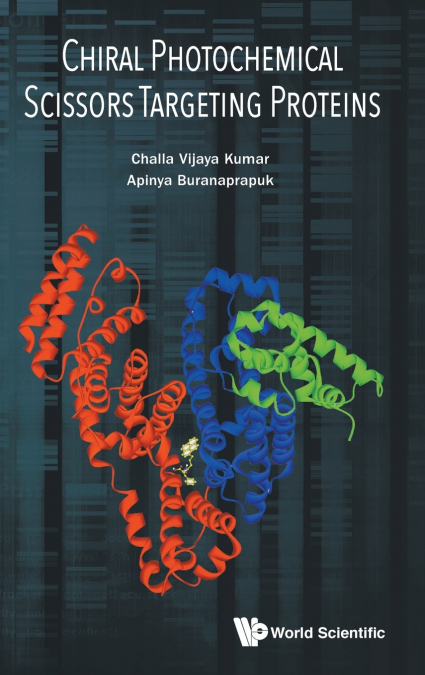
CHIRAL PHOTOCHEMICAL SCISSORS TARGETING PROTEINS

CHIRAL PHOTOCHEMICAL SCISSORS TARGETING PROTEINS

Apinya Buranaprapuk / Challa Vijaya Kumar / CHALLA VIJAYA KUMAR & APINYA BURANAPRAPU / KUMAR CHALLA VIJAYA

196,16 €
IVA incluido
Consulta disponibilidad
Editorial:
World Scientific Publishing Co Pte Ltd
Año de edición:
2018
Materia
Química física
ISBN:
9789813237612

Selecciona una librería:

  • Librería Samer Atenea
  • Librería Aciertas (Toledo)
  • Kálamo Books
  • Librería Perelló (Valencia)
  • Librería Elías (Asturias)
  • Donde los libros
  • Librería Kolima (Madrid)
  • Librería Proteo (Málaga)

The remarkable ability to target one or even a couple of sites on a large protein with a small molecule, under photochemical control, is a considerable challenge and this challenge has been addressed in some depth in this book. Systematic modification of the structure of the photoreagent provided valuable information on the binding site recognition as well as the mechanism of the photocleavage reaction. Some factors that impact the photocleavage reaction include the exact location of the probe binding site on the protein, conformations of the bound probe at the binding site, protein size, functional groups present on the probe that interact with the protein surroundings either in a favorable or unfavorable manner, overall charge on the photoreagent, and photophysical as well as photochemical properties of the probe. The protein photocleavage studies, in all case, were preceded by detailed binding studies by a variety of spectroscopic methods. Methods as simple as absorption and fluorescence spectroscopies or more sophisticated circular dichroism spectroscopy were used. Conclusions that are most consistent with the binding data indicated a single binding site on most proteins, irrespective of the probe or the protein, with only one exception noted so far. Photoactivation of the bound probe resulted in protein cleavage at a single site, in many instances. The specificity for the reaction has been investigated in detail and molecular modeling studies provided a firm ground to rationalize the observed cleavage sites. The reagents provide unique tools for sequencing large proteins by converting them into smaller fragments by non-biochemical transformations. Understanding of the rules for the above methodology are also investigated which provided rational methods for the design of small molecules that could bind at particular sites on large proteins, and this is a major breakthrough for a variety of fields including drug design, protein targeting, mass spectrometry, proteomics and other cutting-edge research areas.
Artículos relacionados

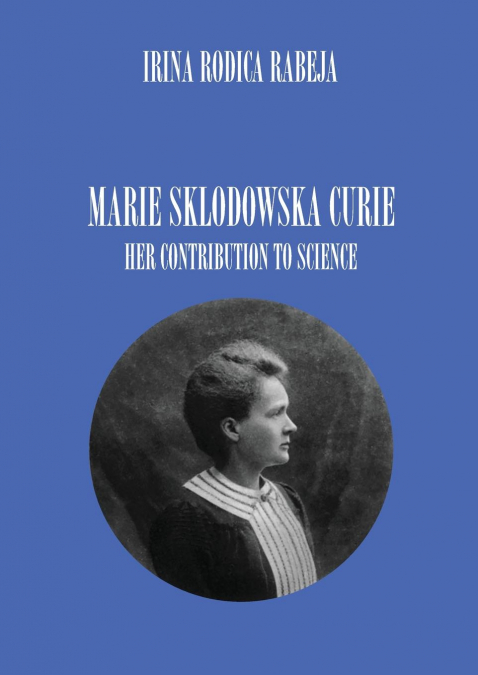
  • MARIE SKLODOWSKA CURIE
    Irina Rodica Rabeja
    Marie Sklodowska Curie (7 November 1867 – 4 July 1934) was one of the greatest scientific minds that brought a fundamental contribution in science opening the door to the understanding/knowledge of the structure of the atom in the 20th century.                 Marie Sklodowska Curie’s hypothesis that the spontaneous emission of powerful rays by some chemical elements, emission ...
    Disponible

    89,28 €

  • COMPUTER SIMULATIONS OF MOLECULES AND CONDENSED MATTER
    En-Ge Wang / LI XIN-ZHENG / Xin-Zheng Li / XIN-ZHENG LI & EN-GE WANG
    This book provides a relatively complete introduction to the methods used in computational condensed matter. A wide range of electronic structure theories are introduced, including traditional quantum chemistry methods, density functional theory, many-body perturbation theory, and more. Molecular dynamics simulations are also discussed, with extensions to enhanced sampling and ...
  • APPLIED THEORETICAL ORGANIC CHEMISTRY
    DEAN J TANTILLO / TANTILLO DEAN J
    This book provides state-of-the-art information on how studies in applied theoretical organic chemistry are conducted. It highlights the many approaches and tools available to those interested in using computational chemistry to predict and rationalize structures and reactivity of organic molecules. Chapters not only describe theoretical techniques in detail, but also describe ...
  • ELECTROANALYTICAL METHODS
    S Rani
    'Electroanalytical Methods' is a pivotal text that offers a comprehensive exploration of electrochemistry and its numerous applications across a wide array of scientific disciplines, including earth science, life science, physical science, biochemistry, and pharmaceutical chemistry. This book is an invaluable resource for chemistry graduates, underlining the increasing necessit...
    Disponible

    18,75 €

  • Advances in the Preparation, Properties and Application of Polyurethane, Cellulose and Their Composites
    Due to their excellent properties, polyurethane, cellulose and their composites have become widely used in previously unimagined areas. Given the fast-increasing consumption in recent years, the demand for advanced polyurethane- and cellulose-based composites is rapidly growing. Accordingly, this Special Issue seeks to showcase research papers, short communications and review a...
  • QUANTUM FIELD THEORY
    PORTER RICHARD N / RICHARD N PORTER
    This introduction to quantum field theory (QFT) is written by a physical chemist for physical chemists, chemical physicists, and other non-physicists with knowledge of quantum theory but who want to explore ways in which they might use the power of QFT in their investigations. This book starts where many graduate courses in quantum theory that are offered to chemistry students ...