China’s Macroeconomic Outlook

China’s Macroeconomic Outlook

CMR of Xiamen University

135,48 €
IVA incluido
Disponible
Editorial:
Springer Nature B.V.
Año de edición:
2015
Materia
Macroeconomía
ISBN:
9783642437564
135,48 €
IVA incluido
Disponible

Selecciona una librería:

  • Librería Samer Atenea
  • Librería Aciertas (Toledo)
  • Kálamo Books
  • Librería Perelló (Valencia)
  • Librería Elías (Asturias)
  • Donde los libros
  • Librería Kolima (Madrid)
  • Librería Proteo (Málaga)

Owing to the decline in domestic investment and trade with the rest of the world, China’s real GDP in the first half of 2012 was lower than expected. Based on forecasts from China’s Quarterly Macroeconomic Model (CQMM), the slowdown of the growth rate in 2013 will be moderate as a result of modestly proactive macro control policy. GDP would grow at 8.01 percent in 2012, and then rebound to 8.29 in 2013; CPI would fall to a 2.9 percent in 2012, and then would pick up to 3.27 percent in 2013. In the scenario in which the sovereign debt crisis in the euro area worsened in the second half of 2012, real GDP is forecast at 7.71 percent for 2012 and 7.5 percent for 2013. Even if the external economic environment becomes worse, China’s growth is expected to stay at above 7.5 percent, which might be a steady growth rate for the near future. If China plans to achieve a higher growth rate by launching the '2 trillion massive investment package', the growth rate of GDP could be increased to 8.25 and 8.86 percent in 2012 and 2013 with a risk of inflation and worsening economic structure. The policy implication from CQMM: on one hand the Chinese government should be able to maintain the growth rate of around 8 percent by means of timely fine-tuning of monetary policies; on the other hand, the emphasis of the micro control should be placed on structural adjustments through fiscal policies. In the long run, deepening economic, social and institutional reform will be crucial to remove the significant structural imbalance and institutional barriers to market competition, to accelerate the transformation of economic development patterns, and finally to maintain a sustainable growth rate.
Artículos relacionados

  • Introduction to Dynamic Macroeconomic General Equilibrium Models
    José Luis Torres Chacon
    This book offers an introductory step-by-step course in Dynamic Stochastic General Equilibrium modelling. Modern macroeconomic analysis is increasingly concerned with the construction, calibration and/or estimation and simulation of Dynamic General Equilibrium (DGE) models. The book is intended for graduate students as an introductory course to DGE modelling and for those econo...
    Disponible

    61,40 €

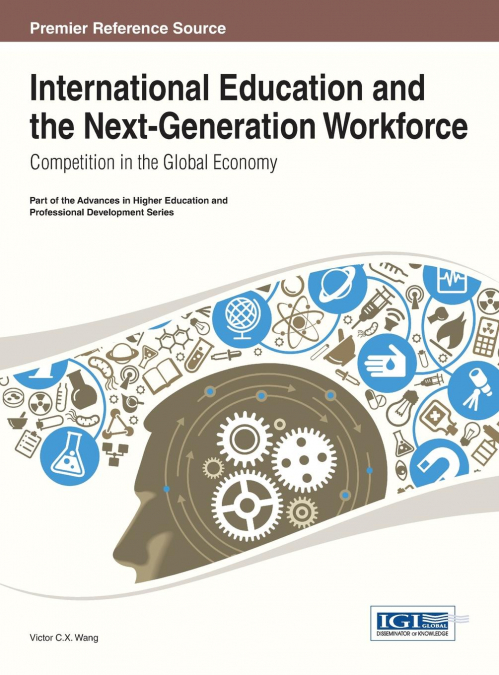
  • International Education and the Next-Generation Workforce
    Wei Wang
    Education is the first stage in developing a viable, dynamic, and long-lived global economy. Unfortunately, in times of economic hardship, educational programs, teacher salaries, and extracurricular opportunities are often the first to be cut. International Education and the Next-Generation Workforce: Competition in the Global Economy presents a detailed discussion of present e...
  • Macroeconomic Policies of Developed Democracies
    Robert J Franzese Jr
    ...
  • End Of The Road
    Louis Holder
    This book is about the mismanagement of Western economies in pursuit of political power, which resulting devastation will have to be borne by future generations. The book establishes that postponement is no longer doable and lays out the hard choices ahead causing much misery and agony.Although not fully recognized because of masking by asset bubbles, which are spun/sold as in...
    Disponible

    16,42 €

  • The Darwin Economy
    Robert H. Frank
    What Charles Darwin can teach us about building a fairer societyWho was the greater economist-Adam Smith or Charles Darwin? The question seems absurd. Darwin, after all, was a naturalist, not an economist. But Robert Frank, New York Times economics columnist and best-selling author of The Economic Naturalist, predicts that within the next century Darwin will unseat Smith as the...
    Disponible

    22,42 €

  • Myth and Measurement
    Alan B. Krueger / David Card
    From David Card, winner of the Nobel Prize in Economics, and Alan Krueger, a provocative challenge to conventional wisdom about the minimum wageDavid Card and Alan B. Krueger have already made national news with their pathbreaking research on the minimum wage. Here they present a powerful new challenge to the conventional view that higher minimum wages reduce jobs for low-wage ...
    Disponible

    39,64 €

Otros libros del autor

  • China’s Macroeconomic Outlook
    CMR of Xiamen University
    This book is a quarterly forecast and analysis report on the Chinese economy. It is published twice a year and presents ongoing results from the 'China Quarterly Macroeconomic Model (CQMM),' a research project at the Center for Macroeconomic Research (CMR) at Xiamen University. Based on the CQMM model, the research team forecast major macroeconomic indicators for the next 8 qua...
    Disponible

    67,93 €

  • China’s Macroeconomic Outlook
    CMR of Xiamen University
    This book is a quarterly forecast and analysis report on the Chinese economy. It is published twice a year and presents ongoing results from the 'China Quarterly Macroeconomic Model (CQMM),' a research project at the Center for Macroeconomic Research (CMR) at Xiamen University. Based on the CQMM model, the research team forecast major macroeconomic indicators for the next 8 qua...
  • China’s Macroeconomic Outlook
    CMR of Xiamen University
    ​This book provides key insights into how to control local government debts and optimize the makeup of debts in China. The rapid growth of investment in infrastructure on the part of local governments has offset the slowdown of investment growth in manufacturing and real estate and maintained the growth rate of 7.7% in 2013. However, local governments’ debts have accumulated, ...
    Disponible

    66,74 €

  • China’s Macroeconomic Outlook
    CMR of Xiamen University
    ​This book provides key insights into how to control local government debts and optimize the makeup of debts in China. The rapid growth of investment in infrastructure on the part of local governments has offset the slowdown of investment growth in manufacturing and real estate and maintained the growth rate of 7.7% in 2013. However, local governments’ debts have accumulated, ...