Baron George Gordon Byron Byron
 Librería Samer Atenea
 Kálamo Books
 Librería Elías (Asturias)
 Librería Kolima (Madrid)
 Librería Proteo (Málaga)
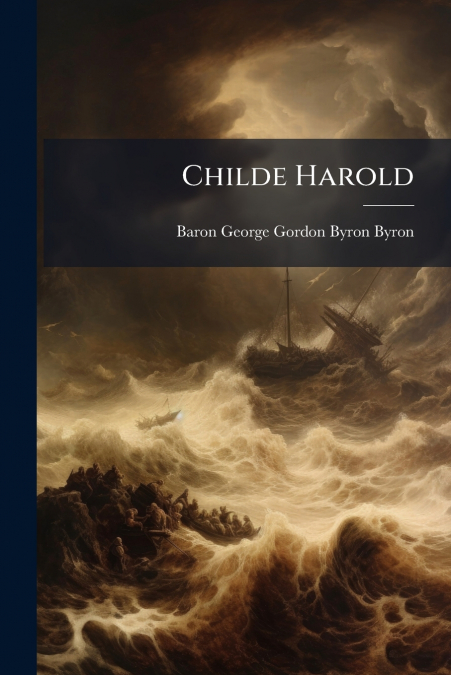
'Childe Harold’s Pilgrimage' is a long narrative poem in four parts written by Lord Byron. The first two cantos were published in 1812, and established Byron’s reputation. He later added two more cantos, published in 1816 and 1818. The poem describes the travels and reflections of a world-weary young man, disillusioned with a life of pleasure and revelry, and who looks for distraction in foreign lands. In Canto the Fourth, Byron reflects on themes of history, art, and freedom as he travels through Italy. This edition also includes 'The Prisoner of Chillon', a poem based on the story of François Bonivard, who was imprisoned in the Castle of Chillon for his political beliefs, and 'Mazepa', a narrative poem based on the legend of Ivan Mazepa, who became a symbol of Ukrainian resistance against Russian rule.This work has been selected by scholars as being culturally important, and is part of the knowledge base of civilization as we know it. This work was reproduced from the original artifact, and remains as true to the original work as possible. Therefore, you will see the original copyright references, library stamps (as most of these works have been housed in our most important libraries around the world), and other notations in the work.This work is in the public domain in the United States of America, and possibly other nations. Within the United States, you may freely copy and distribute this work, as no entity (individual or corporate) has a copyright on the body of the work.As a reproduction of a historical artifact, this work may contain missing or blurred pages, poor pictures, errant marks, etc. Scholars believe, and we concur, that this work is important enough to be preserved, reproduced, and made generally available to the public. We appreciate your support of the preservation process, and thank you for being an important part of keeping this knowledge alive and relevant.