 Librería Samer Atenea
 Kálamo Books
 Librería Elías (Asturias)
 Librería Kolima (Madrid)
 Librería Proteo (Málaga)
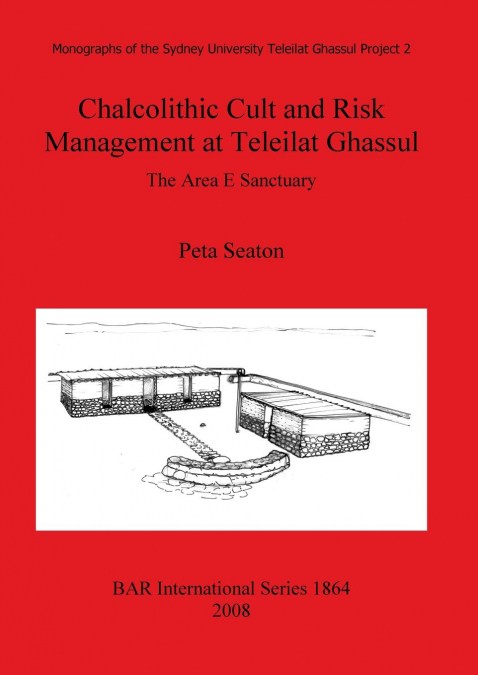
Monographs of the Sydney University Teleilat Ghassul Project 2This work addresses a number of issues emerging from evidence from Teleilat Ghassul in the south Jordan Valley, incorporating unpublished material from Professor J.B. Hennessy's excavations in 1967, 1975-1977, and new material from Bourke's 1994- present campaigns at the site. These include: A report of the excavated material and architecture from Area E, the 'Sanctuary' precinct; Justification for the 'cultic' attribution of the precinct, and some proposals about the nature of the cult activities and their purpose; The evidence for emerging internal competitive diversity in cult and religious activities at the site, its cause and consequences; Observations on the spatial and temporal place of Teleilat Ghassul, and specifically the Sanctuary, in the broader Chalcolithic and pre-state spectrum; The extent to which cult expression reflects a social response to managing crisis, rather than success; The extent to which the evidence supports conventional paradigms about increasing social, economic and technological complexity in pre-state societies, and the value added by the Ghassul evidence to our understanding of Chalcolithic culture and social systems; Analysis of the extent to which the Sanctuary and the broader site can inform the extension of archaeological analysis, to identify the conscious behaviour and evidence of individuals manipulating social and economic circumstances to alter the power relationships in a community; and the degree to which we can extend recent conceptual frameworks in articulating an 'Archaeology of Politics' from pre-literate evidence in cult contexts. Part I presents a full report on the architecture, ceramics and small finds from Area E. The stratigraphy, architecture and phasing of the Sanctuary precinct, including the Sanctuary Courtyard, and the adjacent Industrial Area, reports previously unpublished detail of the excavated remains. This is followed by the ceramics from the Sanctuary precinct, with reference to the Pontifical Biblical Institute material where appropriate and with a broad indication of parallels in the region. The distribution of ceramic forms and wares is presented as the basis of evidence for the unique and specialised nature of the Sanctuary. Objects from the Sanctuary precinct are also presented in a comparable descriptive and statistical format to the ceramics. The architecture of other Chalcolithic sites, cultic and domestic, is discussed in Part II with the aim of drawing conclusions about the function of the Sanctuary, and its relationship with identified comparators at En Gedi and Gilat. Possible links with Mesopotamian, southern Anatolian, Syrian, Egyptian and desert sites are also explored. Part III takes a deliberate context-based approach to cult analysis, drawing together the objects from the Sanctuary Courtyard, Sanctuary Temenos, Industrial Area and Painters Workshop to demonstrate the significance of the components of each assemblage and their relationship to the cult activities. Part III also examines the Ghassul Area E Sanctuary against existing and respected models of cultic criteria and recommends additional criteria to be added to this model. A catalogue of objects from the Sanctuary precinct is presented in the Appendix to emphasise the significance of each assemblage and promote the benefits of context-based publication of objects. Part III draws together current debates and evidence on chronology, environment and economy in the Chalcolithic with specific reference to Ghassul and the Sanctuary, and presents some conclusions about the evidence for risk and crisis, which may have generated the social and political responses by groups and individuals inherent in the Sanctuary evidence. Conclusions in Part IV respond to the aims set out above.