

 Librería Samer Atenea
 Kálamo Books
 Librería Elías (Asturias)
 Librería Kolima (Madrid)
 Librería Proteo (Málaga)
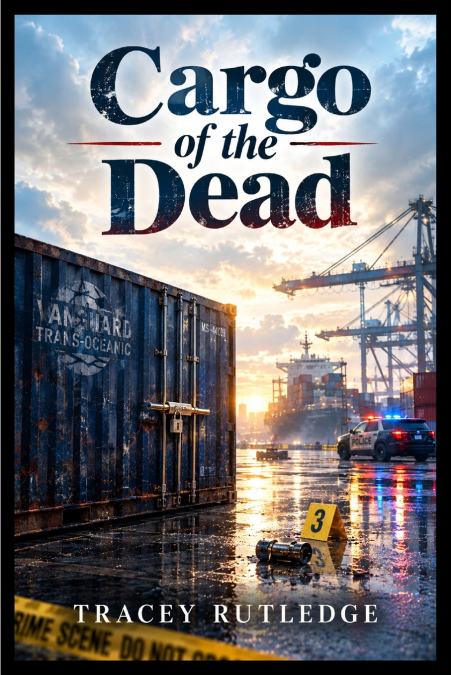
A supposedly decommissioned shipping container should hold no surprises. But when Detective Declan Shaw discovers the frozen body of Julian Croft inside container MS-4409, the case immediately raises questions that the port’s official records cannot answer. Croft was a port systems architect, and the container carries an unlisted polymer cargo. Its presence points toward something far more troubling than a routine shipping irregularity.Shaw begins tracing the container’s movements and finds a trail complicated by phantom shipments, obsolete containers, and manifests that do not tell the whole story. The port’s logistics systems are supposed to make cargo movements traceable, yet the records appear to have been manipulated. Containers seem to exist outside the official accounting, while documentation that should establish where goods came from and where they went offers little reassurance. Someone has turned the machinery of commercial transport into a means of concealing activity.The investigation soon encounters resistance from inside the very system Shaw needs to understand. Deputy Chief Malcolm Ross attempts to suppress the inquiry, making it increasingly difficult to distinguish ordinary bureaucracy from deliberate obstruction. If the records are unreliable and senior officials are unwilling to cooperate, Shaw must determine which pieces of information can be trusted before the evidence disappears or the people connected to it are put at risk.He does not pursue the case alone. Customs auditor Eleanor Vance brings her knowledge of discrepancies and documentation, while dockworkers such as Marcus Cole provide a perspective grounded in the daily reality of the port. Naomi Croft, a witness connected to Julian, may hold information that helps explain why the architect ended up inside a sealed container. Their different positions reveal different parts of the same complicated system: the official paperwork, the physical movement of cargo, and the human consequences hidden behind both.As the investigation develops, the unlisted polymer cargo and the false manifests become central questions. Why was a decommissioned container being used? How could shipments pass through a major port without appearing properly in the records? And what had Julian Croft discovered about the infrastructure that made the port operate? The answers appear connected to a cover-up involving automated logistics and hidden shipments, with murder serving as a chilling indication of how far someone may go to protect the arrangement.For Shaw, solving the case means looking beyond the body and the container number. The port is a world of interconnected routes, records, schedules, and authorities, where a small alteration can hide a much larger movement. The challenge is to connect the surviving clues without allowing official pressure to dictate what the evidence is permitted to say.Cargo of the Dead is a crime mystery set amid the machinery of international shipping, where sealed containers and digital records conceal more than goods. It explores the vulnerabilities of complex systems, the danger of institutional interference, and the persistence required to investigate a death when the infrastructure itself may be part of the cover-up. In a place built to track everything that moves, the most important cargo may be the very thing someone has worked hardest to hide.





