 Librería Samer Atenea
 Kálamo Books
 Librería Elías (Asturias)
 Librería Kolima (Madrid)
 Librería Proteo (Málaga)
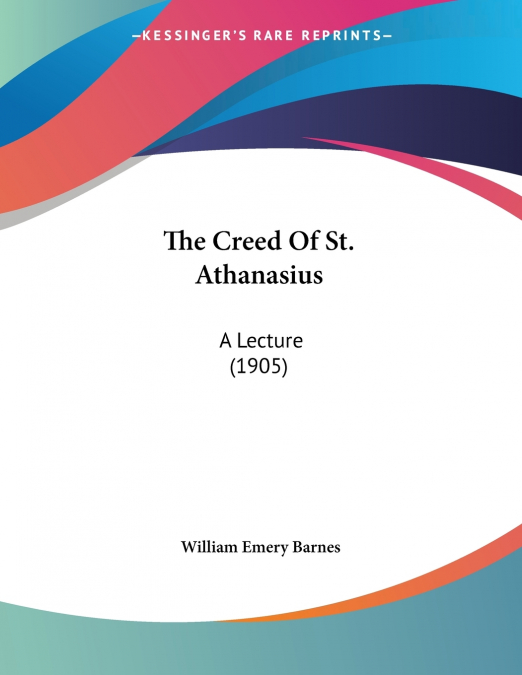
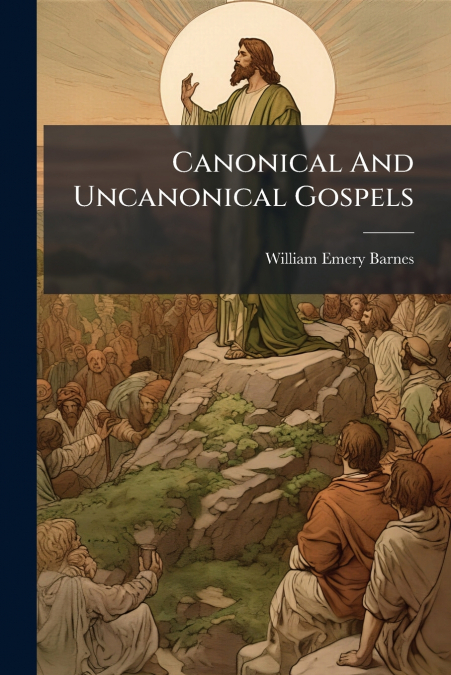
Canonical and Uncanonical Gospels delves into the rich tapestry of early Christian writings, exploring both the accepted Gospels and those that were excluded from the biblical canon. William Emery Barnes provides a valuable resource for understanding the diverse perspectives and beliefs circulating in the early Church. This volume includes a translation of the recently discovered fragment of the 'Gospel of Peter,' offering readers a rare glimpse into this important apocryphal text. Additionally, the book features a selection of sayings attributed to Jesus that are not found in the four canonical Gospels, shedding light on alternative traditions and interpretations of Christ’s teachings. Barnes’s work is essential reading for anyone interested in the historical development of Christian doctrine and the formation of the New Testament. By examining these uncanonical texts alongside the established Gospels, readers gain a deeper appreciation for the complex and multifaceted nature of early Christian thought.This work has been selected by scholars as being culturally important, and is part of the knowledge base of civilization as we know it. This work was reproduced from the original artifact, and remains as true to the original work as possible. Therefore, you will see the original copyright references, library stamps (as most of these works have been housed in our most important libraries around the world), and other notations in the work.This work is in the public domain in the United States of America, and possibly other nations. Within the United States, you may freely copy and distribute this work, as no entity (individual or corporate) has a copyright on the body of the work.As a reproduction of a historical artifact, this work may contain missing or blurred pages, poor pictures, errant marks, etc. Scholars believe, and we concur, that this work is important enough to be preserved, reproduced, and made generally available to the public. We appreciate your support of the preservation process, and thank you for being an important part of keeping this knowledge alive and relevant.