 Librería Samer Atenea
 Kálamo Books
 Librería Elías (Asturias)
 Librería Kolima (Madrid)
 Librería Proteo (Málaga)
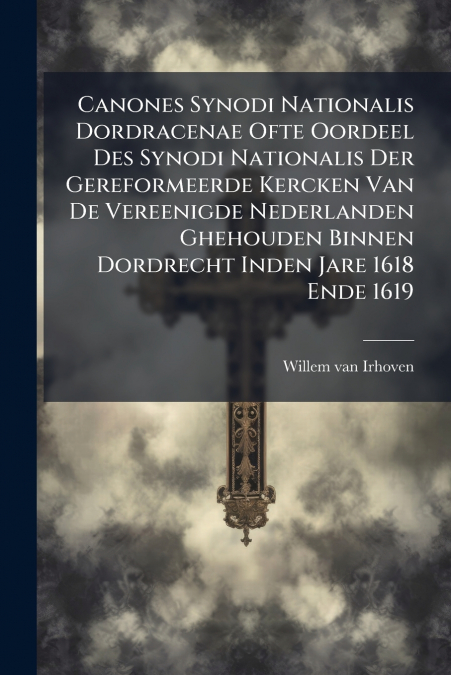
'Canones Synodi Nationalis Dordracenae' presents the official judgment of the National Synod of the Reformed Churches of the United Netherlands, convened in Dordrecht in 1618 and 1619. This pivotal assembly addressed theological controversies surrounding Arminianism, ultimately affirming what became known as the Five Points of Calvinism. This historic document offers a detailed exposition of doctrine concerning predestination, atonement, total depravity, irresistible grace, and perseverance of the saints. Authored under the guidance of Willem van Irhoven, these canons remain a foundational text for Reformed theologians and students of church history. They provide invaluable insight into the theological debates of the early 17th century and the formation of Reformed identity. This edition offers scholars and readers access to the original resolutions, preserving a crucial chapter in the development of Protestant thought.This work has been selected by scholars as being culturally important, and is part of the knowledge base of civilization as we know it. This work was reproduced from the original artifact, and remains as true to the original work as possible. Therefore, you will see the original copyright references, library stamps (as most of these works have been housed in our most important libraries around the world), and other notations in the work.This work is in the public domain in the United States of America, and possibly other nations. Within the United States, you may freely copy and distribute this work, as no entity (individual or corporate) has a copyright on the body of the work.As a reproduction of a historical artifact, this work may contain missing or blurred pages, poor pictures, errant marks, etc. Scholars believe, and we concur, that this work is important enough to be preserved, reproduced, and made generally available to the public. We appreciate your support of the preservation process, and thank you for being an important part of keeping this knowledge alive and relevant.