

 Librería Samer Atenea
 Kálamo Books
 Librería Elías (Asturias)
 Librería Kolima (Madrid)
 Librería Proteo (Málaga)
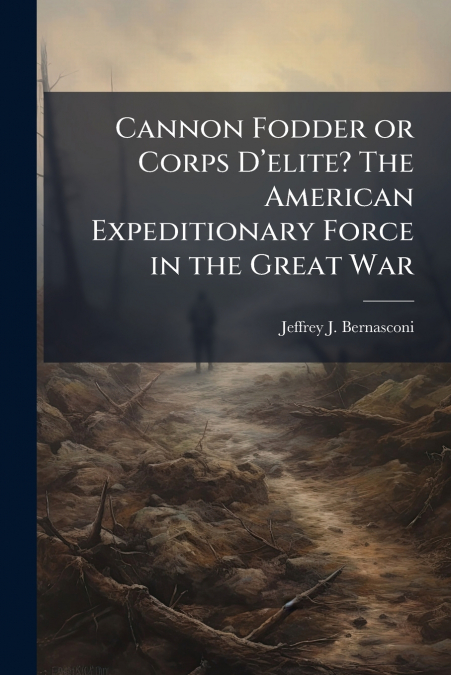
The analysis of the impact of the American Expeditionary Force (AEF) in the Great War has fallen into two competing camps. The first believes that the AEF was the war winning factor in coalition warfare. The opposite view holds that the AEF itself had no true impact, but rather it was the industrial might and the manpower potential of the United States (US) that was the key element to victory. The caveat to both views was that the AEF did not have enough time in combat to truly show its martial ability. This thesis attempts to analyze the combat effectiveness of the AEF by comparing its experience with that of the British Expeditionary Force (BEF) in 1916. The rate of change in the ability of the AEF to adapt to modern warfare will be shown to be slightly higher than that of the BEF of 1916. By November 1918, the AEF was not completely tactically combat effective, but it had dramatically improved from where it started and clearly demonstrated the potential to continue to improve at the same pace.This work has been selected by scholars as being culturally important, and is part of the knowledge base of civilization as we know it. This work was reproduced from the original artifact, and remains as true to the original work as possible. Therefore, you will see the original copyright references, library stamps (as most of these works have been housed in our most important libraries around the world), and other notations in the work.This work is in the public domain in the United States of America, and possibly other nations. Within the United States, you may freely copy and distribute this work, as no entity (individual or corporate) has a copyright on the body of the work.As a reproduction of a historical artifact, this work may contain missing or blurred pages, poor pictures, errant marks, etc. Scholars believe, and we concur, that this work is important enough to be preserved, reproduced, and made generally available to the public. We appreciate your support of the preservation process, and thank you for being an important part of keeping this knowledge alive and relevant.





