Can Animals Be Persons?

Can Animals Be Persons?

Mark Rowlands

55,10 €
IVA incluido
Consulta disponibilidad
Editorial:
Oxford University Press
Año de edición:
2019
Materia
Ética y filosofía moral
ISBN:
9780190846039

Selecciona una librería:

  • Librería Samer Atenea
  • Librería Aciertas (Toledo)
  • Kálamo Books
  • Librería Perelló (Valencia)
  • Librería Elías (Asturias)
  • Donde los libros
  • Librería Kolima (Madrid)
  • Librería Proteo (Málaga)

Can animals be persons? To this question, scientific and philosophical consensus has taken the form of a resounding, ’No!’ In this book, Mark Rowlands disagrees. Not only can animals be persons, many of them probably are. Taking, as his starting point, John Locke’s classic definition of a person, as 'a thinking intelligent being, that has reason and reflection, and can consider itself the same thinking thing, in different times and places,' Rowlands argues that many animals can satisfy all of these conditions. A person is an individual in which four features coalesce: consciousness, rationality, self-awareness and other-awareness, and many animals are such individuals. Consciousness--something that is like to have an experience--is widely distributed through the animal kingdom. Many animals are capable of both causal and logical reasoning. Many animals are also self-aware, since a form of self-awareness is essentially built into the possession of conscious experience. And some animals are capable of a kind of awareness of the minds of others, quite independently of whether they possess a theory of mind. This is not just a book about animals, however. As well as being fascinating in their own right, animals, as Claude Levi-Strauss once put it, are 'good to think.' In this seamless interweaving of the empirical study of animal minds with philosophy and its history, this book makes a powerful case for the idea that reflection on animals allows us to better understand each of these four pillars of personhood, and so illuminates what means for any individual--animal or human--to be conscious, rational, self- and other-aware.
Artículos relacionados

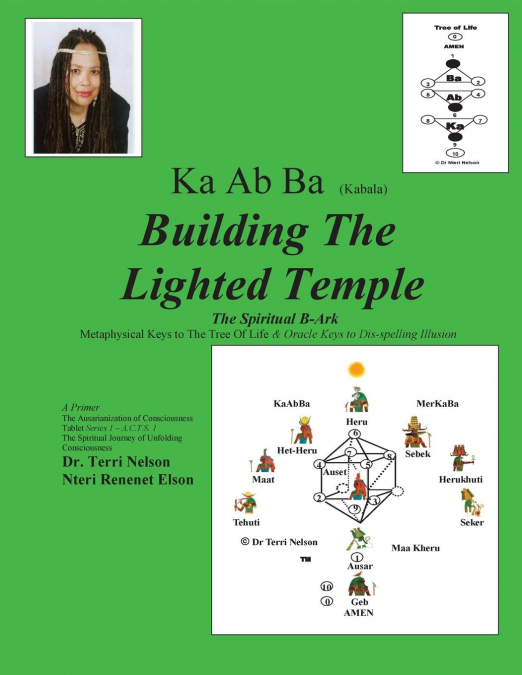
  • Ka Ab Ba Building The Lighted Temple
    Dr Terri R. Nelson / Dr Terri RNelson
    The book KaAbBa Building The Lighted Temple/Metaphysical Keys to the Tree of Life draws a circle that is inclusive of the Afrikan origin of the Ancient Kemetic/Egyptian wisdom. It reveals the undeniable root and link of Ancient Africa to all the religious systems that would develop worldwide. This book is explosive in its power to convey the meaning of KaAbBa, the Medu Neter  (...
    Disponible

    37,41 €

  • Technoethics and the Evolving Knowledge Society
    Rocci Luppicini
    Recently, there has been a major push to rediscover the ethical dimension of technology across the sciences, social sciences, and humanities. Technoethics and the Evolving Knowledge Society: Ethical Issues in Technological Design, Research, Development, and Innovation examines human processes and practices connected to technology embedded within social, political, and moral sph...
  • Kant
    Immanuel Kant
    Kant’s Groundwork of the Metaphysics of Morals is one of the most important works in modern moral philosophy. It belongs beside Plato, Aristotle, Machiavelli, and Hobbes. Here Kant sets out to articulate and defend the Categorical Imperative - the fundamental principle that underlies moral reasoning - and to lay the foundation for a comprehensive account of justice and human vi...
  • On the Duty of Civil Disobedience
    HENRY DAVID THOREAU
    Civil Disobedience argues that citizens should not permit their governments to overrule their consciences, and that they have a duty to avoid allowing their acquiescence to enable the government to make them the agents of injustice. Thoreau was motivated in part by his disgust with slavery and the Mexican-American War, but the sentiments he expresses here are just as pertinent ...
  • Beyond Good and Evil
    Friedrich Nietzsche
    Nietzsche, though primarily a philosopher, wrote widely on art, philology, history, religion, tragedy, culture, and science.  In 1886, at the height of his powers, he published Beyond Good and Evil.  Here he examines much of the best of human thought--dogmatic philosophy, Judeo-Christian morality, science and democracy – and finds it lacking.  Rejecting “slave-morality” he pres...
  • Beyond Good and Evil
    Friedrich Nietzsche
    Nietzsche, though primarily a philosopher, wrote widely on art, philology, history, religion, tragedy, culture, and science.  In 1886, at the height of his powers, he published Beyond Good and Evil.  Here he examines much of the best of human thought--dogmatic philosophy, Judeo-Christian morality, science and democracy – and finds it lacking.  Rejecting “slave-morality” he pres...
    Disponible

    9,99 €

Otros libros del autor

  • World on Fire
    Mark Rowlands
    Mark Rowlands presents a novel analysis of three epoch-defining environmental problems: climate, extinction, and pestilence. Our climate is changing at a rate that is unprecedented and, if unchecked, disastrous. Species are disappearing hundreds or thousands of times faster than normal.COVID-19 has wreaked social and economic havoc but is merely the latest off a blossoming prod...
  • Fame
    Mark Rowlands
    Fame was once associated with excellence or achievement in some or other field of endeavour. One of the most distinctive cultural phenomena over the years has been the rise and rise of fame. This book shows why this new fame is simultaneously fascinating and worthless. ...
  • Memory and the Self
    Mark Rowlands
    The idea that our memories, in some sense, make us who we are, is a common one-and not at all implausible. After all, what could make us who we are if not the things we have experienced, thought, felt and desired on these idiosyncratic pathways through space and time that we call lives? And how can we retain these experiences, thoughts, feelings and desires if not through memor...
  • Can Animals Be Moral?
    Mark Rowlands
    ...
    Disponible

    57,71 €

  • Can Animals Be Moral?
    Mark Rowlands
    From eye-witness accounts of elephants apparently mourning the death of family members to an experiment that showed that hungry rhesus monkeys would not take food if doing so gave another monkey an electric shock, there is much evidence of animals displaying what seem to be moral feelings. But despite such suggestive evidence, philosophers steadfastly deny that animals can act ...
  • Animal Rights
    Mark Rowlands
    ...
    Disponible

    66,52 €