Inicio > Humanidades > Historia > Café con leche
Café con leche

Café con leche

Winthrop R. Wright / Winthrop RWright

26,90 €
IVA incluido
Disponible
Editorial:
Univ of Chicago behalf of University of Texas
Año de edición:
1993
Materia
Historia
ISBN:
9780292790803
26,90 €
IVA incluido
Disponible

Selecciona una librería:

  • Librería Samer Atenea
  • Librería Aciertas (Toledo)
  • Kálamo Books
  • Librería Perelló (Valencia)
  • Librería Elías (Asturias)
  • Donde los libros
  • Librería Kolima (Madrid)
  • Librería Proteo (Málaga)

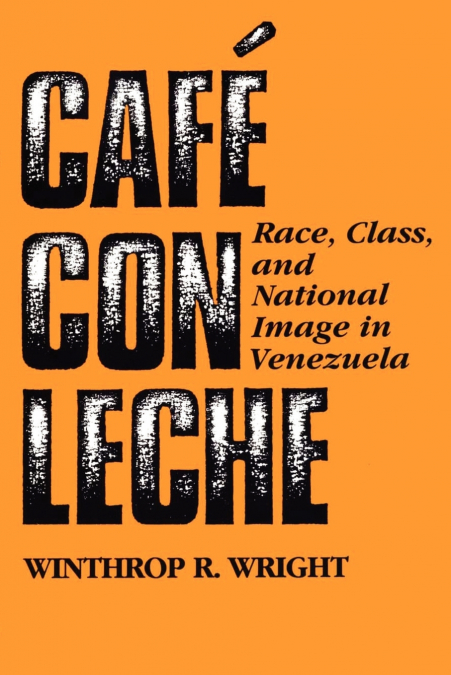
For over a hundred years, Venezuelans have referred to themselves as a café con leche (coffee with milk) people. This colorful expression well describes the racial composition of Venezuelan society, in which European, African, and Indian peoples have intermingled to produce a population in which almost everyone is of mixed blood. It also expresses a popular belief that within their blended society Venezuelans have achieved a racial democracy in which people of all races live free from prejudice and discrimination. Whether or not historical facts actually support this popular perception is the question Winthrop Wright explores in this study. Wright’s research suggests that, contrary to popular belief, blacks in Venezuela have not enjoyed the full benefits of racial democracy. He finds that their status, even after the abolition of slavery in 1854, remained low in the minds of Venezuelan elites, who idealized the European somatic type and viewed blacks as inferior. Indeed, in an effort to whiten the population, Venezuelan elites promoted European immigration and blocked the entry of blacks and Asians during the early twentieth century. These attitudes remained in place until the 1940s, when the populist Acción Democrática party (AD) challenged the elites’ whitening policies. Since that time, blacks have made significant strides and have gained considerable political power. But, as Wright reveals, other evidence suggests that most remain social outcasts and have not accumulated significant wealth. The popular perception of racial harmony in Venezuela hides the fact of ongoing discrimination.

Artículos relacionados

  • Raising Freedom's Banner
    Paul Harris
    World wide history of peaceful street demonstrations from their earliest beginning in eighteenth century England to their use throughout the world in the twenty-first century. Describes why some demonstration movements succeeded and others failed. Contrasts demonstrations within the law with civil disobedience demonstrations. Describes Peterloo, the Chartists, the Suffragettes,...
    Disponible

    23,59 €

  • Waipi’o Valley
    Jeffrey L. Gross
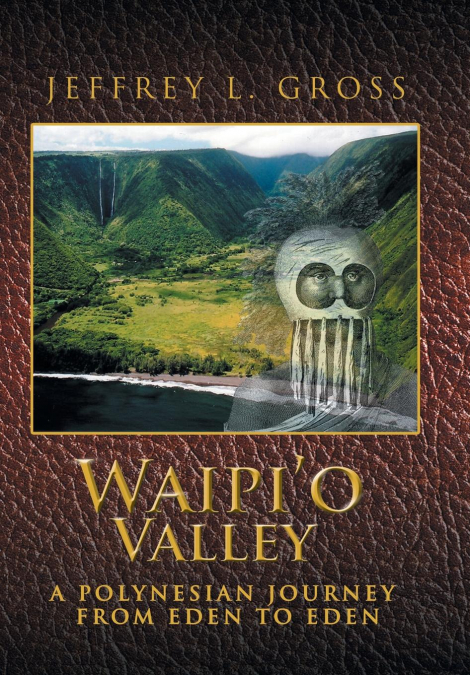
    Waipi’o Valley: A Polynesian Journey from Eden to Eden recounts the remarkable migrations of the Polynesians across a third of the circumference of the earth. Their amazing journey began from Kalana i Hau’ola, the biblical “Garden of Eden” located along the shore of the Persian Gulf, extended to the Indus River Valley of ancient Vedic India, to Egypt where some ancestors of the...
  • Floralia
    June Rainsford Butler
    A century characterized by a growing interest in science, the opportunity for travel, and leisure for gardening furnishes the setting for Butler’s book. The rise of landscape gardening in England is traced, and the origin and history of its most famous gardens are given. The close relation between England and America in the field of horticulture is also discussed.Originally pub...
    Disponible

    61,20 €

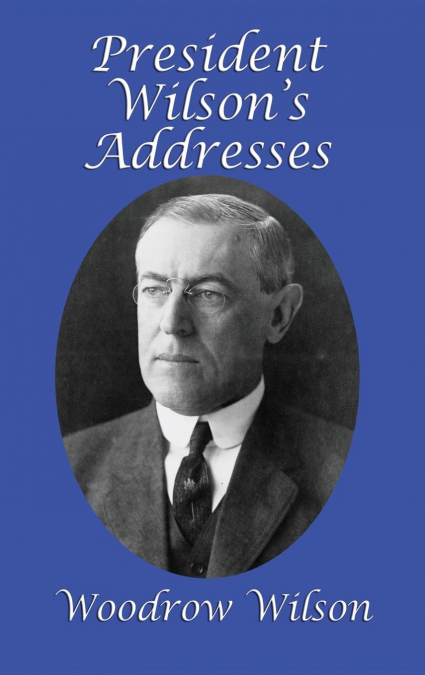
  • President Wilson’s Addresses
    Woodrow Wilson
    'These addresses of President Woodrow Wilson are almost entirely concerned with political affairs, and more specifically with defining Americanism. Yet they also show that even as he moved from academia to the heights of politics, Wilson retained something of the teacher’s interest in showing the relation between specific instances and the general forms of thought or action of ...
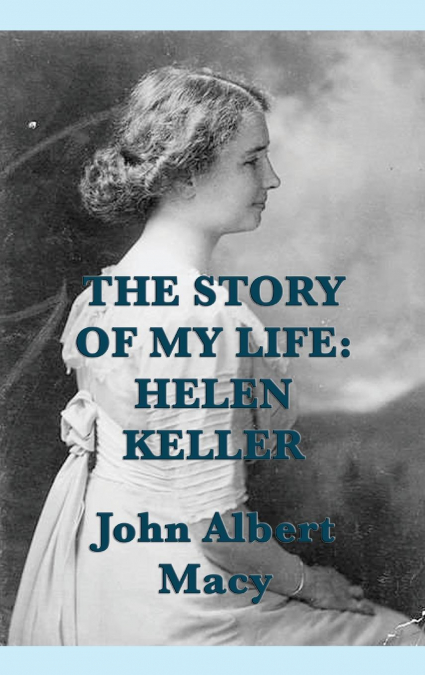
  • The Story of my Life
    John Albert Macy
    The Story of My Life, is Helen Keller’s autobiography detailing her early life, especially her experiences with Anne Sullivan. The book is dedicated to inventor Alexander Graham Bell. The dedication reads, 'To ALEXANDER GRAHAM BELL Who has taught the deaf to speak and enabled the listening ear to hear speech from the Atlantic to the Rockies, I dedicate this Story of My Life.' ...
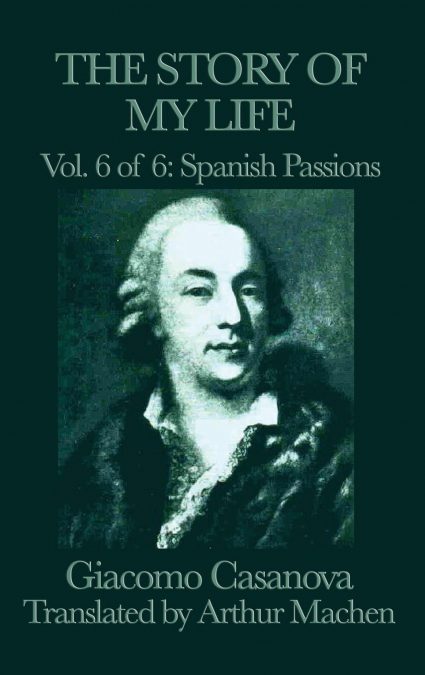
  • The Story of My Life Vol. 6 Spanish Passions
    Giacomo Casanova
    Casanova was an Italian adventurer and author from the Republic of Venice. His autobiography, Histoire de ma vie (Story of My Life), is regarded as one of the most authentic sources of the customs and norms of European social life during the 18th century. He has become so famous for his often complicated and elaborate affairs with women that his name is now synonymous with 'wom...

Otros libros del autor

  • British-Owned Railways in Argentina
    Winthrop R. Wright / Winthrop RWright
    During the nineteenth century, British-owned railways grew under the protection of an Argentine ruling elite that considered railways both instruments and symbols of progress. Under this program of support for foreign enterprise, Argentina had by 1914 built the largest railway network in Latin America. During the first decades of the twentieth century, the railways were success...
    Disponible

    40,24 €